Latest Canada study pathway for Sustainable PR Success
04/05/2026 Phong Nguyen
Amidst significant adjustments in Canada’s immigration policies aimed at managing volume and enhancing the quality of human resources, the **Canada study pathway** has become a guiding light for international students. The 2026–2027 period marks a major turning point as the federal government no longer encourages mass settlement across all professions. Instead, the Canada Way study abroad approach and the **Canada study pathway** focus intensely on training and retaining highly skilled individuals in sectors facing critical labor shortages.
Understanding new financial regulations, study permits, and selecting the right priority sectors will be the key to realizing your dream of settling in the Maple Leaf country.
Entering the 2026–2027 period, the Canada Way study abroad strategy has shifted from a focus on quantity to an emphasis on quality and labor market alignment. Immigration, Refugees and Citizenship Canada (IRCC) has implemented stricter quotas on Study Permits to ensure that the education system and infrastructure can best support students. This means competition for spots at prestigious institutions will increase, requiring applicants to be thoroughly prepared in both their academic profiles and career orientation.
The current **Canada study pathway** is no longer a flat road for everyone. The Canadian government is clearly prioritizing students enrolled in training programs within essential sectors. Instead of choosing general fields of study, smart students following the Canada Way will focus on areas where Canada needs labor for sustainable economic development.
This helps optimize the chances of receiving a Provincial Attestation Letter and increases scores in immigration selection systems after graduation.
Another noteworthy point in the Canada Way trend at this time is the transparency in the admissions process. Universities and colleges in Canada are tightening entry controls, requiring students to prove a genuine intent to study. Building a detailed study plan, closely linked to the actual needs of the locality where you intend to study, is the core factor of a successful **Canada study pathway** in 2026 and 2027.
2. Documentation Requirements and the Latest Study Permit Process
2.1. Academic and Language Proficiency Requirements
To begin the **Canada study pathway**, students must meet rigorous academic standards. Most colleges and universities require a Grade Point Average (GPA) from a “good” level or higher. Particularly for STEM or Healthcare sectors, requirements for natural science subjects will be significantly higher.
Language proficiency is also an inseparable part of the Canada Way study profile, with IELTS Academic requirements typically ranging from 6.0 to 6.5 or higher, or equivalent certificates such as PTE or TOEFL to ensure students can effectively absorb specialized knowledge.
2.2. Provincial Attestation Letter (PAL) Process
One of the biggest changes to the Canada Way study abroad process in recent years is the requirement for a Provincial Attestation Letter (PAL). Except for master’s and doctoral programs, most international undergraduate and college students applying for a Study Permit must have a PAL from the province where the school is located. This is a step to control the number of international students in each locality, ensuring a balance between education and public services.
Grasping the PAL application process quickly is a strategic step in your **Canada study pathway**.
2.3. Study Permit Procedures and Important Notes
Once you have the Letter of Acceptance (LOA) and the Provincial Attestation Letter (PAL), students will proceed to apply for a Study Permit. Within the **Canada study pathway**, the explanation of the study purpose (Study Plan) plays a decisive role. You need to clearly present the reasons for choosing the major, the school, and your plan to return or contribute to Canada after completing the program.
Logic and honesty in the application will help immigration officers trust the candidate’s genuine study abroad intentions, thereby increasing the visa approval rate.
3. Financial Requirements and the 24-Hour Weekly Work Regulation
3.1. New Financial Proof Levels Applied to Students
Financial requirements for the **Canada study pathway** have undergone significant adjustments to accurately reflect the actual cost of living in Canada. Since 2024 and continuing into the 2026–2027 period, international students must prove they have a minimum financial capacity of approximately 20,635 CAD for the first year’s living expenses, excluding tuition fees and airfare. This change in Canada Way study regulations aims to ensure students do not fall into financial hardship and can focus entirely on their studies.
3.2. Regulation for a Maximum of 24 Hours of Part-Time Work Per Week
An important new point in the Canada Way study policy is the regulation on off-campus work hours. Instead of being allowed to work unlimited hours as during the pandemic phase, international students are now only permitted to work a maximum of 24 hours per week during the academic term. This regulation within the **Canada study pathway** helps students balance earning extra income with ensuring academic results.
During official scheduled breaks, students are still allowed to work full-time to accumulate experience and finances.
3.3. How to Manage Your Budget Effectively While Studying in Canada
To adapt to the new financial regulations of the **Canada study pathway**, students need a reasonable spending plan. Choosing cities with moderate living costs that are still in provinces with good immigration policies is a smart tactic. Additionally, maximizing the 24 hours of part-time work per week in jobs related to the field of study will help students both earn extra income and build professional networks, further strengthening their long-term Canada Way study journey.
4. Selecting Majors and Schools Based on Priority Immigration Orientation
Choosing a major is no longer based on mere personal preference but must closely follow the government’s list of priority occupations. According to the latest **Canada study pathway** strategy, occupations with high labor demand will have a more favorable immigration route through category-based selection draws in Express Entry. Instead of choosing business or management fields that are already oversaturated, Canada Way students should aim for engineering, social services, and manufacturing sectors.
When choosing a school within the **Canada study pathway**, students must pay special attention to the list of Designated Learning Institutions (DLI) and eligibility for a Post-Graduation Work Permit (PGWP). Not all schools and programs offer PGWP, especially after recent policy changes regarding public-private partnership programs. A safe Canada Way route is to choose reputable public institutions in provinces with high labor demand, where your degree has practical value for local employers.
Furthermore, the geographical location of the school greatly affects immigration opportunities under the **Canada study pathway**. Provinces like Saskatchewan, Manitoba, or the Atlantic provinces often have more flexible Provincial Nominee Programs (PNP) compared to Ontario or British Columbia. Thoroughly researching each province’s immigration streams before choosing a school is an indispensable step to optimize your Canada Way study plan for the 2027 phase.
5. Healthcare, STEM, and Construction in the Canada Study Pathway
5.1. Healthcare and Medical Services Sector
Healthcare always tops the priority list of the **Canada study pathway** due to Canada’s aging population. Positions such as nurses, medical assistants, laboratory technicians, and psychologists are in severe shortage. Students choosing the Canada Way in this field not only have almost absolute job opportunities after graduation but also enjoy special priorities during the immigration review process.
This is a sustainable sector with attractive salaries for those pursuing a long-term Canada Way study route.
5.2. STEM: Science, Technology, Engineering, and Mathematics
STEM is the driver of Canada’s economic growth; therefore, it is a vital pillar in the **Canada study pathway** strategy. Specializations such as Artificial Intelligence (AI), cybersecurity, software development, and civil engineering are always in high demand. The Canadian government frequently organizes immigration invitation rounds specifically for candidates with experience in STEM fields.
Choosing a Canada Way study route in this block requires intellectual investment but offers a very open professional future in major tech hubs.
5.3. Construction and Skilled Trades
To address the housing crisis, Canada needs a large number of workers in the construction industry. The **Canada study pathway** into fields like construction management, electricians, carpenters, or HVAC technicians is becoming extremely promising. Contrary to old misconceptions, trade professions in Canada offer very high incomes and good working conditions.
Students following this Canada Way direction often find employment immediately after their internship, creating a solid foundation for applying for Permanent Residency after a short period of work.
6. The Learning Pathway to Employment and Settlement in 2027
An ideal **Canada study pathway** begins with completing a program lasting at least 2 years to receive a PGWP valid for up to 3 years. During this time, students need to focus on accumulating professional work experience (TEER 0, 1, 2, or 3) in Canada. This is a prerequisite for transitioning from a student visa to official immigration programs.
A correct Canada Way strategy involves securing a job in a priority specialty within 6 to 12 months after graduation.
By 2027, the Express Entry system and Provincial Nominee Programs will become even more specialized. Candidates on the **Canada study pathway** with work experience in Healthcare, STEM, or Construction will be prioritized for invitations to apply for Permanent Residency (PR) through separate selection rounds. Possessing a valid Job Offer from a Canadian employer will also add significant points to your profile.
The Canada Way study experience does not just stop at a degree; it is a whole process of building a profile that meets Canadian standards.
Finally, perseverance and adaptability are vital factors in the **Canada study pathway** journey. Regulations may change, but the demand for skilled labor always exists. By updating information regularly and being ready for new requirements in language and work experience, students can be fully confident in their Canada Way route.
Canadian settlement in 2027 will be for those who have methodical preparation and follow the right career path that this nation hungers for.
The **Canada study pathway** journey for 2026–2027 requires careful calculation and a strategic career vision. Focusing on priority occupations not only gives you peace of mind about job prospects but is also the shortest path to achieving sustainable settlement goals.
If you are concerned about your personal profile or do not know which major to choose to optimize your opportunities, let experienced experts support you. Do not miss the chance to build a future in one of the most livable countries in the world with a uniquely designed route.
Take the first step for your future by contacting us for in-depth consultation. We will help you analyze your profile, select the right school, and build the most detailed settlement route according to the latest **Canada study pathway** orientation.
Assess your ability to settle in Canada in 2027 now to not miss golden opportunities in Healthcare, STEM, and Construction. Contact SIEC today for study and settlement information to start your journey at: https://siec.com.vn/dang-ky
Are You Ready to Break Through Your Global Career with SIEC?
Don’t let your prestigious degree just stay on paper. Let SIEC experts advise you on a **Canada study pathway** combined with a strategic employment orientation starting today!
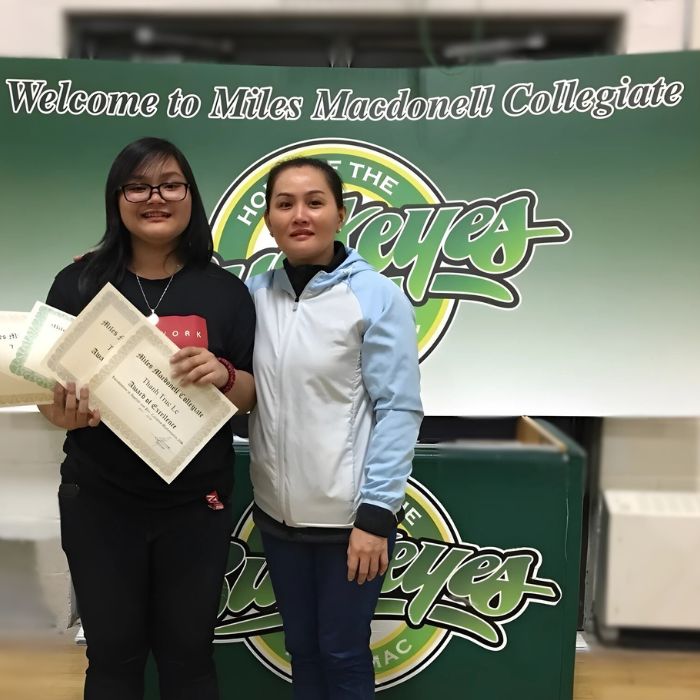
Lê Thanh Trúc, Student at Miles Macdonell Collegiate
“My family and I are deeply grateful to SIEC for not only securing my **Canada high school student visa** in Grade 10 but also for assisting my parents and siblings in obtaining their **visitor visas**. That was an invaluable gift.” — Lê Thanh Trúc, Student at **Miles Macdonell Collegiate** Secure Your Early High School (Secondary) […]
Phan Thị Ngọc Huỳnh, Former Student in Winnipeg
“The solid foundation provided by SIEC and Ms. Huong not only helped me realize my study abroad dream but also gave me the confidence to graduate, secure a stable job, and **settle permanently in Canada**.” — Phan Thị Ngọc Huỳnh, Former Student, currently working in **Winnipeg, Canada** Explore Your Study & Immigration Pathway in Canada […]
Hoàng Giang, Student at Edmonds College
“With her dedication and passion, Ms. Huong helped launch my **American dream**, opening up a vast world of opportunity and the chance to meet new friends.” — Hoàng Giang, Student at **Edmonds College** Explore More About Studying in the USA Spotlight on Edmonds College (Washington State) Gain in-depth knowledge about the programs, tuition fees, and […]
Khánh Lê, Student at LaSalle College
“Thank you to Ms. Huong and the SIEC team for their dedicated partnership and support, from my application phase until I was settled in Canada, helping me confidently pursue my dreams.” — Khánh Lê, Student at **LaSalle College** Explore Further Canada Study Opportunities Spotlight on LaSalle College Gain deeper insights into the programs, tuition fees, […]
Quỳnh Giao, Student at Red River Colleg
“She didn’t just stop at completing the application; she was an inspiration, a true motivator…” — Quỳnh Giao, Student at **Red River College** Continue Your Canada Study Abroad Journey Spotlight on Red River College Polytechnic (RRC Polytech) Discover the high-demand, **applied learning programs** at **Red River College** – one of the premier post-secondary institutions in […]