Latest Canada spousal sponsorship process and requirements
14/08/2026 Phong Nguyen
In the context of Canada’s immigration policies undergoing significant adjustments for the 2026-2027 period, thoroughly researching the Canada spousal sponsorship process is essential for families planning to reunite. While Canada maintains its goal of attracting talent, it has begun tightening regulations for general immigration categories, instead prioritizing sectors that contribute directly to the economy. This article provides a detailed look at the roadmap for Canada spousal sponsorship in conjunction with study-to-immigrate trends in priority fields such as Healthcare, STEM, and Construction.
Requirements for Canada spousal sponsorship in 2026-2027
To successfully navigate Canada spousal sponsorship during the 2026-2027 phase, both the sponsor and the applicant must meet rigorous legal standards and provide proof of their relationship. The sponsor must be a Canadian citizen or permanent resident aged 18 or older, not be receiving social assistance (except for disability), and demonstrate the financial capacity to support the sponsored person during their initial period in the country.
The application for Canada spousal sponsorship requires absolute transparency in proving that the relationship is genuine and not entered into for immigration purposes. Key documents include a legal marriage certificate and evidence of cohabitation, such as joint bank accounts, lease agreements, or joint property ownership. In 2026-2027, Immigration, Refugees and Citizenship Canada (IRCC) will increase scrutiny of communication history and emotional bonds to prevent marriages of convenience.
Furthermore, the individual applying for Canada spousal sponsorship must prepare a comprehensive judicial record, ensuring no criminal history, and meet all health requirements. Preparing a scientific, logical, and complete file from the start will help shorten processing times, which can range from 12 to 24 months depending on specific cases. Staying updated on changes in immigration law will ensure the Canada spousal sponsorship process proceeds more smoothly.
New Study Permit regulations and Canada spousal sponsorship rights
One of the most significant changes affecting the Canada spousal sponsorship pathway is the regulation regarding Study Permits. Starting in 2024 and extending through 2026-2027, Canada has capped the number of new Study Permits and tightened the eligibility for Open Work Permits (OWP) for the spouses of international students. This directly impacts those intending to pursue Canada spousal sponsorship via the education route.
Currently, only spouses of students enrolled in Master’s, Doctoral, or professional programs such as Medicine and Law have the opportunity to receive an Open Work Permit to work in Canada. For other levels of study, the chance for Canada spousal sponsorship through the accompanying student stream has been significantly restricted. This forces families to carefully calculate their choice of degree level and field of study to ensure immigration benefits for the entire family.
This tightening aims to focus resources on high-skilled labor groups. Therefore, if you are planning for Canada spousal sponsorship, having the student choose a postgraduate program will be a major advantage. This not only helps the accompanying partner obtain a legal work permit but also creates a solid foundation for applying for Permanent Residency (PR) after graduation, thereby completing the Canada spousal sponsorship goal sustainably.
New financial requirements and the 24-hour weekly work limit
Financial stability is always a key factor in a Canada spousal sponsorship file. Since 2024, Canada has increased the financial proof requirements for international students to accurately reflect the actual cost of living. This change also indirectly affects Canada spousal sponsorship applications, as the government requires sponsors to demonstrate sufficient economic capacity to support themselves and their accompanying relatives without relying on public funds.
Additionally, the new regulation regarding off-campus work hours for international students is a point to note. Instead of being allowed to work unlimited hours during certain periods as before, students are now limited to a maximum of 24 hours per week during academic terms. This regulation ensures students focus on their studies but also presents an income challenge for families pursuing the Canada spousal sponsorship route within Canada.
When undertaking Canada spousal sponsorship, understanding the cost of living figures in each province is vital. Income from working 24 hours a week can help cover part of the expenses, but families need a solid financial backup. Careful financial preparation not only makes the Canada spousal sponsorship application more likely to be accepted but also helps the family reduce psychological pressure when newly settled in a foreign country.
Immigration priority for Healthcare, STEM, and Construction sectors
Instead of promoting mass immigration, the Canadian government in the 2026-2027 period is focusing heavily on selecting candidates with skills in sectors facing severe labor shortages. This is a golden opportunity for those wishing to achieve Canada spousal sponsorship by developing a career in priority fields. The three main priority groups include Healthcare, STEM (Science, Technology, Engineering, Mathematics), and Construction.
The Healthcare sector always tops the priority list due to Canada’s aging population. Roles such as nurses, medical assistants, and lab technicians are in high demand. If the person being sponsored or the sponsor works in this field, the likelihood of receiving an invitation for PR through Provincial Nominee Programs (PNP) or category-based Express Entry is very high. This helps accelerate the Canada spousal sponsorship process compared to general occupations.
The STEM and Construction sectors also receive special attention. With the tech boom and infrastructure development needs, software engineers, data specialists, or skilled electricians and carpenters are highly sought after by Canada. Orienting your career toward these groups from the start of your study journey will give your family a significant advantage when filing for Canada spousal sponsorship. Competency-based immigration is becoming an inevitable trend, making Canada spousal sponsorship more secure than ever.
Choosing programs and schools to optimize immigration potential
Selecting the right program and school is a strategic step toward realizing your Canada spousal sponsorship goal. Instead of choosing general programs that are easy to find but have high immigration competition, you should focus on training programs on the priority list of the province where you intend to live. Choosing the right field not only helps you find a job easily after graduation but is also the key to opening the door to a fast-tracked Canada spousal sponsorship.
When choosing a school, prioritize Public Colleges or Universities to ensure you are eligible for a Post-Graduation Work Permit (PGWP). The PGWP is a crucial tool that helps you accumulate Canadian work experience, a key factor in calculating immigration points. If you plan for Canada spousal sponsorship, consider provinces with open immigration policies for international students like Saskatchewan, Manitoba, or the Atlantic provinces. Here, requirements for Canada spousal sponsorship are often more flexible than in major cities like Toronto or Vancouver.
Additionally, look into partnership programs between schools and businesses. Schools with high employment rates in Healthcare, STEM, and Construction are optimal choices. A study path linked to professional practice will help you secure a stable income early, creating favorable financial conditions to proceed with Canada spousal sponsorship. Thorough educational preparation is the strongest foundation for your future Canada spousal sponsorship application.
Roadmap for study, work, and Canada spousal sponsorship
A typical roadmap to achieve the Canada spousal sponsorship goal often begins with studying in a priority sector program. After completing a 2 to 4-year program, the student applies for a PGWP to work in Canada. During this time, if you are married, Canada spousal sponsorship can be carried out through family class sponsorship or by including the spouse in the main applicant’s permanent residency file.
In the 2026-2027 period, this roadmap requires a high focus on accumulating Skilled Work Experience. Immigration programs like the Canadian Experience Class (CEC) or various Provincial Nominee streams require candidates to have at least one year of Canadian work experience. Once you become a permanent resident, the right to Canada spousal sponsorship becomes easier and is prioritized for processing. This is the most official and safest path for the whole family to settle long-term.
Maintaining legal status throughout the study and work process is mandatory. Any error in the study permit file can affect the ability to pursue Canada spousal sponsorship later. Therefore, the family needs to be aligned and have a detailed plan for each stage, from the initial school application to receiving the PR card. Although this path is long, it yields sustainable results, helping Canada spousal sponsorship achieve the expected success.
Assess your Canada immigration potential for 2027 now
With constant changes in immigration policy, self-assessing a Canada spousal sponsorship file can sometimes be difficult. Each case has its own unique characteristics regarding education level, work experience, and financial status. To know exactly whether you qualify for Canada spousal sponsorship in the 2026-2027 period, seeking out reputable immigration consultants is a smart move.
Don’t let immigration opportunities pass by due to a lack of information or incorrect file preparation. Assessing your Canada spousal sponsorship potential now will help you identify weaknesses in your profile for timely correction. Whether you are interested in the study route for Healthcare, STEM, or Construction, a personalized roadmap will help optimize time and costs, ensuring your Canada spousal sponsorship goal is successfully met.
Start your journey by thoroughly researching regulations and preparing a mindset ready for change. Canada continues to welcome families who contribute positively to society. A clear plan and perseverance will be the keys to completing your Canada spousal sponsorship procedures and building a new life in the Great White North.
If you are concerned about your profile or need the most detailed study-to-immigrate roadmap for the 2026-2027 period, do not hesitate to seek professional support. Capturing accurate and timely information is the deciding factor in overcoming challenges during the Canada spousal sponsorship process.
Contact SIEC immediately to be consulted and have your immigration file assessed by experienced experts. We will accompany you in building an optimal study and immigration roadmap, helping your family’s dream of Canada spousal sponsorship become a reality in the near future.
Don’t miss the chance to settle in one of the world’s most livable countries by registering for an in-depth consultation at SIEC today. We are committed to providing the most updated information on Canada spousal sponsorship policies so you can have the best preparation for your journey.
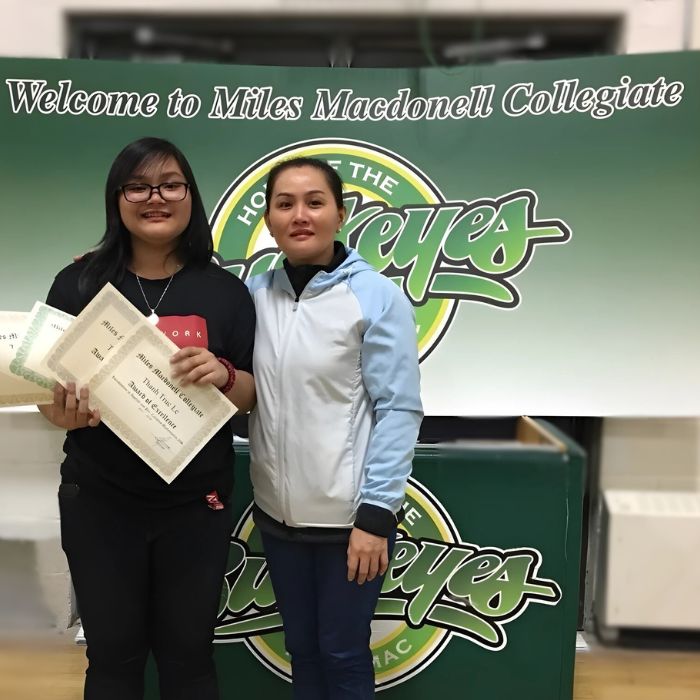
Lê Thanh Trúc, Student at Miles Macdonell Collegiate
“My family and I are deeply grateful to SIEC for not only securing my **Canada high school student visa** in Grade 10 but also for assisting my parents and siblings in obtaining their **visitor visas**. That was an invaluable gift.” — Lê Thanh Trúc, Student at **Miles Macdonell Collegiate** Secure Your Early High School (Secondary) […]
Phan Thị Ngọc Huỳnh, Former Student in Winnipeg
“The solid foundation provided by SIEC and Ms. Huong not only helped me realize my study abroad dream but also gave me the confidence to graduate, secure a stable job, and **settle permanently in Canada**.” — Phan Thị Ngọc Huỳnh, Former Student, currently working in **Winnipeg, Canada** Explore Your Study & Immigration Pathway in Canada […]
Hoàng Giang, Student at Edmonds College
“With her dedication and passion, Ms. Huong helped launch my **American dream**, opening up a vast world of opportunity and the chance to meet new friends.” — Hoàng Giang, Student at **Edmonds College** Explore More About Studying in the USA Spotlight on Edmonds College (Washington State) Gain in-depth knowledge about the programs, tuition fees, and […]
Khánh Lê, Student at LaSalle College
“Thank you to Ms. Huong and the SIEC team for their dedicated partnership and support, from my application phase until I was settled in Canada, helping me confidently pursue my dreams.” — Khánh Lê, Student at **LaSalle College** Explore Further Canada Study Opportunities Spotlight on LaSalle College Gain deeper insights into the programs, tuition fees, […]
Quỳnh Giao, Student at Red River Colleg
“She didn’t just stop at completing the application; she was an inspiration, a true motivator…” — Quỳnh Giao, Student at **Red River College** Continue Your Canada Study Abroad Journey Spotlight on Red River College Polytechnic (RRC Polytech) Discover the high-demand, **applied learning programs** at **Red River College** – one of the premier post-secondary institutions in […]