Latest Canada investor visa cost for investment programs
08/08/2026 Phong Nguyen
In the 2026–2027 period, Canada’s immigration policy is undergoing significant shifts, focusing on attracting high-quality human resources in essential sectors. Instead of only being concerned about the Canada investor visa cost with capital reaching billions of dong, many individuals and families are opting for the study-to-immigrate pathway in priority occupations. This is considered a sustainable, cost-effective direction with a higher success rate as traditional investment programs increasingly tighten their requirements. Understanding the **Canada investor visa cost** compared to the skilled worker pathway will provide a comprehensive overview to help you make the most accurate financial decisions.
Overview of Canada Investment Immigration Costs and New Trends for 2026-2027
Previously, when mentioning moving to the Great White North, the **Canada investor visa cost** was often the biggest hurdle for many. Programs like the Start-up Visa or provincial entrepreneur streams required substantial working capital and net worth, often ranging from hundreds of thousands to millions of Canadian dollars. However, entering 2026 and 2027, the Canadian Government has adjusted its immigration targets, prioritizing candidates with practical work skills in sectors facing severe labor shortages. This makes the traditional investment route no longer the only or optimal choice for everyone.
Instead of spending a massive amount to invest in a business, investing in education in fields such as Healthcare, STEM, and Construction is becoming the main trend. Choosing an immigration route through education helps candidates obtain international degrees and local work experience, making it easier to achieve Permanent Resident (PR) status. Experts predict that in the next two years, point-based immigration programs (Express Entry) will give special priority to those who have graduated and worked in these priority sectors.
Although investment costs for entrepreneur streams still exist, requirements for business operation and job creation for locals are stricter than ever. Therefore, shifting to the study-to-immigrate route not only reduces the initial financial burden but also ensures a stable career future in Canada. The total cost of the education-based immigration route is often much lower and brings long-term dual benefits.
Document Requirements and Priority Skilled Worker Immigration Route
To prepare for an immigration route that serves as an alternative to the traditional **Canada investor visa cost**, candidates must meet strict documentation requirements. First is language proficiency, typically requiring an IELTS Academic score of 6.0 to 6.5 or a PTE equivalent for admission to prestigious colleges and universities. Possessing a strong language foundation not only helps you complete your studies but is also a decisive factor when calculating immigration points later. This is a smart investment rather than focusing solely on pure investment capital.
Academic records also need careful preparation, including transcripts, diplomas, and relevant certificates. For those looking to avoid a high **Canada investor visa cost**, choosing the right field of study within priority groups such as Nursing, Information Technology, or Civil Engineering is a strategic move. The Canadian Government regularly announces lists of labor-shortage occupations, and having a profile that matches this list will make the immigration process through the labor stream much smoother.
In addition, criminal records and health checks are indispensable elements of the application. Candidates need to demonstrate transparency in their previous work and study history. When compared to the investment route for entrepreneurs, the skilled worker pathway requires more personal preparation than massive financial capacity. Understanding the regulations on Study Permits and Post-Graduation Work Permits (PGWP) will help you optimize your costs most effectively during the 2026–2027 period.
New Financial Requirements and How to Optimize Canada Immigration Costs
One of the most important changes affecting the cost of immigration through education in 2026-2027 is the requirement for proof of funds. Immigration, Refugees and Citizenship Canada (IRCC) has increased the living expense requirement in the GIC (Guaranteed Investment Certificate) account to ensure international students can afford life in Canada without over-relying on part-time work. This directly impacts the total initial immigration cost a family needs to prepare.
Specifically, in addition to tuition fees ranging from 15,000 to 25,000 CAD per year depending on the school and program, candidates need to prove they have approximately 20,635 CAD (this level may be adjusted for inflation by 2027) for first-year living expenses. Although this figure has increased compared to previous years, when compared to the **Canada investor visa cost** for entrepreneurs (which often requires a net worth of over 500,000 CAD), it remains a completely feasible figure for many middle-class Vietnamese families. Clear financial planning helps you avoid unnecessary risks when processing your application.
To optimize costs, many students choose provinces with lower living expenses such as Manitoba, Saskatchewan, or suburban areas of Ontario and British Columbia. Here, not only is tuition more competitive, but Provincial Nominee Programs (PNP) also offer many incentives for graduates in priority sectors. Grasping new financial regulations is the key to managing your immigration journey intelligently and effectively.
24-Hour Weekly Part-Time Work Regulation and Living Cost Support
Starting from late 2024 and extending through the 2026–2027 period, the Canadian Government has officially applied new regulations on part-time work for international students. Instead of being allowed to work unlimited hours as during the pandemic, students are now permitted to work a maximum of 24 hours per week during academic terms. This regulation aims to help students focus on their studies while still having the opportunity to earn extra income to cover part of their costs. Part-time work not only provides income but is also an opportunity to accumulate practical work experience in an international environment.
With minimum wages in provinces ranging from 15 to 17 CAD per hour, a student working the full 24 hours can earn approximately 1,500 to 1,800 CAD per month. This amount is sufficient to cover rent and basic food, reducing the financial pressure on the family. This is a major plus for the study-to-immigrate route compared to simply investing capital in a project without an active income source from the start. However, students need to balance their time to avoid affecting their academic results, as this is a prerequisite for maintaining a Study Permit.
Furthermore, during scheduled breaks or summer vacations, students are still allowed to work full-time (40 hours per week). This is a golden time to accumulate finances and prepare for the next semester’s tuition. Taking full advantage of part-time work regulations makes the total immigration cost much lighter. For those studying priority majors like Healthcare or Construction, finding part-time jobs related to their field also helps them build professional networks, effectively supporting their immigration goals later on.
Choosing Programs and Schools in Healthcare, STEM, and Construction Priority Groups
In the 2026–2027 immigration strategy, the choice of study program plays a pivotal role in determining the success of an immigration application. Instead of choosing general business majors, candidates should focus on three “golden” sectors: Healthcare, STEM (Science, Technology, Engineering, Mathematics), and Construction. These fields not only have high labor demand but also benefit from priority policies in application processing, minimizing risks. Canada is facing an aging population and infrastructure shortages, making personnel in these fields highly sought after.
The Healthcare group includes occupations such as Nursing, Dental Assistants, and Physiotherapy. These are fields with high starting salaries and very clear immigration pathways. Next is the STEM group with the explosion of Information Technology, Artificial Intelligence, and Mechanical Engineering. Finally, the Construction sector, including Construction Management, Electrical Engineering, and Carpentry, is also short of thousands of workers annually. When you choose to study these majors, your investment in education will yield a very high Return on Investment (ROI) through attractive salaries after graduation.
When choosing a school, prioritize public Designated Learning Institutions (DLI) that offer Co-op programs (paid internships). Co-op programs allow you to work while you study, gaining practical experience and additional income to offset costs. Additionally, carefully check if the program is eligible for a Post-Graduation Work Permit (PGWP). A prestigious school in a province with open immigration policies will be a solid launchpad, helping you optimize your journey and quickly achieve the goal of becoming a permanent resident.
The Pathway from Study to Employment and Canada Permanent Residency 2027
The transition from an international student to a Permanent Resident (PR) is a process that requires perseverance and meticulous planning. After completing a program of at least 2 years, you will be granted a PGWP with a duration of up to 3 years. This is a valuable time for you to work full-time and accumulate Canadian Work Experience. This is the most important factor for gaining points in the Express Entry system or Provincial Nominee Programs, helping you save on the **Canada investor visa cost** compared to other streams.
In 2027, it is expected that category-based selection draws will continue to focus on those with experience in Healthcare, STEM, and Construction. If you work in these fields, the CRS (Comprehensive Ranking System) cutoff scores are typically lower than the general pool, opening up wide immigration opportunities. Accumulating at least 1 year of professional work experience (NOC TEER 0, 1, 2, or 3) will be the key to applying for PR. At this point, your initial investment in education will prove its maximum value.
Finally, after receiving an Invitation to Apply (ITA) and completing security and medical checks, you will officially become a Canadian Permanent Resident. With a PR card in hand, you and your family will enjoy all health, education, and social welfare benefits like local citizens. The total cost of immigration following this route not only brings a second citizenship but also opens up a solid career in one of the most livable countries in the world. Start preparing today to seize golden opportunities in the 2026–2027 period.
Assess your Canada immigration potential for 2027 now to not miss out on important policy changes. Grasping accurate information about the **Canada investor visa cost** and priority career paths will help you save time and money.
If you are wondering about choosing a major or need a detailed financial plan for your immigration journey, do not hesitate to seek professional advice. We are always ready to accompany you to turn your Canadian dream into reality with the most optimized costs.
Contact SIEC immediately to receive dedicated support and a personalized roadmap for your application. Our team of experts will help you answer all questions regarding immigration costs and related legal procedures at https://siec.com.vn/dang-ky.
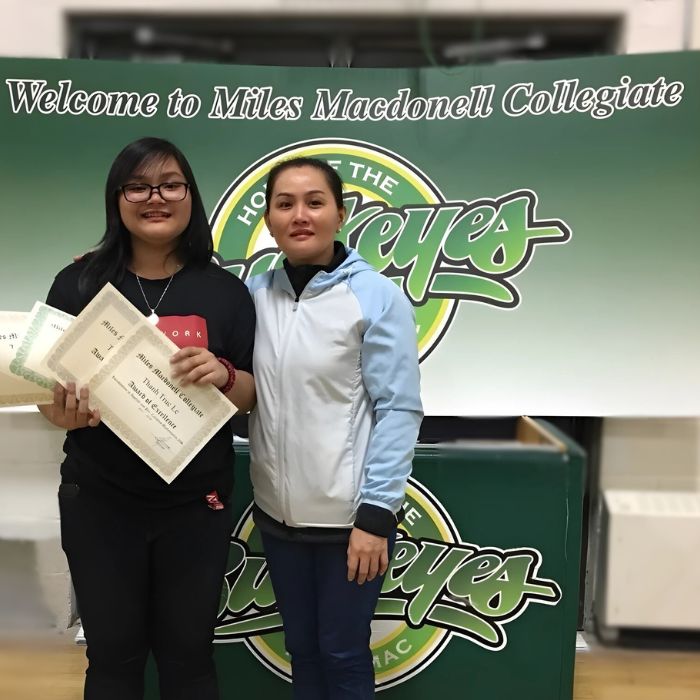
Lê Thanh Trúc, Student at Miles Macdonell Collegiate
“My family and I are deeply grateful to SIEC for not only securing my **Canada high school student visa** in Grade 10 but also for assisting my parents and siblings in obtaining their **visitor visas**. That was an invaluable gift.” — Lê Thanh Trúc, Student at **Miles Macdonell Collegiate** Secure Your Early High School (Secondary) […]
Phan Thị Ngọc Huỳnh, Former Student in Winnipeg
“The solid foundation provided by SIEC and Ms. Huong not only helped me realize my study abroad dream but also gave me the confidence to graduate, secure a stable job, and **settle permanently in Canada**.” — Phan Thị Ngọc Huỳnh, Former Student, currently working in **Winnipeg, Canada** Explore Your Study & Immigration Pathway in Canada […]
Hoàng Giang, Student at Edmonds College
“With her dedication and passion, Ms. Huong helped launch my **American dream**, opening up a vast world of opportunity and the chance to meet new friends.” — Hoàng Giang, Student at **Edmonds College** Explore More About Studying in the USA Spotlight on Edmonds College (Washington State) Gain in-depth knowledge about the programs, tuition fees, and […]
Khánh Lê, Student at LaSalle College
“Thank you to Ms. Huong and the SIEC team for their dedicated partnership and support, from my application phase until I was settled in Canada, helping me confidently pursue my dreams.” — Khánh Lê, Student at **LaSalle College** Explore Further Canada Study Opportunities Spotlight on LaSalle College Gain deeper insights into the programs, tuition fees, […]
Quỳnh Giao, Student at Red River Colleg
“She didn’t just stop at completing the application; she was an inspiration, a true motivator…” — Quỳnh Giao, Student at **Red River College** Continue Your Canada Study Abroad Journey Spotlight on Red River College Polytechnic (RRC Polytech) Discover the high-demand, **applied learning programs** at **Red River College** – one of the premier post-secondary institutions in […]