Do you need IELTS for US study? Latest updates for students
27/08/2026 Phong Nguyen
In the evolving landscape of global education, planning for children to study in advanced countries like the United States requires thorough early preparation. One of the most common questions many parents and students ask is whether **IELTS for US study** is necessary when preparing for the 2026 and 2027 academic intakes. Understanding language requirements not only helps students feel more confident during the application process but is also the key to unlocking high-value scholarship opportunities. The Double-Path strategy, combining education with an employment-based settlement route, is becoming a sustainable trend helping families optimize costs and ensure a long-term future in the US.
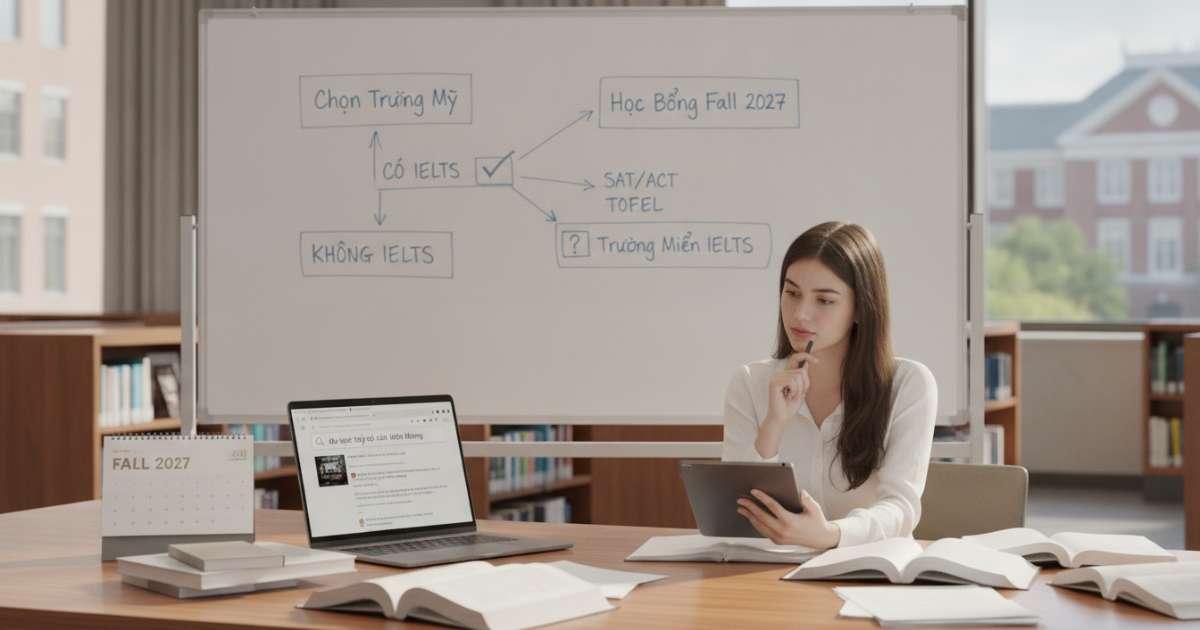
Answering the Question: Is IELTS Required for US Study in 2026–2027?
The question of whether one needs an English certificate for their journey does not have a single answer, as each university and college in the US has its own specific regulations. However, in general, most formal universities in the US require an international English certificate to assess a student’s academic capability. Many institutions accept **IELTS for US study** alongside TOEFL and the Duolingo English Test. For undergraduate programs, IELTS scores typically range from 6.0 to 7.5, depending on the ranking and specific requirements of each major.
Nevertheless, there are cases where students do not need an IELTS certificate at the exact time of application. Many universities offer English as a Second Language (ESL) preparatory programs for international students who have not yet met the language requirements. This means you can be granted a conditional offer letter, requiring you to complete an English course before starting the official program. However, understanding the requirements for studying in the US and if IELTS is needed will help you realize that having this certificate early brings a significant advantage in visa processing and receiving financial aid packages from the school.
Advantages of Obtaining an IELTS Certificate Early
Preparing an English certificate early helps students be more proactive in school selection. The importance of **IELTS for US study** is evident when filtering for schools that match your capacity through specific test results. Additionally, a high IELTS score is strong evidence of a student’s seriousness and ability to adapt to an international academic environment—qualities that Consular officers highly value when reviewing visa applications.
Alternatives to IELTS
Besides IELTS, many US schools are now more flexible in accepting other types of certificates. If you are still wondering about language requirements, you can consider the Duolingo English Test, which has lower costs and faster results. Some schools may also waive the English requirement if the student has graduated from an international school that uses English as the primary language of instruction for a certain period.
How to Choose Schools and Hunt for Fall 2027 Scholarships
The Fall 2027 intake can be considered a golden time for students to begin their journey. To choose the right school, parents need to consider many factors such as geographical location, tuition fees, major rankings, and especially financial aid policies. While considering the requirements of **IELTS for US study**, you will find that prestigious scholarships often demand very high English scores. Top-tier universities usually prioritize candidates with comprehensive preparation in both academic knowledge and language proficiency.
To successfully hunt for scholarships for the Fall 2027 term, students need to start building their profiles from late 2025 or early 2026. An impressive application includes not only a high GPA but also outstanding extracurricular activities and a deep personal essay. Resolving the language requirement early with a high test score will allow you to focus your time on perfecting your essay and other procedures, thereby increasing your chances of receiving scholarships ranging from 50% to 100% of tuition fees.
School Selection Criteria Under the Double-Path Strategy
In the Double-Path strategy, choosing a school goes beyond academic reputation; it must also consider the ability to connect with the labor market. Parents should prioritize schools located in states with high labor demand and favorable settlement policies. When considering your options, check if the school has career support centers for international students, as this will be an important stepping stone for the future EB-3 employment-based settlement route.
Scholarship Application Process for Fall 2027
This process usually begins with researching a list of schools that have large scholarship funds for international students. Once you clearly understand the language requirements at your target schools, you need to prepare recommendation letters from teachers and complete standardized tests like the SAT or ACT if required. Applying early (Early Action or Early Decision) often results in a higher acceptance and scholarship rate compared to the regular application period.
Preparing Financial Records and a Clear Study Plan for a Successful Visa
After receiving an admission letter, the next and most important step is applying for a student visa (F-1). During this stage, financial records play a decisive role. The US Consulate needs to see that the family has enough capacity to pay for the student’s entire study and living process without the need for illegal employment. Even if you have already secured your **IELTS for US study** score, if you cannot prove a stable financial source, the chance of visa refusal remains high.
Financial records should include savings books, proof of parents’ monthly income, and other owned assets such as real estate or company shares. Besides that, a clear study plan is a factor that helps Consular officers believe in your true purpose for studying abroad. This plan should explain why you chose that major, why this specific university, and your plans after graduation. Understanding your requirements and being well-prepared linguistically will help you present this plan articulately and persuasively during the interview.
Necessary Financial Documents
Parents need to prepare tax documents, business licenses (if applicable), and bank balance confirmations for at least the last 6 months. A transparent, systematic financial profile will create a good impression. When combined with fluently answering questions about your preparation, students will demonstrate the family’s thorough and serious commitment to the study abroad journey.
Building a Logical Study Roadmap
A study plan should not just be empty promises. It needs to be built on the link between previous studies and future career goals. If you have overcome the language barrier with an impressive test result, emphasize that this language ability will help you absorb specialized knowledge most effectively, thereby contributing to the development of your chosen profession.
Avoiding Vague Purpose Errors in US Student Visa Interviews
The error of “unclear purpose” is the leading cause of US student visa denials. Many students, when asked why they chose the US, answer too generally, such as “because the US has the best education.” This is not convincing enough. You need to prove thorough research into the program and your personal suitability. When asked about your preparation, if you answer that you proactively achieved a high score to be ready for the academic environment, it is a big plus showing a clear academic purpose.
Furthermore, failing to explain the link between the major in the US and future career opportunities is also a common mistake. Consular officers want to ensure you have a specific plan and no intention of staying in the US illegally. However, with the Double-Path strategy, we aim for legal settlement through employment categories like EB-3. Even so, during the F-1 visa interview, the focus must remain on studying. Being well-prepared for all questions will help you feel more confident when facing other tough inquiries from the consulate.
Confident Interview Skills
Confidence comes from preparation. Students should practice answering questions about the school, major, and finances honestly and concisely. Do not try to memorize sample answers. Understand the nature of the matter, including your academic readiness, to respond flexibly to any situation. A proactive attitude and a calm demeanor will help you score points with the interviewer.
The Importance of Honesty
Absolutely do not provide false information or use forged documents. All information in the file is recorded and cross-checked. If you have difficulty achieving a certain English score, present your ESL study path clearly instead of seeking ways to cheat. Honesty is the core foundation for building a sustainable future in the US.
EB-3 Settlement Roadmap and Waiting Times for 2026
The EB-3 employment-based settlement is an important part of the Double-Path strategy for families with a long-term vision. This is a program for skilled workers, professionals, or unskilled workers with sponsorship from a US employer. For those looking into **IELTS for US study**, combining the study path with EB-3 will help shorten the distance to a Green Card. While you are studying in the US on an F-1 visa, processing an EB-3 file concurrently can help you adjust your status legally after graduation.
Forecasts for 2026 suggest that waiting times for the EB-3 category for certain nationalities will fluctuate based on backlogs and annual visa quotas. Typically, this process can last from 3 to 5 years or longer depending on the timing. Therefore, starting this roadmap as soon as the student begins studying abroad is a smart decision. Even if you are focusing on academic requirements for your studies, basic English communication skills are also an indispensable requirement for the EB-3 category so that you can work effectively in the US.
Steps to Implement an EB-3 File
The EB-3 process begins with finding a reputable US employer willing to sponsor. This is followed by the Labor Certification stage from the US Department of Labor to confirm that no local workers are suitable for the position. Next is filing the I-140 petition with USCIS. Throughout this process, the student can still continue their studies. Maintaining a good academic record facilitates a smoother transition to settlement status later.
Waiting Time Forecast for 2026
Based on recent Visa Bulletins, applicants need patience when pursuing the EB-3 category. However, 2026 is expected to see positive policy adjustments to attract international labor. Preparing your file now will help you secure an early priority date. Do not let procedural hurdles be a barrier; see them as the first stepping stone in a larger plan to stabilize your life in the land of opportunity.
Double-Path Strategy: Combining Study and Long-term Settlement
The Double-Path strategy is not just a simple study roadmap but a comprehensive financial and settlement plan. By combining studying abroad (F-1 visa) and filing for employment-based settlement (EB-3), families can ensure that after graduation, students do not face the pressure of having to leave the US due to visa expiration. When starting to research, parents should look broader at the benefits a Green Card brings, such as lower tuition, equal job opportunities, and social security benefits like a US citizen.
In this roadmap, the 2026–2027 period is the pivotal time for implementation. Students will enroll in the Fall 2027 term, while the EB-3 file has been initiated beforehand. This creates a perfect timing overlap. Being well-prepared linguistically will help students easily find internships (CPT/OPT), thereby accumulating valuable experience to support their settlement file later. This is the most modern and safest approach for the future of the younger generation.
Optimizing Costs Through the Double-Path Roadmap
One of the biggest advantages of this strategy is the ability to save long-term costs. Students with a Green Card or those in the process of waiting for one can enjoy in-state tuition rates in many states, which is often only 1/3 of international student tuition. When you no longer have to worry about maintaining a student visa, you can focus entirely on career development and building a new life.
Building a Sustainable Future in the US
The ultimate goal of every study abroad journey is success and stability. With the Double-Path strategy, the road to the American Dream becomes clearer and less risky. Parents need the companionship of experienced consultants to coordinate between study and work smoothly. Start by addressing your concerns and planning in detail today so as not to miss precious opportunities in the 2026–2027 period.
The journey to build a future in the US for your children always needs a dedicated and deeply knowledgeable partner in both education and settlement. At SIEC, we are committed to providing the optimal Double-Path solution, helping your family realize the American Dream in the safest and most effective way.
Do not let questions about procedures or language requirements slow you down. Contact the SIEC expert team today for detailed advice on a study roadmap combined with EB-3 settlement tailored to your family’s unique conditions at https://siec.com.vn/dang-ky.
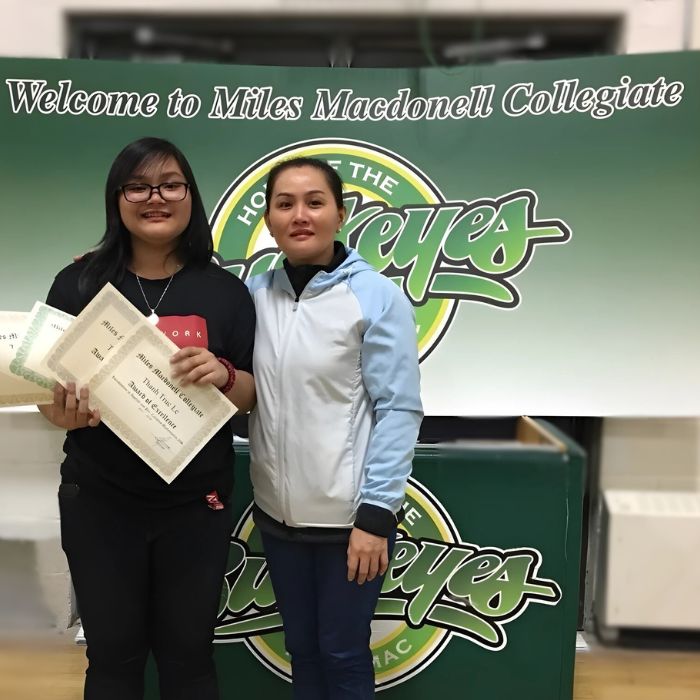
Lê Thanh Trúc, Student at Miles Macdonell Collegiate
“My family and I are deeply grateful to SIEC for not only securing my **Canada high school student visa** in Grade 10 but also for assisting my parents and siblings in obtaining their **visitor visas**. That was an invaluable gift.” — Lê Thanh Trúc, Student at **Miles Macdonell Collegiate** Secure Your Early High School (Secondary) […]
Phan Thị Ngọc Huỳnh, Former Student in Winnipeg
“The solid foundation provided by SIEC and Ms. Huong not only helped me realize my study abroad dream but also gave me the confidence to graduate, secure a stable job, and **settle permanently in Canada**.” — Phan Thị Ngọc Huỳnh, Former Student, currently working in **Winnipeg, Canada** Explore Your Study & Immigration Pathway in Canada […]
Hoàng Giang, Student at Edmonds College
“With her dedication and passion, Ms. Huong helped launch my **American dream**, opening up a vast world of opportunity and the chance to meet new friends.” — Hoàng Giang, Student at **Edmonds College** Explore More About Studying in the USA Spotlight on Edmonds College (Washington State) Gain in-depth knowledge about the programs, tuition fees, and […]
Khánh Lê, Student at LaSalle College
“Thank you to Ms. Huong and the SIEC team for their dedicated partnership and support, from my application phase until I was settled in Canada, helping me confidently pursue my dreams.” — Khánh Lê, Student at **LaSalle College** Explore Further Canada Study Opportunities Spotlight on LaSalle College Gain deeper insights into the programs, tuition fees, […]
Quỳnh Giao, Student at Red River Colleg
“She didn’t just stop at completing the application; she was an inspiration, a true motivator…” — Quỳnh Giao, Student at **Red River College** Continue Your Canada Study Abroad Journey Spotlight on Red River College Polytechnic (RRC Polytech) Discover the high-demand, **applied learning programs** at **Red River College** – one of the premier post-secondary institutions in […]