IDP study abroad Canada: Latest PR Pathways for Students
04/05/2026 Phong Nguyen
In the context of landmark changes in Canadian immigration policy, seeking support from a reputable organization like IDP study abroad Canada has become more important than ever. The 2026–2027 period marks a significant shift from mass immigration to prioritizing highly skilled candidates in essential sectors. To succeed on this path, international students need a clear strategy starting from the stage of choosing a major and preparing financial documents.
This article will provide a comprehensive look at the process of studying and settling in the land of the maple leaf, helping you optimize your future career opportunities.
1. Benefits of choosing IDP study abroad Canada for the 2026–2027 roadmap
Preparing for a plan to study in Canada in the coming years requires a deep understanding of the new regulations from Immigration, Refugees and Citizenship Canada (IRCC). When choosing IDP study abroad Canada, students and parents will gain access to official information regarding scholarship programs and admission requirements for hundreds of prestigious universities and colleges. A team of experts will help you analyze your visa success probability based on your actual profile, thereby providing the most practical advice.
The biggest difference in the 2026–2027 period is the tightening of the number of Study Permits. Therefore, support from professional consultants will help you minimize the risk of application rejection due to missing information or failure to prove a clear study purpose. Consultants will accompany you in preparing an impressive Study Plan, highlighting your desire to contribute to the Canadian economy through occupations currently facing critical labor shortages.
Furthermore, comprehensive services also include post-visa support such as finding accommodation, pre-departure briefings, and connecting with the international student community in Canada. This helps new students quickly integrate into their new environment, focusing fully on their studies to achieve the best results, creating a solid foundation for applying for a Post-Graduation Work Permit (PGWP) and future residency.
2. Document requirements and latest Study Permit regulations
To begin your study journey, mastering the document requirements is a prerequisite step. In the 2026–2027 phase, IRCC requires stricter standards for the quality of international student intake. You need to prepare full academic documents, including transcripts, graduation certificates, and language proficiency certificates such as IELTS or PTE.
When working with IDP study abroad Canada, you will be guided in detail on how to organize your documents in the most logical and professional way to score points with the consulate.
Current Study Permit regulations require students to have a Provincial Attestation Letter (PAL) for most undergraduate and college-level programs. This is a crucial additional step that professional consultancy helps you navigate through close links with partner schools. Understanding the PAL application process will help you be more proactive with timing, avoiding late submissions that lead to unnecessary risks.
A new point to note is the limit on the number of Study Permits issued each year. The Canadian government is prioritizing applications for postgraduate programs or occupations on the priority list. Therefore, expert advice will help you choose the study path with the highest probability of approval.
You should start preparing your application at least 8 to 12 months before the expected intake date to ensure all procedures are completed meticulously.
2.1. Updated financial requirements for international students in Canada
One of the biggest changes students need to notice when researching at IDP study abroad Canada is the level of financial proof required. Since 2024, the Cost of Living requirement has increased significantly to ensure international students can afford life in Canada without being overly dependent on part-time work. This figure currently fluctuates around more than 20,000 CAD per year for an individual, excluding tuition fees and airfare.
Proving the sponsor’s income source must also be done transparently and clearly. Experts will help you review savings accounts, labor contracts, and other assets to build a solid financial profile. This not only increases the visa approval rate but also gives families a realistic view of the budget needed for the entire study process in Canada during the 2026–2027 period.
2.2. 24-hour per week work regulation for international students
Canada’s new policy allows international students to work off-campus for a maximum of 24 hours per week during the academic term. This is a reasonable adjustment from the previous 20-hour limit, helping students earn extra income to cover living expenses while still ensuring time for studies. When discussing with IDP study abroad Canada, you will be advised on how to balance work and study so as not to affect academic results, as this is a key factor for renewing your Study Permit later.
Part-time work not only provides income but is also an opportunity to accumulate work experience in an international environment and practice communication skills. However, consultants always recommend that students prioritize jobs related to their field of study. This will enhance your resume after graduation and create a competitive advantage when performing skilled worker immigration procedures in Canada in 2027.
3. Canadian immigration by priority sectors instead of mass immigration
The trend of immigration in Canada is shifting strongly toward a selection model based on the actual needs of the labor market. Instead of opening doors to all sectors, the Canadian government is focusing on occupational groups facing severe labor shortages. Through IDP study abroad Canada, you will be updated with the list of priority sectors to have the right study orientation from the start.
Choosing the right major not only ensures job opportunities but also makes the Permanent Residency (PR) application process much smoother.
The Express Entry system now frequently has specific invitation rounds for candidates with experience in specific fields. Experts emphasize that holding a degree in a priority field will help you receive significant bonus points in the Comprehensive Ranking System (CRS). This is a smart strategy for those intending to stay long-term in Canada during the 2026–2027 period, as competition for general immigration spots becomes increasingly fierce.
3.1. Top priority for Healthcare and Medical Care sectors
With an aging population, Canada is facing a healthcare personnel shortage at an alarming level. Fields such as Nursing, Medical Assistants, Laboratory Technology, and Elderly Care are always on the top priority immigration list. When registering through professional channels, you will be introduced to high-quality training programs that combine theory and clinical practice, helping you become job-ready immediately after graduation.
Immigration opportunities for Healthcare students are extremely wide open with many Provincial Nominee Programs (PNP) dedicated to this field. Consultants will help you analyze provinces with high demand for healthcare workers such as Ontario, British Columbia, or Alberta so you can choose the optimal study location. Salaries in the healthcare sector in Canada are also very attractive, ensuring a stable and prosperous life after settling down.
3.2. STEM sectors and the appeal of the technology revolution
STEM (Science, Technology, Engineering, and Mathematics) continues to be a pillar in Canada’s talent attraction policy. Experts in Data Science, Cybersecurity, Software Engineering, and Artificial Intelligence are always sought after with high compensation. Through professional guidance, students can access top technology universities that have close links with multinational corporations, facilitating internships and future job searches.
Immigration through the STEM stream often has a fast-track and prioritized review process. Consultants will guide you on how to optimize your portfolio with practical projects and international professional certificates. In 2027, the demand for STEM personnel is forecast to increase even further as Canada accelerates digital transformation in all areas of socio-economic life, opening wide immigration doors for students with good professional capacity.
3.3. Opportunities from the Construction and Infrastructure sector
To meet housing and infrastructure development needs, Canada is in great need of civil engineers, project managers, and skilled tradespeople. This is an occupational group with a very clear immigration roadmap through provincial skilled worker programs. Professional support will help you find highly applicable courses, helping you master construction standards and labor safety in Canada, thus easily adapting to the actual labor market.
Graduates in the Construction sector often have a very high employment rate within the first few months. It is noted that actual work experience in Canada in this industry is the golden key for you to achieve high scores in immigration assessments. With the government’s strong investment in public works and new urban areas, the Construction industry promises to be a fertile land for those who want to build a career and settle long-term here.
4. How to choose a major and school with professional guidance
Choosing a major and school is not only based on personal preference but must also be based on market trends and the family’s financial capacity. At IDP study abroad Canada, experts use employment data analysis tools to help you select occupations with the strongest growth potential in the next 5-10 years. This helps avoid studying in sectors that are already saturated, which causes difficulties in finding jobs and settling later.
Besides the major, choosing the right school is equally important. You need to consider between research universities and applied colleges. Consultants will provide information on tuition fees, geographical location, facilities, and international student support programs for each school.
In particular, you should prioritize schools on the list eligible for PGWP to ensure the right to stay and work after graduation, a mandatory condition if you want to settle in Canada.
Study location also greatly affects living costs and immigration opportunities. Smaller provinces or remote areas often have priority immigration policies to attract labor. Professional consultants will help you compare the pros and cons of studying in major cities like Toronto and Vancouver versus regions like the Atlantic or the central provinces.
A wise choice of location will help you save costs and increase your chances of receiving a provincial nomination for the 2027 immigration roadmap.
5. Roadmap from studying to employment and residency in 2027
A successful study abroad roadmap needs to be clearly planned from the beginning until the immigration goal is achieved. The first stage is completing the study program with good results and actively participating in extracurricular activities or internships. Experts advise students to make the most of paid internship periods (Co-op) to build a network in the industry and accumulate practical work experience while still in school.
After graduation, the next step is to apply for a Post-Graduation Work Permit (PGWP). The duration of the PGWP usually corresponds to the length of your course, up to 3 years. During this time, you need to find a job belonging to a professional occupational group (TEER 0, 1, 2, or 3) to accumulate enough required working hours.
Consultants will always accompany and advise you on the necessary steps to convert your visa and prepare your residency application legally and effectively.
Finally, once you have enough work experience in Canada, you can apply for permanent residency through programs like the Canadian Experience Class (CEC) or Provincial Nominee Programs (PNP). This roadmap requires persistence and careful preparation of documents as well as language proficiency. With dedicated support, you will always be updated on the latest changes in immigration law, helping you confidently walk the path to becoming a global citizen in Canada by 2027.
6. Important notes when applying to study in Canada
When proceeding with the application, accuracy and honesty are the most important factors. Any misleading information can lead to being banned from entering Canada for many years. Professional services will help you carefully check each type of document, from criminal records and health checks to relevant degrees.
Preparing a clean and transparent application will help the consulate’s review process take place more quickly and smoothly.
In addition, you also need to note the validity of your passport and permits. Ensure your passport is valid at least until the end of the expected course. Students are also reminded to comply with Study Permit regulations such as maintaining regular studies and not working more than the prescribed hours.
Violating these regulations can seriously affect your ability to apply for residency in the future.
Finally, always maintain a proactive spirit and be ready to adapt. The living and learning environment in Canada will have many differences compared to your home country. Participating in orientation sessions before departure will equip you with the necessary skills to overcome cultural shock and start a new life in the most favorable way.
Remember, studying abroad is not just about getting a degree, but also a journey of experience and growth to open up endless opportunities in the land of the maple leaf.
The journey to conquer the Canadian dream in the 2026–2027 period requires careful preparation and the right strategy from the start. Focusing on priority sectors like Healthcare, STEM, and Construction is the key to not only succeeding in your studies but also securing a permanent residency ticket. Don’t let policy changes be a barrier; turn them into opportunities by equipping yourself with full knowledge and professional support from IDP study abroad Canada.
If you are nurturing a plan to study abroad and desire a sustainable residency roadmap in Canada, let experienced experts support you. We will help you assess your profile, choose a major suitable for market trends, and build the most optimized personalized roadmap.
Start preparing for your future today so as not to miss golden opportunities in 2027. Contact our consulting team for in-depth support and to receive the latest updates on Canadian study and immigration policies.
Assess your Canada 2027 residency potential now to realize your dream.
Are You Ready to Breakthrough Your Global Career with SIEC?
Don’t let your prestigious degree just stay on paper. Let SIEC experts advise you on a study abroad roadmap combined with a job-oriented strategy starting today!
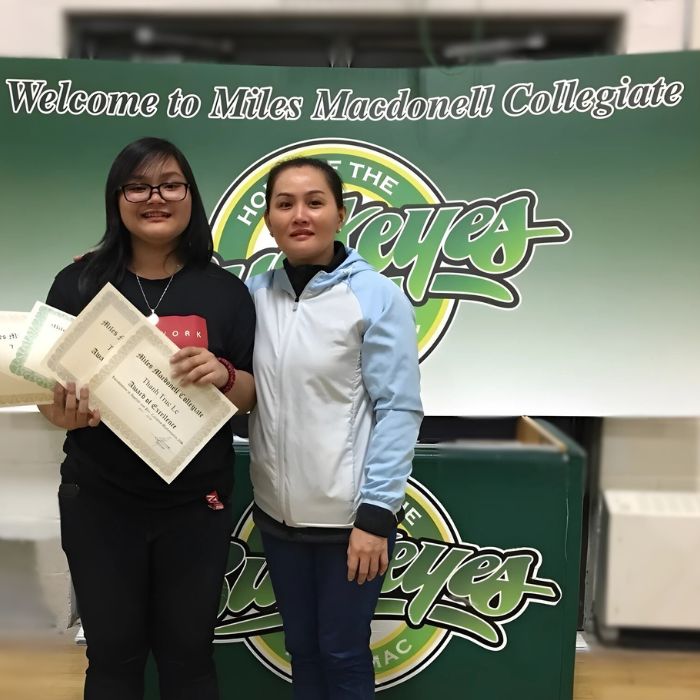
Lê Thanh Trúc, Student at Miles Macdonell Collegiate
“My family and I are deeply grateful to SIEC for not only securing my **Canada high school student visa** in Grade 10 but also for assisting my parents and siblings in obtaining their **visitor visas**. That was an invaluable gift.” — Lê Thanh Trúc, Student at **Miles Macdonell Collegiate** Secure Your Early High School (Secondary) […]
Phan Thị Ngọc Huỳnh, Former Student in Winnipeg
“The solid foundation provided by SIEC and Ms. Huong not only helped me realize my study abroad dream but also gave me the confidence to graduate, secure a stable job, and **settle permanently in Canada**.” — Phan Thị Ngọc Huỳnh, Former Student, currently working in **Winnipeg, Canada** Explore Your Study & Immigration Pathway in Canada […]
Hoàng Giang, Student at Edmonds College
“With her dedication and passion, Ms. Huong helped launch my **American dream**, opening up a vast world of opportunity and the chance to meet new friends.” — Hoàng Giang, Student at **Edmonds College** Explore More About Studying in the USA Spotlight on Edmonds College (Washington State) Gain in-depth knowledge about the programs, tuition fees, and […]
Khánh Lê, Student at LaSalle College
“Thank you to Ms. Huong and the SIEC team for their dedicated partnership and support, from my application phase until I was settled in Canada, helping me confidently pursue my dreams.” — Khánh Lê, Student at **LaSalle College** Explore Further Canada Study Opportunities Spotlight on LaSalle College Gain deeper insights into the programs, tuition fees, […]
Quỳnh Giao, Student at Red River Colleg
“She didn’t just stop at completing the application; she was an inspiration, a true motivator…” — Quỳnh Giao, Student at **Red River College** Continue Your Canada Study Abroad Journey Spotlight on Red River College Polytechnic (RRC Polytech) Discover the high-demand, **applied learning programs** at **Red River College** – one of the premier post-secondary institutions in […]