How to immigrate to Canada: The complete success roadmap
13/08/2026 Phong Nguyen
In the context of significant changes in Canadian immigration policy, learning **how to immigrate to Canada** systematically is crucial for those intending to live long-term in this country. The 2026–2027 period marks a major turning point as the Canadian government shifts away from mass immigration to focus on highly skilled individuals. Understanding the roadmap from studying to working and settling through priority sectors will help you save time and increase your success rate. This article provides a detailed look at **how to immigrate to Canada** through the path of education and professional skills.
Profile Requirements and Roadmap on How to Immigrate to Canada
To begin the journey of discovering **how to immigrate to Canada**, the first and most important step is to prepare a strong profile. Canada currently applies an immigration points system based on various factors such as age, education level, language proficiency, and work experience. For those choosing the study route, profile preparation should be done early to ensure compliance with the strict standards of Immigration, Refugees and Citizenship Canada (IRCC).
Education and Language Proficiency Requirements
Education is the foundation of the most effective way regarding **how to immigrate to Canada**. You need a high school or university degree from Vietnam with good academic results. Additionally, language proficiency (English or French) is a mandatory factor. IELTS Academic or PTE Core certificates are usually required with minimum scores for admission and later for permanent residency applications. Achieving high language scores will help you accumulate more points in the Comprehensive Ranking System (CRS).
Study Permit Application Process for International Students
A Study Permit is the first ticket in the roadmap of **how to immigrate to Canada** for international students. To obtain a Study Permit, you must receive an acceptance letter from a Designated Learning Institution (DLI). In the 2026–2027 period, this process requires an additional Provincial Attestation Letter (PAL) for most levels of study. Preparing a Study Permit application requires meticulousness, including a clear study plan and evidence of intent to return home or contribute to Canada after graduation.
Financial Requirements and New 2026 Work Regulations
One of the biggest changes in the strategy of **how to immigrate to Canada** during this period is the financial capacity requirement. The Canadian government has increased the required cost-of-living amount for international students to ensure they have enough financial resources to live without hardship. This helps students focus on their studies and accumulate professional knowledge rather than being overly pressured by finances.
Proof of Funds Under New Regulations
When researching **how to immigrate to Canada**, you should note that the amount required for proof of funds has significantly increased compared to previous years. In addition to the first year’s tuition, students must prove they have enough money for living expenses according to the latest IRCC regulations, which are usually updated annually based on the consumer price index. Holding a Guaranteed Investment Certificate (GIC) at a Canadian bank is the most common and safest way to fulfill this requirement.
24-Hour Weekly Off-Campus Work Rule for International Students
A key new point for international students is the regulation on work hours. Instead of unlimited hours or only 20 hours as before, new regulations allow international students to work off-campus for a maximum of 24 hours per week during academic sessions. This helps students earn extra income to cover living expenses while still ensuring time for their studies. Part-time work is also an opportunity to familiarize yourself with the Canadian work culture, creating a foundation for finding professional employment later.
Choosing Majors and Schools to Increase Success Rates
Choosing a major is no longer just a personal preference; it has become a strategic move in the modern approach of **how to immigrate to Canada**. The Canadian government is conducting category-based selection draws, focusing on sectors facing severe labor shortages. Choosing the right priority major will give you higher priority points and faster processing times.
Healthcare and Medical Sectors
The healthcare sector always tops the list of priority occupations. With an aging population, Canada needs a large number of nurses, personal care aides, psychologists, and medical technicians. Graduates in these fields often find employment immediately and receive maximum support in applying for permanent residency through Provincial Nominee Programs (PNP) or specialized Express Entry draws.
STEM and Information Technology Sectors
STEM, which includes Science, Technology, Engineering, and Mathematics, is the backbone of the Canadian economy. In the roadmap of **how to immigrate to Canada**, fields such as software development, data analysis, cybersecurity, and electrical engineering are always in high demand. Canada is striving to attract global talent in technology to compete with other powers, so the immigration opportunities for graduates in this group are immense.
Construction and Skilled Trades
To address the housing crisis, Canada is giving special priority to the construction sector. Trades such as electricians, carpenters, welders, construction managers, and civil engineers are on the list for the fastest ways to settle. Enrolling in vocational college programs or professional certifications in construction will open wide doors for young people with good health and practical skills.
Roadmap from Studying to Employment and Permanent Residency
To successfully execute the plan of **how to immigrate to Canada**, you need a clear roadmap from your time in school to official employment. This is a continuous process that requires careful preparation in terms of both legalities and professional skills.
Post-Graduation Work Permit (PGWP)
After completing a program at an eligible DLI, you can apply for a Post-Graduation Work Permit (PGWP). This is an indispensable stepping stone. The PGWP allows you to stay in Canada and work for any employer for up to 3 years, depending on the length of your study program. This work period is the key to accumulating Canadian Work Experience.
Accumulating Work Experience and Applying for Residency
Canadian work experience in priority sectors will qualify you for programs such as the Canadian Experience Class (CEC) or Provincial Nominee Programs (PNP). This is the most critical stage in the process of **how to immigrate to Canada**, where you transition from temporary resident status to Permanent Resident (PR). Working in your field of study and maintaining a clean work record will help this process go more smoothly.
Important Considerations for How to Immigrate to Canada in 2027
Moving into 2027, Canada’s immigrant selection criteria are expected to become even stricter and more focused on the actual needs of each locality. Understanding these regulations will help you adjust your plans to best fit the new trends.
Express Entry System and Category-Based Draws
The Express Entry system continues to be the primary tool for managing skilled immigration applications. However, instead of only inviting those with the highest scores, IRCC will focus on category-based draws for priority sectors like Healthcare, STEM, Construction, Agriculture, and Transport. Therefore, the smartest way regarding **how to immigrate to Canada** today is to focus on possessing the skills that the Canadian labor market truly needs.
Leveraging Provincial Nominee Programs (PNP)
Each province in Canada has different labor needs and their own Provincial Nominee Programs (PNP) to attract talent. Researching PNP options is a wise choice, especially in provinces that are growing rapidly but lack manpower. Some provinces have very favorable policies for international students who graduate locally and have a job offer from a business in the region.
Assessing Your Eligibility to Immigrate to Canada for 2027 Today
Preparing for a future in a new country is never easy, especially when immigration policies are constantly changing. To know exactly if you are suitable for the priority occupation immigration path, you need an in-depth and professional assessment. Do not let vague information affect the most important decision of your life. Start your journey by seeking reputable consulting firms for a detailed profile assessment. Identifying the right major and the right roadmap from the start will save you thousands of dollars and shorten the time it takes to reach your Canadian Permanent Resident card. This is the golden time to plan for your 2027 immigration goals.
If you are looking for the most solid path to build a career and a new life in the Great White North, contact the team of experts at SIEC immediately. We will help you analyze your profile, choose priority sectors, and build the most optimal study-to-residency roadmap for the 2026-2027 period.
Don’t miss the opportunity to become a Canadian Permanent Resident through the most accurate and updated advice. Register now to receive dedicated and professional support for your immigration journey at: https://siec.com.vn/dang-ky
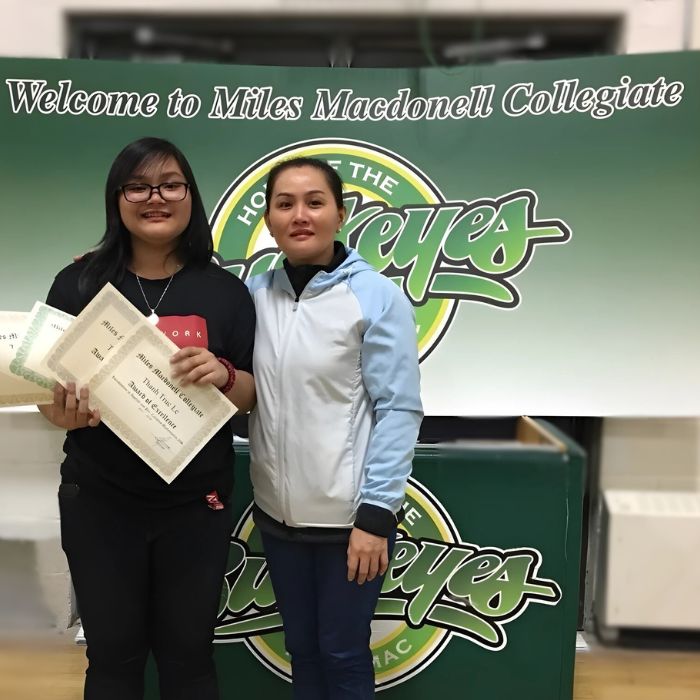
Lê Thanh Trúc, Student at Miles Macdonell Collegiate
“My family and I are deeply grateful to SIEC for not only securing my **Canada high school student visa** in Grade 10 but also for assisting my parents and siblings in obtaining their **visitor visas**. That was an invaluable gift.” — Lê Thanh Trúc, Student at **Miles Macdonell Collegiate** Secure Your Early High School (Secondary) […]
Phan Thị Ngọc Huỳnh, Former Student in Winnipeg
“The solid foundation provided by SIEC and Ms. Huong not only helped me realize my study abroad dream but also gave me the confidence to graduate, secure a stable job, and **settle permanently in Canada**.” — Phan Thị Ngọc Huỳnh, Former Student, currently working in **Winnipeg, Canada** Explore Your Study & Immigration Pathway in Canada […]
Hoàng Giang, Student at Edmonds College
“With her dedication and passion, Ms. Huong helped launch my **American dream**, opening up a vast world of opportunity and the chance to meet new friends.” — Hoàng Giang, Student at **Edmonds College** Explore More About Studying in the USA Spotlight on Edmonds College (Washington State) Gain in-depth knowledge about the programs, tuition fees, and […]
Khánh Lê, Student at LaSalle College
“Thank you to Ms. Huong and the SIEC team for their dedicated partnership and support, from my application phase until I was settled in Canada, helping me confidently pursue my dreams.” — Khánh Lê, Student at **LaSalle College** Explore Further Canada Study Opportunities Spotlight on LaSalle College Gain deeper insights into the programs, tuition fees, […]
Quỳnh Giao, Student at Red River Colleg
“She didn’t just stop at completing the application; she was an inspiration, a true motivator…” — Quỳnh Giao, Student at **Red River College** Continue Your Canada Study Abroad Journey Spotlight on Red River College Polytechnic (RRC Polytech) Discover the high-demand, **applied learning programs** at **Red River College** – one of the premier post-secondary institutions in […]