How much Canada settlement funds do you need to immigrate
12/08/2026 Phong Nguyen
In the context of Canada’s immigration policies undergoing strategic changes for the 2026–2027 period, financial and knowledge preparation is a key factor for success. One of the most common questions many people ask is how much money to bring to Canada for settlement to both comply with the law and ensure a stable life in the Maple Leaf country. Currently, the Canadian government does not limit the total amount of money you can bring into the country; however, there are strict regulations regarding declaration at the border. Understanding the requirements for **Canada settlement funds** will help you avoid unnecessary trouble with customs and build a more solid financial preparation for your long-term plan.
Legal regulations on how much money you can bring when settling in Canada
According to current regulations from the Canada Border Services Agency (CBSA), anyone entering Canada, whether for tourism or settlement, must declare if they are carrying cash or equivalent monetary instruments valued at $10,000 CAD or more. This directly answers the question regarding **Canada settlement funds** without worrying about a maximum limit. You can bring $20,000 CAD, $50,000 CAD, or more, but it is mandatory to fill out the customs declaration form truthfully.
Declaring a large amount of money does not mean you will be taxed or have the money confiscated. The purpose of this regulation is to prevent international money laundering and terrorist financing. If you fail to declare and are caught carrying more than $10,000 CAD, the money may be seized, and you may face fines ranging from $250 CAD to $5,000 CAD depending on the severity of the violation. Therefore, when researching **Canada settlement funds**, always remember the principle of honesty during entry procedures to protect your personal interests.
In addition to cash, forms such as traveler’s checks, bank drafts, or bonds are also included in the total value of the currency you carry. In the 2026–2027 period, as border controls become stricter, preparing documents to prove the source of large sums of money is a smart move. This not only helps explain the origin of your funds transparently but also builds a clean personal profile in the eyes of Canadian regulatory authorities.
Document conditions and new financial requirements for the 2026 – 2027 period
Entering 2026 and 2027, Canada is no longer encouraging mass immigration but is shifting its focus toward candidates with high skills and strong financial capacity. To obtain a Study Permit or other types of settlement visas, the requirements for financial proof have been significantly increased. Instead of just needing basic financial levels as before, international students and settlers need to prove they have enough ability to cover tuition fees and the high cost of living in major cities.
Specifically, the cost of living requirement in visa applications has increased to over $20,000 CAD per year for an individual, excluding tuition. This is an important figure to note when considering **Canada settlement funds** to ensure your application is approved. Depositing money into a GIC (Guaranteed Investment Certificate) account at Canadian banks is the most common and safest way to prove finances to the consular office.
Settlement applications during this period also require careful preparation regarding qualifications and work experience. Candidates with a clear study path combined with transparent financial capacity will have a significant advantage. When calculating your funds, you should also set aside a fee for administrative procedures, initial health insurance, and rent, which is currently trending upwards in Canada.
Study Permit requirements and financial roadmap
For those choosing the study-to-immigrate path, the Study Permit is the first key. To receive this permit, you must prove you have enough money for at least the first academic year. When looking into the necessary funds for study purposes, you should add the average tuition of about $15,000 to $30,000 CAD along with $20,635 CAD in living expenses according to the latest regulations. Preparing ample finances will help you focus entirely on your studies instead of the pressure of earning money as soon as you arrive.
New regulations on GIC financial proof
The Canadian government has adjusted GIC levels to reflect the current reality of living costs. Instead of the $10,000 CAD level seen for many years, this figure has doubled. Therefore, when planning your **Canada settlement funds**, you should prioritize completing this GIC payment early. This is not only a mandatory condition for a visa application but also an amount that the bank will return to you monthly to cover your living expenses during your first year in Canada.
24-hour weekly work regulation and economic benefits
Another important change that settlers and international students need to be aware of is the regulation on part-time work hours. Instead of allowing unlimited work or only 20 hours as before, the new regulation applies a limit of 24 hours per week during study terms. This directly affects the calculation of your backup funds, as part-time income will only support a portion of monthly expenses.
Working 24 hours per week helps international students gain extra income while still ensuring time for high-quality studies. With minimum wages in provinces like Ontario or British Columbia currently at a decent level, you can earn from $1,500 to $1,800 CAD per month. However, never assume that part-time wages can completely replace savings. When preparing your finances, always consider part-time income as a supplement for extracurricular activities or savings for the future.
Additionally, part-time work is a great opportunity to build networks and accumulate work experience in Canada. For priority occupations, part-time work in the right field will be a huge plus when you apply for permanent residency later. Understanding **Canada settlement funds** and how to manage cash flow from part-time work will help you maintain a healthy financial foundation throughout your settlement process.
Canada settlement in priority sectors instead of mass immigration
The 2026–2027 period marks a strong shift in Canada’s immigration policy. Instead of opening doors to everyone, the government is focusing on category-based draws. This means that if you belong to a priority occupation group, your chances of receiving an Invitation to Apply (ITA) for permanent residency will be much higher. When considering your financial path, you should also invest in studying sectors that are facing severe labor shortages, such as Healthcare, STEM, and Construction.
Choosing a priority sector not only shortens the settlement roadmap but also ensures a high starting salary after graduation. People working in Healthcare, STEM (Science, Technology, Engineering, Mathematics), and Construction often have stable incomes, helping to solve the long-term financial equation. At that point, the initial question of how much money to bring will no longer be a heavy burden because the potential for return on investment and accumulation in Canada is very positive.
Healthcare and social care sector
Canada is facing an aging population, leading to a huge demand for nurses, doctors, and personal support workers. This is a sector that is always at the top of the priority list for settlement. If you choose to study in this field, you will not only be supported with visa procedures but also have access to many attractive scholarships, helping to reduce the pressure regarding the initial financial requirements.
STEM and digital transformation sector
With the goal of becoming a technology powerhouse, Canada is scouting for software engineers, data analysts, and mechanical engineers. Settlement programs for the STEM block often have lower score requirements in the Express Entry system. Investing in a quality STEM course is a smart way to optimize the money you bring. Instead of worrying about whether you have enough, focus on improving your professional skills to earn a thousand-dollar salary right after graduation.
Construction and infrastructure sector
To address the housing crisis, Canada needs a large volume of human resources in the construction industry, from project managers to skilled tradespeople. This is a sector with very fast settlement processing speeds in many provinces. When calculating your budget, set aside a portion for necessary local professional certifications so you can start working immediately with an attractive income.
How to choose majors and schools to optimize settlement potential
Choosing the right school and major is the factor that decides 80% of the success of your settlement roadmap. You should prioritize schools on the DLI (Designated Learning Institutions) list that offer Post-Graduation Work Permit (PGWP) programs. When researching costs, you need to balance tuition fees and the school’s geographical location. Provinces like Saskatchewan, Manitoba, or the Atlantic regions often have lower living costs and easier Provincial Nominee Program (PNP) policies compared to Ontario or British Columbia.
Choose majors that you are passionate about but that also fall within the priority list of that province. For example, if you choose to study technology in a province that is pushing for digital transformation, your chances of being sponsored for settlement will be very high. Planning your finances must go hand in hand with careful research of the labor market in your intended place of residence. A school with good corporate links will help you easily find a job in your field after graduation.
Additionally, you should consider Co-op programs (paid internships). This is a great way for you to study and work at the same time while earning extra income to pay for life. When participating in a Co-op, the money you earn will help you manage your financial situation more flexibly, as you already have a source of income during your studies.
Roadmap from study to work and Canada settlement in 2027
The ideal settlement roadmap in the 2026–2027 period starts with choosing the right priority occupation, studying seriously, taking advantage of 24 hours of part-time work per week to gain experience, and then applying for a PGWP to work officially. Throughout this process, financial management plays a foundational role. You need to know clearly how much **Canada settlement funds** are required to maintain your life until you have a stable income from professional work.
After having 1 to 2 years of work experience in Canada in fields like Healthcare, STEM, or Construction, you will be eligible to apply for permanent residency through Express Entry or provincial nomination programs. At this point, the money you initially brought has served its purpose in helping you overcome the most difficult transition phase. Understanding the requirements and using your funds wisely will help you realize your dream of becoming a Canadian citizen sustainably.
Settlement is not a casual stroll but a campaign that requires careful preparation in both knowledge and finances. With new policies focusing on the quality of human resources, Canada remains a land of promise for those who are well-prepared. Start by thoroughly understanding the regulations and choosing a career path that best fits the trends of 2027.
Your journey to conquer Canada will become smoother than ever if you have the companionship of experienced experts. Don’t let questions about finances or documentation become a barrier to the future of you and your family. Proactively seek in-depth advice to seize the latest settlement opportunities in priority occupations.
Evaluating your personal profile right now is an important step to determine how much money you need to prepare and which roadmap is the shortest to achieve a green card. We are ready to help you analyze your chances of success in detail based on your current capabilities and finances.
Contact the professional consulting team at SIEC now for a completely free assessment of your 2027 Canada settlement potential. We will provide you with a detailed roadmap from choosing Healthcare, STEM, or Construction majors to completing the most optimal financial profile.
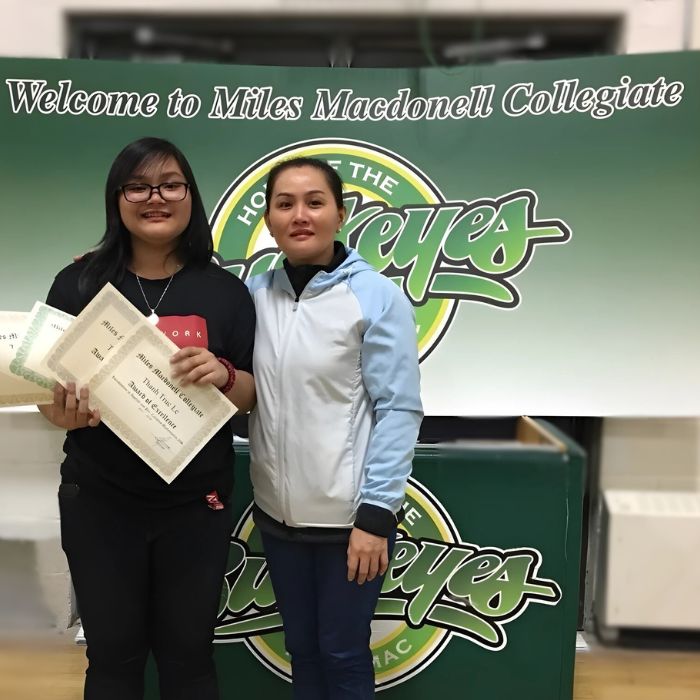
Lê Thanh Trúc, Student at Miles Macdonell Collegiate
“My family and I are deeply grateful to SIEC for not only securing my **Canada high school student visa** in Grade 10 but also for assisting my parents and siblings in obtaining their **visitor visas**. That was an invaluable gift.” — Lê Thanh Trúc, Student at **Miles Macdonell Collegiate** Secure Your Early High School (Secondary) […]
Phan Thị Ngọc Huỳnh, Former Student in Winnipeg
“The solid foundation provided by SIEC and Ms. Huong not only helped me realize my study abroad dream but also gave me the confidence to graduate, secure a stable job, and **settle permanently in Canada**.” — Phan Thị Ngọc Huỳnh, Former Student, currently working in **Winnipeg, Canada** Explore Your Study & Immigration Pathway in Canada […]
Hoàng Giang, Student at Edmonds College
“With her dedication and passion, Ms. Huong helped launch my **American dream**, opening up a vast world of opportunity and the chance to meet new friends.” — Hoàng Giang, Student at **Edmonds College** Explore More About Studying in the USA Spotlight on Edmonds College (Washington State) Gain in-depth knowledge about the programs, tuition fees, and […]
Khánh Lê, Student at LaSalle College
“Thank you to Ms. Huong and the SIEC team for their dedicated partnership and support, from my application phase until I was settled in Canada, helping me confidently pursue my dreams.” — Khánh Lê, Student at **LaSalle College** Explore Further Canada Study Opportunities Spotlight on LaSalle College Gain deeper insights into the programs, tuition fees, […]
Quỳnh Giao, Student at Red River Colleg
“She didn’t just stop at completing the application; she was an inspiration, a true motivator…” — Quỳnh Giao, Student at **Red River College** Continue Your Canada Study Abroad Journey Spotlight on Red River College Polytechnic (RRC Polytech) Discover the high-demand, **applied learning programs** at **Red River College** – one of the premier post-secondary institutions in […]