High school in Canada: Study Pathways and Entry Requirements
22/05/2026 Phong Nguyen
In the context of Canada’s immigration policies undergoing significant adjustments toward selecting high-quality human resources, attending **High school in Canada** is becoming a strategic choice for Vietnamese students. Starting the journey of studying abroad from grade 10, 11, or 12 not only helps students integrate early into an international educational environment but also creates a solid foundation for accessing priority sectors for immigration. The 2026-2027 period marks a strong shift in how the Canadian government reviews applications, prioritizing candidates with a consistent study path targeting sectors with severe labor shortages.
This article will provide a detailed look at the latest regulations, from financial requirements to career roadmaps, to optimize immigration opportunities after graduation.
1. Outstanding benefits of attending High school in Canada during 2026-2027
Choosing to attend High school in Canada provides an excellent language advantage. Between the ages of 15 and 18, a student’s ability to absorb a foreign language and adapt to a new culture is at its peak. Instead of struggling with academic English exams after graduating from Grade 12 in Vietnam, students studying in Canada from high school are trained in a native environment, making it much easier to achieve high scores in university entrance exams.
The Canadian education system emphasizes developing critical thinking and teamwork skills, which are key factors for success in higher education.
Another major plus is the diversity in subject selection. Students are free to choose subjects that align with their interests and future career goals, such as computer science, graphics, business, or healthcare. This helps them identify early objectives when attending high school, thereby preparing them best for priority immigration fields such as Healthcare, STEM, and Construction.
Having a high school diploma from Canada (such as Ontario’s OSSD or British Columbia’s Dogwood Diploma) also makes applications to prestigious universities much more competitive compared to students applying from Vietnam.
Additionally, the high school pathway helps students accumulate extra points for the future immigration process. Long-term residence and study in Canada help them understand the laws and culture and build a necessary social network. These are intangible but extremely important values when they enter the competitive labor market in the Great White North in the coming years.
2. Document requirements and Study Permit procedures for High school in Canada
To begin the journey of attending **High school in Canada**, students need to prepare complete academic records. Typically, public and private high schools in Canada require transcripts from the last two to three years with an average grade of Fair or higher. Although many schools do not mandate an IELTS certificate at the time of entry for Grade 10 or 11, having a basic English foundation will make the interview and Study Permit application process smoother.
For the high school study route, demonstrating a clear study purpose is a prerequisite for being granted a visa.
The Study Permit application process for high school students has some differences compared to university students. One of the most important documents is the Letter of Acceptance (LOA) from a Designated Learning Institution (DLI). Additionally, since students under 18 are considered minors, the application must include custodianship documents.
The custodian must be a Canadian citizen or permanent resident living near the school area. This is a mandatory regulation to ensure the safety and rights of students when attending high school without their parents accompanying them.
In the 2026-2027 phase, Immigration, Refugees and Citizenship Canada (IRCC) continues to tighten the quality control of applications. Students need to ensure the authenticity of all documents and have a logical study plan. This plan should clearly show that high school is a stepping stone to higher education in fields that Canada is encouraging.
Preparing documents early, 6 to 9 months before the intake, is sincere advice to avoid unnecessary errors and to timely supplement documents if requested by the consulate.
3. Updated financial requirements and the 24-hour work rule per week
One of the most important changes affecting the **High school in Canada** pathway is the financial capacity requirement. Starting in 2024 and expected to continue adjusting through 2026-2027, the level of financial proof for living expenses has increased significantly. Instead of the old rate, students and families need to prove they have enough, approximately 20,635 CAD per year for living costs, excluding tuition and insurance.
This aims to ensure that students have sufficient resources to focus on their studies without being weighed down by economic pressure.
Families can prove finances through savings books, parents’ monthly income, or other valuable assets. Participating in the Guaranteed Investment Certificate (GIC) program is also a popular way to increase the visa approval rate for high school studies. This amount will be disbursed monthly by a bank in Canada for the student to pay living expenses, giving families more peace of mind regarding their children’s spending management while away from home.
Regarding work regulations, the Canadian government has officially applied a 24-hour per week work limit during academic terms for international students. However, for high school students, this regulation should be understood correctly. Students under 18 are often restricted from working in certain positions and must prioritize completing their high school program.
This 24-hour rule will truly be significant when they transition to college or university. Part-time work not only helps cover part of the costs but is also an opportunity for students to accumulate practical work experience and understand the corporate culture in Canada, thereby better preparing for a long-term career.
4. How to choose majors and schools when studying in Canada from high school for favorable immigration
Selecting a school for **High school in Canada** should be based on long-term career orientation rather than just reputation or geographic location. Canada is implementing immigration policies focused on priority occupational groups. Therefore, students should look for high schools with strengths in natural sciences or programs linked to colleges and universities training in Healthcare, STEM (Science, Technology, Engineering, Mathematics), and Construction.
The Healthcare sector, including nursing, lab technicians, or personal support workers, is always on the top priority list due to Canada’s aging population. If intending to pursue this field, high school students should focus on excelling in Biology and Chemistry starting from Grade 10. Similarly, for the STEM group, they need a solid foundation in Mathematics and Physics.
Provinces like Ontario or British Columbia are major technology hubs, home to many leading technical training schools, very suitable for students passionate about information technology or engineering.
Furthermore, the Construction industry is in dire need of human resources to meet the high housing demand in Canada. Jobs such as construction project management, civil engineering, or electrical and plumbing trades have very high immigration opportunities. When choosing a high school, families should consider provinces with open immigration policies for skilled labor, such as the Atlantic provinces or central provinces like Manitoba and Saskatchewan.
Studying in these areas helps students gain extra points when applying for permanent residency through Provincial Nominee Programs (PNP) later on.
4.1. Prioritizing Healthcare and Social Care
This sector not only provides a stable income but is also a golden ticket to immigration. High school students can start by participating in volunteer clubs at hospitals or elderly care centers to enhance their profiles. When transitioning to university, they will have a major advantage when applying for programs like Nursing or Health Sciences.
4.2. Catching the technology trend with STEM fields
Canada is investing heavily in artificial intelligence and software development. Students with a talent for logic and programming should choose high schools with Advanced Placement (AP) programs in Mathematics and Computer Science. This is a perfect stepping stone to enter top technology institutes, where employers are always ready to scout students even before they graduate.
4.3. Opportunities from Construction and Infrastructure
With urban expansion plans, the construction industry in Canada needs a large number of qualified personnel. High school students interested in this field can choose vocational or technical pathways after graduation. This is the shortest path to stable employment and meeting the Canadian government’s skilled immigration standards.
5. Study and work roadmap to achieve Canada immigration goals in 2027
To achieve the goal of immigration after completing **High school in Canada**, students need a systematic and consistent roadmap. After graduating from Grade 12, the next step is to choose a college program of at least two years or a university program of four years at reputable educational institutions. Choosing the right major from the priority list (Healthcare, STEM, Construction) will help students easily find suitable jobs after graduation.
This is a prerequisite for applying for a Post-Graduation Work Permit (PGWP).
During university or college, students should make the most of paid internship programs (Co-op). This is an opportunity to build practical work experience in Canada, which immigration programs like Express Entry or the Provincial Nominee Program (PNP) highly value. Work experience in priority sectors will make their profiles stand out much more than candidates in other general fields.
By 2027, as category-based selection immigration policies become more common, possessing experience in Healthcare or STEM will be a massive advantage.
After gaining one to two years of professional work experience, students can start applying for Permanent Residency (PR). The journey from high school to immigration typically lasts from 6 to 8 years, but this is the safest and most sustainable path. Investing early from the high school level helps them not only have a degree but also the mindset, language, and local network—factors that make the process of becoming a Canadian citizen smoother and faster.
6. Assess your Canada 2027 immigration potential with experts
Canada’s immigration policy is always fluctuating, especially the regulations on priority immigration for 2026-2027. Therefore, assessing your profile right now is extremely necessary for families intending to send their children to high school. A detailed plan from choosing the province and school to career orientation will help save time and costs while maximizing the chances of success.
Starting your studies from high school is a long-term investment decision for the future. To avoid missing golden opportunities and to stay updated on changes in immigration law, parents and students should seek professional advice. We will help you analyze the strengths and weaknesses of your profile, thereby providing the most optimal study roadmap, closely following the Healthcare, STEM, and Construction groups to aim for a certain immigration goal in 2027.
Don’t let policy changes be a barrier to your child’s dream of reaching out to the world. Be proactive in learning and preparing today so that the high school journey becomes a solid launchpad for their future career and life in the land of the maple leaf. Immigration opportunities are always open to those who prepare thoroughly and go in the right direction from the very first steps.
The journey to conquer the Canadian permanent resident card begins with the decision to invest in high school education. Let us accompany you in building a safe, effective high school study roadmap that anticipates the latest immigration trends. Contact us now for an assessment of your Canada 2027 immigration potential and to receive the most valuable advice for your application.
SIEC’s team of experienced experts is always ready to listen and answer all parents’ questions about the study and immigration path in Canada. We are committed to providing the most updated, accurate, and transparent information so that families can have total peace of mind when entrusting their children’s future.
Take the first step for your future immigration plan by contacting SIEC for in-depth advice on high school programs in Canada. We will support you from school selection and visa application to long-term career planning after graduation.
Are You Ready to Breakthrough Your Global Career with SIEC?
Don’t let your prestigious degree just stay on paper. Let SIEC experts advise you on a study roadmap combined with a job orientation strategy starting today!
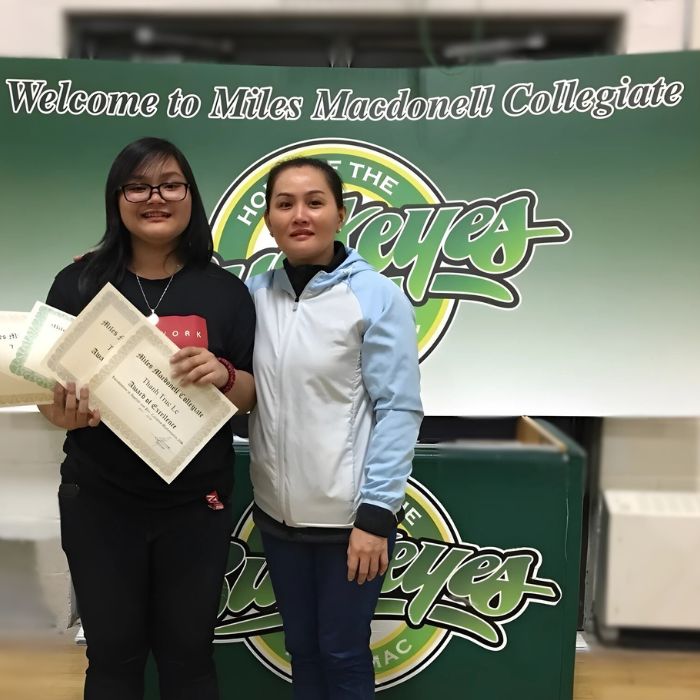
Lê Thanh Trúc, Student at Miles Macdonell Collegiate
“My family and I are deeply grateful to SIEC for not only securing my **Canada high school student visa** in Grade 10 but also for assisting my parents and siblings in obtaining their **visitor visas**. That was an invaluable gift.” — Lê Thanh Trúc, Student at **Miles Macdonell Collegiate** Secure Your Early High School (Secondary) […]
Phan Thị Ngọc Huỳnh, Former Student in Winnipeg
“The solid foundation provided by SIEC and Ms. Huong not only helped me realize my study abroad dream but also gave me the confidence to graduate, secure a stable job, and **settle permanently in Canada**.” — Phan Thị Ngọc Huỳnh, Former Student, currently working in **Winnipeg, Canada** Explore Your Study & Immigration Pathway in Canada […]
Hoàng Giang, Student at Edmonds College
“With her dedication and passion, Ms. Huong helped launch my **American dream**, opening up a vast world of opportunity and the chance to meet new friends.” — Hoàng Giang, Student at **Edmonds College** Explore More About Studying in the USA Spotlight on Edmonds College (Washington State) Gain in-depth knowledge about the programs, tuition fees, and […]
Khánh Lê, Student at LaSalle College
“Thank you to Ms. Huong and the SIEC team for their dedicated partnership and support, from my application phase until I was settled in Canada, helping me confidently pursue my dreams.” — Khánh Lê, Student at **LaSalle College** Explore Further Canada Study Opportunities Spotlight on LaSalle College Gain deeper insights into the programs, tuition fees, […]
Quỳnh Giao, Student at Red River Colleg
“She didn’t just stop at completing the application; she was an inspiration, a true motivator…” — Quỳnh Giao, Student at **Red River College** Continue Your Canada Study Abroad Journey Spotlight on Red River College Polytechnic (RRC Polytech) Discover the high-demand, **applied learning programs** at **Red River College** – one of the premier post-secondary institutions in […]