Expert Tips for a Canada Student Visa and PR Opportunities
28/04/2026 Phong Nguyen
The journey to conquer the dream of studying in the Land of the Maple Leaf during the 2026–2027 period requires more thorough preparation than ever. With landmark changes from Immigration, Refugees and Citizenship Canada (IRCC), obtaining a Canada student visa is no longer just about attending school but is a long-term career strategy. This article provides a comprehensive look at the latest regulations, helping you optimize your chances of success.
1. What is a Canada student visa and Important Updates for 2026
Before starting the process, students and parents need to clearly understand what a Canada student visa is. In reality, this is the visa stamped in your passport that allows you to enter Canada for the purpose of studying. However, to stay and study legally, you also need a Study Permit.
In 2026, the Canadian government continues to apply application caps to ensure the quality of education and social infrastructure.
The biggest difference in the 2026–2027 period is the clear priority given to training programs in sectors facing labor shortages. Applying for a Canada student visa is no longer for all fields in a generic way. Instead, students choosing Healthcare, STEM, and Construction will receive maximum support in procedures as well as post-graduation immigration opportunities.
Additionally, the Provincial Attestation Letter (PAL) process remains a mandatory requirement for most levels of study. This requires candidates to have a plan to submit applications early to secure spots at reputable schools. The 2026 visa process aims for transparency and quality, eliminating cases of studying abroad without clear career goals.
2. Application Requirements and Latest Study Permit Regulations
A Canada student visa application in 2026 requires strict preparation of both academic records and study plans. Candidates need to prove their genuine academic purpose through a solid Letter of Explanation. This is the key factor for consular officers to evaluate whether you truly understand the requirements and have serious intentions.
Academically, top universities and colleges require a Grade Point Average (GPA) of 7.0 or higher. Language proficiency requirements have also been raised, with a minimum IELTS Academic score usually being 6.0 or 6.5 depending on the level of study. Possessing a good English certificate not only makes your application stand out but also serves as the foundation for keeping up with intensive training programs in Canada.
Document Type
2026 Detailed Requirements
Passport
Valid for at least 6 months with blank pages
Letter of Acceptance (LOA)
From a recognized Designated Learning Institution (DLI)
Provincial Attestation Letter (PAL)
Mandatory for College and University levels
Language Certificate
IELTS 6.0+ or PTE Academic 60+
Police Clearance Certificate
Must be clean, with no criminal record
The Study Permit will be issued at the port of entry when you first arrive with your visa. This permit clearly stipulates the duration of your stay, your level of study, and accompanying conditions. You must always maintain an active academic status to avoid affecting your residency rights and future renewal applications.
3. New Financial Requirements and 24-Hour Weekly Work Regulation
One of the most notable changes when researching the Canada student visa is the financial threshold. Since 2024, and continuing at a high level in 2026, international students must prove financial capacity equivalent to the updated cost of living index. This ensures that students do not fall into hardship while living in major cities.
Specifically, in addition to the first year’s tuition, you need to prepare living expenses of approximately 20,635 CAD for a single person. If accompanied by family members, this figure increases significantly. Applying via the direct financial proof route requires savings books, property documents, and the monthly income of the sponsor to be extremely transparent and persuasive.
Regarding off-campus work regulations, the Canadian government has officially applied a 24-hour per week limit for international students during regular academic terms. This is an adjustment after a period of allowing unlimited work hours. This regulation helps students focus maximum effort on their studies while still being able to cover part of their expenses.
When holding a Canada student visa, you must strictly adhere to the working hour limits to avoid the risk of deportation or having your Study Permit extension denied.
During official breaks such as summer or winter holidays, students are still allowed to work full-time. This is a great opportunity to accumulate practical work experience in Canada. Understanding this regulation will help you balance your finances and time most scientifically.
4. How to Choose Majors and Schools to Optimize Immigration Chances
Immigration is no longer a wide-open path for all professions as it once was. In the 2026–2027 migration strategy, Canada focuses on attracting human resources in essential fields. Therefore, when applying for a visa, choosing the right field of study will determine 70% of your future immigration potential.
The top priority groups include Healthcare, STEM (Science, Technology, Engineering, Mathematics), and Construction.
Healthcare fields such as Nursing, Dental Assistant, or Rehabilitation are always in a state of severe labor shortage across all provinces. Graduates in these fields often receive job offers immediately. This is a huge bonus factor when transitioning from a student status to Permanent Residency (PR).
Schools training in these sectors also often have close links with local hospital systems.
The STEM and Construction sectors are no exception. With the boom of artificial intelligence and the need for infrastructure expansion, software engineers, data specialists, and construction managers are highly sought after. When explaining your career path, emphasize the alignment between your abilities and the needs of the Canadian labor market to increase your visa approval rate.
Healthcare
Nursing, Medical Laboratory Technician, Elderly Care.
STEM
Information Technology, Cybersecurity, Mechanical Engineering, Data Analysis.
Construction
Construction Project Management, Electrical Engineering, Skilled Carpentry.
When choosing a school, you must also pay attention to the DLI (Designated Learning Institutions) list permitted to issue PGWP (Post-Graduation Work Permit). Not every school that allows you to get a visa offers the opportunity to stay and work. SIEC encourages you to choose public colleges or reputable training programs in provinces with favorable immigration policies like Manitoba, Saskatchewan, or the Atlantic provinces.
5. Roadmap from Canada Student Visa to Employment and PR 2027
After completing your study program with a Canada student visa, the next step is to apply for a Post-Graduation Work Permit (PGWP). The duration of the PGWP usually corresponds to the length of the course, up to a maximum of 3 years. This is the golden time for you to accumulate work experience in Canada – a prerequisite for applying for immigration through programs like Express Entry or PNP (Provincial Nominee Program).
In 2027, invitation draws for immigration are expected to continue focusing on candidates with experience in priority sectors. If you have graduated in STEM or Healthcare, your CRS (Comprehensive Ranking System) score will be prioritized in specialized selection rounds. Understanding how to use your study period as a stepping stone will help you shorten the time to becoming a permanent resident.
A typical roadmap includes: Studying (1-4 years) -> Working with PGWP (1-3 years) -> Applying for PR. During the work process, you should proactively improve your French proficiency or participate in community activities to increase your profile score. Studying abroad is the key that opens the door to becoming a global citizen in one of the most livable countries in the world.
Settling under the high-skilled category in priority industries is the inevitable trend of the 2026–2027 period. Canada is no longer prioritizing quantity but shifting focus to quality and the actual contribution of immigrants to the economy. Therefore, prepare a meticulous application tied to a long-term career plan in provinces hungry for labor.
6. Assess Your Canada Immigration Potential for 2027 with SIEC
Preparing a Canada student visa application on your own can be difficult due to frequently changing regulations. At SIEC, we provide in-depth consulting services to help you assess your chances of visa approval and immigration based on your actual profile. We understand the nuances of the process and how to optimize each individual’s roadmap according to the Healthcare, STEM, and Construction groups.
With a team of experienced experts and continuous updates on 2026–2027 immigration data, SIEC is committed to bringing transparent and effective solutions. We will support you from choosing a school and major, proving finances, until you hold the visa in your hand and stabilize your life in the Land of the Maple Leaf.
Don’t let policy changes be a barrier to your future. Let SIEC accompany you in building a sustainable and successful study-to-immigration roadmap. Contact us today for a detailed profile assessment and to receive the most valuable advice for your journey.
Start your journey to conquer your future in Canada today by connecting with our team of leading immigration consultants. We are ready to answer all questions about conditions, processes, and the latest priority immigration programs for 2027.
Don’t miss the opportunity to own a ticket to immigration through a quality education. Register for in-depth consultation and free profile assessment at SIEC to realize your Canadian dream: https://siec.com.vn/dang-ky
Are You Ready to Breakthrough to a Global Career with SIEC?
Don’t let your prestigious degree just stay on paper. Let SIEC experts advise you on a study abroad roadmap combined with a strategic career orientation starting today!
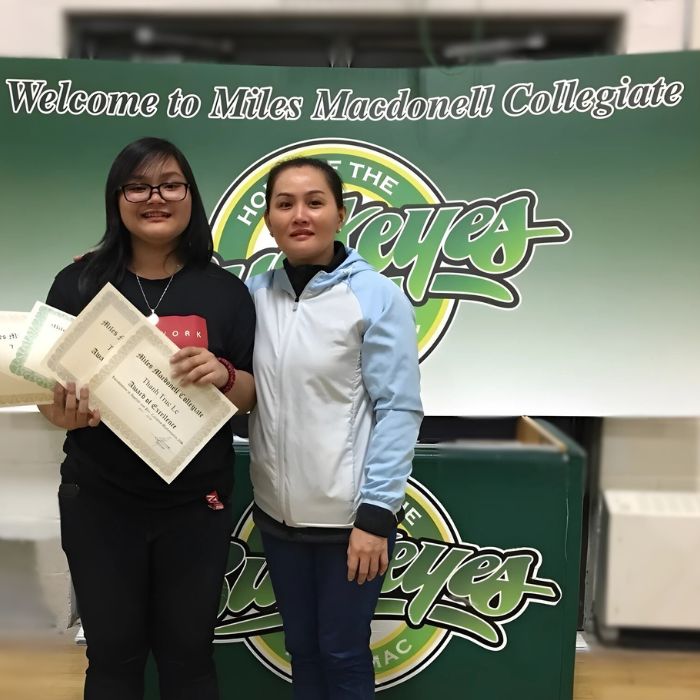
Lê Thanh Trúc, Student at Miles Macdonell Collegiate
“My family and I are deeply grateful to SIEC for not only securing my **Canada high school student visa** in Grade 10 but also for assisting my parents and siblings in obtaining their **visitor visas**. That was an invaluable gift.” — Lê Thanh Trúc, Student at **Miles Macdonell Collegiate** Secure Your Early High School (Secondary) […]
Phan Thị Ngọc Huỳnh, Former Student in Winnipeg
“The solid foundation provided by SIEC and Ms. Huong not only helped me realize my study abroad dream but also gave me the confidence to graduate, secure a stable job, and **settle permanently in Canada**.” — Phan Thị Ngọc Huỳnh, Former Student, currently working in **Winnipeg, Canada** Explore Your Study & Immigration Pathway in Canada […]
Hoàng Giang, Student at Edmonds College
“With her dedication and passion, Ms. Huong helped launch my **American dream**, opening up a vast world of opportunity and the chance to meet new friends.” — Hoàng Giang, Student at **Edmonds College** Explore More About Studying in the USA Spotlight on Edmonds College (Washington State) Gain in-depth knowledge about the programs, tuition fees, and […]
Khánh Lê, Student at LaSalle College
“Thank you to Ms. Huong and the SIEC team for their dedicated partnership and support, from my application phase until I was settled in Canada, helping me confidently pursue my dreams.” — Khánh Lê, Student at **LaSalle College** Explore Further Canada Study Opportunities Spotlight on LaSalle College Gain deeper insights into the programs, tuition fees, […]
Quỳnh Giao, Student at Red River Colleg
“She didn’t just stop at completing the application; she was an inspiration, a true motivator…” — Quỳnh Giao, Student at **Red River College** Continue Your Canada Study Abroad Journey Spotlight on Red River College Polytechnic (RRC Polytech) Discover the high-demand, **applied learning programs** at **Red River College** – one of the premier post-secondary institutions in […]