Essential Guide to Study in Canada immigration Pathways
06/05/2026 Phong Nguyen
In the context of Canada’s strategic adjustments to its migration policies, the **Study in Canada immigration** pathway for the 2026–2027 period is no longer a one-size-fits-all route for all professions. The Canadian government is currently prioritizing candidates with high-level professional skills in sectors facing severe labor shortages. Understanding the new regulations regarding finances, part-time work hours, and selecting the right priority majors will be the key to the success of your settlement plan.
1. Application Requirements and Study Permit Procedures for 2026-2027
To begin your **Study in Canada immigration** journey, the first and most crucial step is preparing a complete Study Permit application according to the latest regulations. Since 2024, Canada has implemented a cap on the number of Study Permit applications and requires a Provincial Attestation Letter (PAL) for most levels of study. This requires international students to be thoroughly prepared and submit their applications much earlier than before.
Academically, Canadian institutions require candidates to have at least an above-average academic record, usually with a minimum GPA of 6.5. However, to increase competitiveness in the study in Canada and immigration pathway, you should aim for a GPA of 7.5 or higher. Language proficiency is also a key factor, with IELTS requirements typically ranging from 6.0 to 6.5 depending on the level and field of study.
Particularly for priority sectors, language requirements may be higher to ensure the ability to absorb professional knowledge and communicate effectively in the future workplace.
Study Permit applications now also place more emphasis on the Study Plan. You need to clearly state the reasons for choosing Canada, the school, and especially how that major contributes to your future career. For the goal of study in Canada and immigration, a logical, coherent study plan that demonstrates a connection between the major and the actual needs of the Canadian labor market will help achieve a higher visa approval rate.
1.1. Provincial Attestation Letter (PAL) Requirements
A PAL is a new mandatory document that students must obtain before applying for a Study Permit. Each province has its own process for issuing PALs, usually after you receive a Letter of Acceptance from a Designated Learning Institution (DLI). Managing the number of PALs helps Canada control the quality of education and ensures that international students are distributed across regions with economic development needs.
1.2. Medical Examination and Police Certificate Regulations
To ensure public health and security, all candidates for study in Canada and immigration must undergo a background check and a medical examination at designated facilities. Any criminal record or serious health issues that could place an excessive burden on the Canadian healthcare system may lead to an application refusal.
2. New Financial Requirements and 24-Hour Weekly Work Rule
One of the biggest changes affecting the study in Canada and immigration pathway in 2026-2027 is the financial capacity requirement. The Canadian government has significantly increased the proof of funds for the Cost of Living to ensure students can afford their expenses without over-relying on part-time work. The current requirement has doubled compared to the old level, reflecting the reality of living costs in Canada’s major cities.
Specifically, in addition to the first year’s tuition, students need to prove they have at least approximately 20,635 CAD in their account for personal living expenses. If accompanied by family members, this figure will increase accordingly. This is a challenge but also an assurance for students to focus on their studies, thereby improving academic results and creating a good foundation for a long-term study in Canada and immigration pathway.
Regarding part-time work regulations, after a period of allowing unlimited work hours, Canada has officially applied a new rule: international students are allowed to work a maximum of 24 hours per week during academic sessions. This regulation aims to balance earning extra income with ensuring educational quality. During scheduled breaks or summer holidays, students are still permitted to work full-time.
Compliance with the allowed work hours is extremely important, as any violation could affect your residency status and future immigration opportunities.
2.1. Actual Living Costs in Different Provinces
Although the proof of funds amount is fixed by federal regulations, actual costs vary across regions. For example, costs in Toronto (Ontario) or Vancouver (British Columbia) are usually higher than in prairie provinces like Saskatchewan or Manitoba. Choosing a province with reasonable costs is also a smart strategy when executing a study in Canada and immigration plan.
2.2. Importance of Personal Financial Management
With rising living costs, students need good financial management skills. Working 24 hours per week should only be considered a supplementary income rather than the primary source. Focusing on your studies to graduate on time with good results will help you save on retake costs and quickly enter the official labor market.
3. How to Choose Majors and Schools to Optimize **Study in Canada immigration**
Choosing a major is no longer just based on personal preference but must be based on the list of priority occupations provided by the Canadian Government. To optimize study in Canada and immigration, students should aim for fields with high labor demand that are prioritized in Express Entry Category-based selection draws or Provincial Nominee Programs (PNP).
School selection must also consider the list of Designated Learning Institutions (DLI) that are eligible for the Post-Graduation Work Permit (PGWP). Since 2025, PGWP regulations have become stricter, especially for programs at private colleges with licensing agreements. Therefore, choosing public institutions or programs closely linked to local labor needs is the safest path for the goal of study in Canada and immigration.
Additionally, the geographical location of the school plays an important role. Provinces like New Brunswick, Nova Scotia, or areas under the Rural and Northern Immigration Pilot (RNIP) often have specific incentive policies for local graduates. If you choose to study in these regions, your chances of obtaining Permanent Residency (PR) will be higher, and the waiting time may be shorter than in overcrowded cities.
3.1. Checking Program Eligibility for PGWP
Before paying tuition, you must carefully check if your study program is on the list eligible for a PGWP. Especially with new regulations, only majors in priority groups ensure the ability to receive a long-term work permit after graduation, which is an indispensable stepping stone for study in Canada and immigration.
3.2. Prioritizing Schools with Co-op Internship Programs
Co-op programs (work-integrated learning) provide students with practical work experience in Canada during their studies. This is a huge advantage when applying for jobs after graduation, as Canadian employers highly value local work experience. This experience also helps enhance your profile when you apply for immigration through skilled worker streams.
4. Focus on Priority Sectors: Healthcare, STEM, and Construction
In the 2026-2027 period, the **Study in Canada immigration** strategy will revolve around three main pillars: Healthcare, STEM (Science, Technology, Engineering, Mathematics), and Construction. These are the fields where Canada is facing serious labor shortages due to an aging population and high demand for infrastructure and housing development.
The Healthcare sector includes professions such as nursing, personal care assistants, lab technicians, and pharmacists. The Canadian government frequently holds specific immigration draws for this sector with lower points requirements compared to other groups. Studying healthcare not only brings an attractive income but also ensures a solid path for the study in Canada and immigration journey.
The STEM group is always a top priority for Canada in its efforts to drive innovation and the digital economy. Experts in Artificial Intelligence (AI), cybersecurity, software development, and mechanical or electronic engineers are always in high demand. For international students, graduating in STEM from prestigious Canadian universities is almost a smooth ticket to achieving long-term settlement goals.
The Construction industry is also emerging strongly as a potential choice for study in Canada and immigration. With the goal of building millions of new homes to solve the housing crisis, Canada desperately needs electricians, carpenters, plumbers, and construction project managers. These professions require high practical skills and often have shorter training times at vocational colleges, helping students enter the labor market sooner.
4.1. Opportunities in Healthcare and Wellness
With a developed public health system, Canada always needs a large workforce to operate it. Students in this field are often placed for internships at major hospitals and have opportunities for official employment immediately after graduation. This is one of the most stable professions in the priority list for study in Canada and immigration.
4.2. The Boom of the STEM Sector
Cities like Toronto, Vancouver, and Montreal are becoming major tech hubs in North America. Studying in this environment helps students access the latest technologies and vast professional networks, thereby optimizing their study in Canada and immigration potential in the digital age.
4.3. Potential in Construction and Infrastructure Engineering
Contrary to old perceptions, the construction industry in Canada now applies many modern technologies and offers very high salaries. Apprenticeship programs in Canada are very well-structured, helping students not only find immediate employment but also potentially start their own businesses after gaining enough experience and certification.
5. Pathway from Study to Employment and Canada Skilled Worker Immigration
The typical pathway for **Study in Canada immigration** starts with completing a study program of at least 2 years to receive a Post-Graduation Work Permit (PGWP) valid for 3 years. During this time, the most important goal is to find a job in a priority sector and accumulate at least 1 year of professional work experience (TEER 0, 1, 2, or 3).
Once you have Canadian work experience, you can apply to the Express Entry system through programs like the Canadian Experience Class (CEC), Federal Skilled Worker (FSW), or participate in Provincial Nominee Programs (PNP). Your CRS score will be calculated based on factors: age, education level, language proficiency, Canadian work experience, and foreign work experience. Owning a Canadian degree and local work experience will significantly add points to your study in Canada and immigration profile.
Particularly in recent years, Canada has frequently held Category-based draws. If you work in Healthcare, STEM, Construction, Agriculture, or Transport, you will have a chance to receive an Invitation to Apply (ITA) even if your overall CRS score is not exceptionally high. This is a major advantage that students should leverage when planning their study in Canada and immigration route.
5.1. Accumulating Quality Work Experience
Not every job will help you immigrate. You need to ensure your job falls under the appropriate National Occupational Classification (NOC). Working in your field of study not only helps you advance quickly but is also the clearest evidence of integration into the Canadian labor market when applying for study in Canada and immigration.
5.2. Leveraging Provincial Nominee Programs (PNP)
Each province has its own labor needs. If you study and work in a specific province, research that province’s PNP carefully. Many provinces have immigration streams dedicated to international students who graduated locally with more flexible requirements than the federal Express Entry system.
6. Assess Your Canada Immigration Potential for 2027 Today
Immigration policies are always changing, so early preparation and a clear strategy are prerequisites. You should not wait until graduation to learn about immigration regulations. Start now by assessing your personal profile to see where you stand and what factors you need to improve to meet the strict standards of the **Study in Canada immigration** pathway in the future.
Evaluation will include language proficiency assessment, financial estimation, selection of a major suitable for your ability and market trends, as well as choosing the province with the most open immigration policies. A study in Canada and immigration pathway tailored to each individual will help you save time and money and avoid unnecessary legal risks.
The 2026-2027 period is predicted to be a time when Canada tightens numbers but raises the quality of immigrants. Those with methodical preparation, who choose the right priority sectors and strictly comply with study and work regulations, will have a very high chance of becoming permanent residents. Start your study in Canada and immigration journey smartly and proactively today.
The journey to conquer a permanent resident card in the land of the maple leaf requires perseverance and a correct strategy from the very beginning. With the latest policy changes, choosing a reputable consulting agency to accompany you is essential to help realize your immigration dream.
Don’t let regulatory changes be a barrier to your future. Contact the team of experts at SIEC now for in-depth advice on your study pathway, updates on the latest financial requirements, and an accurate assessment of immigration opportunities based on priority sectors. We will help you build the most solid and effective study and immigration plan for the 2026-2027 period.
To receive detailed information and personalize your pathway, you can register for consultation and profile assessment at SIEC through the link below. We are committed to providing the most transparent, updated, and realistic information regarding Canada’s current immigration situation.
Are You Ready to Breakthrough Your Global Career with SIEC?
Don’t let your prestigious degree just stay on paper. Let SIEC experts advise you on a study abroad pathway combined with an employment orientation strategy starting today!
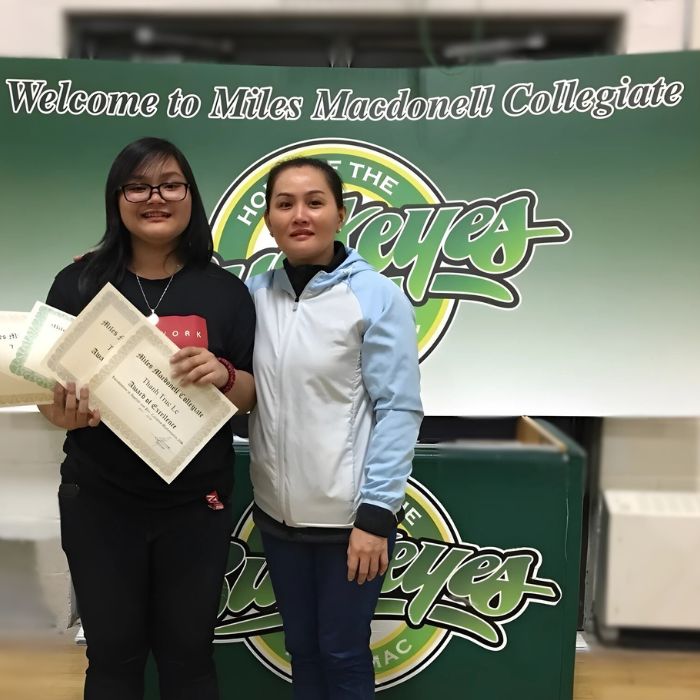
Lê Thanh Trúc, Student at Miles Macdonell Collegiate
“My family and I are deeply grateful to SIEC for not only securing my **Canada high school student visa** in Grade 10 but also for assisting my parents and siblings in obtaining their **visitor visas**. That was an invaluable gift.” — Lê Thanh Trúc, Student at **Miles Macdonell Collegiate** Secure Your Early High School (Secondary) […]
Phan Thị Ngọc Huỳnh, Former Student in Winnipeg
“The solid foundation provided by SIEC and Ms. Huong not only helped me realize my study abroad dream but also gave me the confidence to graduate, secure a stable job, and **settle permanently in Canada**.” — Phan Thị Ngọc Huỳnh, Former Student, currently working in **Winnipeg, Canada** Explore Your Study & Immigration Pathway in Canada […]
Hoàng Giang, Student at Edmonds College
“With her dedication and passion, Ms. Huong helped launch my **American dream**, opening up a vast world of opportunity and the chance to meet new friends.” — Hoàng Giang, Student at **Edmonds College** Explore More About Studying in the USA Spotlight on Edmonds College (Washington State) Gain in-depth knowledge about the programs, tuition fees, and […]
Khánh Lê, Student at LaSalle College
“Thank you to Ms. Huong and the SIEC team for their dedicated partnership and support, from my application phase until I was settled in Canada, helping me confidently pursue my dreams.” — Khánh Lê, Student at **LaSalle College** Explore Further Canada Study Opportunities Spotlight on LaSalle College Gain deeper insights into the programs, tuition fees, […]
Quỳnh Giao, Student at Red River Colleg
“She didn’t just stop at completing the application; she was an inspiration, a true motivator…” — Quỳnh Giao, Student at **Red River College** Continue Your Canada Study Abroad Journey Spotlight on Red River College Polytechnic (RRC Polytech) Discover the high-demand, **applied learning programs** at **Red River College** – one of the premier post-secondary institutions in […]