Easy Guide to Become a Canada Skilled Worker Successfully
23/07/2026 Phong Nguyen
In the 2026 and 2027 period, Canada’s immigration policy is undergoing significant shifts to focus on addressing labor shortages in key sectors. Instead of opening doors to all applicants, the Canadian Government now prioritizes the path to becoming a Canada skilled worker through the route of studying and working in essential industries. Mastering new regulations regarding finances, part-time work hours, and choosing the right field of study will be the deciding factors for international students to achieve their goal of becoming permanent residents sustainably.
1. Latest Document Conditions and Financial Requirements 2026
To begin the journey of immigrating as a Canada skilled worker, preparing a complete application and complying with new regulations is an extremely important first step. Starting in 2026, Immigration, Refugees and Citizenship Canada (IRCC) has tightened entry standards to ensure students have the ability to adapt to life here. The basic profile includes a valid passport, a Letter of Acceptance from a Designated Learning Institution (DLI), and language certificates such as IELTS or PTE with scores that meet the requirements of each specific study program.
1.1. Academic Capacity and Language Requirements
Applicants need to prove their academic ability through transcripts and the most recent degrees with a GPA of “good” or higher. For the goal of becoming a Canada skilled worker, proficiency in English or French is a prerequisite. Priority occupations often require higher language proficiency levels to ensure effective communication in professional working environments.
Possessing a strong language certificate not only makes applying for a Study Permit easier but also adds significant points when participating in immigration scoring systems later on.
1.2. Important Changes in Financial Proof
One of the biggest changes affecting the plan to become a Canada skilled worker is the minimum financial requirement. Since 2024 and continuing through the 2026-2027 period, international students must prove they have enough capacity to cover tuition and living expenses, which are higher than in previous years. Specifically, the amount of financial proof for living costs has increased significantly to accurately reflect the reality of living expenses in Canada’s major cities.
Preparing a solid financial foundation helps applicants focus on their studies without excessive economic pressure during the initial period.
2. Study Permit Regulations and the 24-Hour Weekly Work Policy
Holding a Study Permit is a mandatory requirement for anyone wishing to pursue the path of a Canada skilled worker through the study route. In recent years, IRCC has implemented several adjustments to the permitting process to ensure transparency and efficiency. Students should note that a Study Permit is not just an authorization to study but also comes with conditions regarding employment and residency that the learner must strictly follow to maintain legal status in Canada.
2.1. New Regulations on Part-time Work Hours for Students
Starting from the 2024-2025 period and maintained through 2026, Canada has applied a new regulation allowing international students to work part-time for a maximum of 24 hours per week during their studies. This is a change from the previous 20-hour regulation, aimed at helping students earn extra income and gain practical experience while still ensuring priority is given to academic success. For those aiming to become a Canada skilled worker, utilizing these 24 hours of work to find jobs related to their field of study is a smart strategy to accumulate early experience.
2.2. The Importance of Complying with Study Permit Conditions
Violating the conditions of a Study Permit, such as working more than the regulated hours or failing to maintain active student status, can lead to deportation or the refusal of a future Canada skilled worker immigration application. The Canadian Government is increasingly monitoring student activities through coordination with DLI schools. Therefore, students need to clearly understand their rights and responsibilities to protect their long-term immigration roadmap.
3. Canada Skilled Worker Immigration Trends by Priority Occupations
Instead of applying a general immigration policy as in previous years, Canada is currently focusing on category-based selection rounds. This means that opportunities to become a Canada skilled worker will be much wider for candidates with expertise in fields where the country is facing severe shortages. Choosing the right priority occupation from the start of your studies will help significantly shorten the time it takes to receive permanent residency.
3.1. Healthcare and Medical Services Group
With an aging population, the Healthcare group always tops the priority list for becoming a Canada skilled worker. Positions such as nurses, personal care assistants, psychologists, and laboratory technicians are in huge demand across all provinces. Healthcare graduates not only enjoy high starting salaries but also benefit from priority immigration processing with lower competitive scores compared to other groups.
3.2. STEM and Information Technology Group
The fields of Science, Technology, Engineering, and Mathematics (STEM) continue to be the engine of Canada’s economic growth. Experts in programming, artificial intelligence, cybersecurity, and software engineering are always sought after to drive innovation. If you choose to study in STEM fields, your chances of succeeding as a Canada skilled worker will be very high thanks to programs attracting tech talent from both the federal government and provincial governments like Ontario or British Columbia.
3.3. Construction and Infrastructure Engineering Group
To address the housing crisis and infrastructure development, Canada is short of hundreds of thousands of workers in the construction industry. Trades such as electricians, carpenters, welders, and construction managers are being placed on the top priority list for the Canada skilled worker pathway. These are professions that require high practical skills and provide immediate job opportunities after graduation, helping students quickly accumulate enough work experience to apply for permanent residency.
4. How to Choose a Major and School to Optimize Immigration Chances
Choosing a field of study and a school is not just based on personal preference but must also be carefully calculated based on immigration law criteria. For a successful Canada skilled worker roadmap, students need to choose programs that are highly applicable and align with the priority occupation lists in the province where they intend to live. Thorough preparation of information will help you avoid unnecessary risks later on.
4.1. Selecting Schools on the DLI List and Eligible for PGWP
Not all schools in Canada help you obtain a Post-Graduation Work Permit (PGWP). To serve the goal of becoming a Canada skilled worker, you must attend a Designated Learning Institution (DLI) and the study program must be on the PGWP-eligible list. From 2025, PGWP regulations have changed, requiring the field of study to be directly related to sectors experiencing labor shortages.
Therefore, carefully checking information before applying for admission is a step that cannot be skipped.
4.2. Choosing a Major Based on Provincial Labor Demand
Each province in Canada has its own unique labor needs. For example, the Atlantic provinces may prioritize the seafood processing or transportation sectors, while the central provinces need construction and agricultural labor. When planning to become a Canada skilled worker, you should research Provincial Nominee Programs (PNP) to know which occupations are most strongly supported by that province.
Studying and working in areas that need people will help your profile stand out in the selection system.
5. Roadmap from Studying to Working and Canada Skilled Worker Immigration
The path from an international student to a permanent resident through the Canada skilled worker route usually goes through four main stages. First is completing a study program in Canada to gain specialized knowledge and a linguistic foundation. This stage is crucial for building a network of relationships and learning the local work culture, creating a premise for finding a job later.
5.1. Graduation Phase and Applying for a PGWP Work Permit
After completing a study program of at least 8 months, students can apply for a PGWP to stay and work in Canada. The duration of the PGWP is usually equivalent to or longer than the study time, up to a maximum of 3 years. This is the golden time for you to achieve your goal of becoming a Canada skilled worker by finding a job in a priority occupation group.
Work experience in Canada is the key factor that helps you increase your score in the Express Entry system or meet the conditions of provincial immigration programs.
5.2. Accumulating Experience and Applying for Permanent Residency (PR)
Once you have enough professional work experience (usually 1 year), you can start applying for Permanent Residency (PR). Depending on your ability and profession, you can choose programs such as the Canadian Experience Class (CEC) or provincial skilled worker streams. In the 2026-2027 period, candidates in the Healthcare, STEM, and Construction groups will have a major advantage with specific invitation rounds for the Canada skilled worker category.
Persistently following the Canada skilled worker roadmap with a correct strategy will help you soon obtain a permanent resident card and enjoy the wonderful social benefits in Canada.
Canada’s immigration policy is always changing to suit the actual economic situation. Regularly updating information and preparing a careful application is the best way to ensure success. Start your journey by choosing the right major, studying at the right school, and working in the right profession to realize your goal of becoming a Canada skilled worker in the near future.
The journey to conquer the goal of settling in the land of the maple leaf in the 2026-2027 period requires a clear strategy and a deep understanding of the latest regulations. If you are looking for an effective study-to-work roadmap to optimize your chances of receiving a permanent resident card, do not hesitate to seek professional support.
Contact our team of experts now for detailed advice on how to choose priority occupations, prepare finances, and complete your study abroad application most accurately.
Assess your ability to immigrate to Canada in 2027 now so you don’t miss out on precious opportunities from the Canadian Government’s priority policies for highly skilled workers.
To receive a personalized roadmap and answer all questions about immigration procedures, you can register for consultation information at SIEC today.
We are committed to accompanying you from the school selection step until you achieve the goal of sustainable settlement in Canada.
Register for consultation at: https://siec.com.vn/dang-ky
Reach Your Dream of Settling in Canada with a Solid Career Path from SIEC
Immigrating as a Canada skilled worker is not just a life-changing goal but also a major turning point that requires careful preparation in both professional skills and international qualifications. Understanding these challenges, SIEC provides a study-to-work consultation solution combined with global career guidance, helping you optimize your profile and confidently seize the opportunity to settle in the ‘land of the maple leaf’ in the most sustainable way.
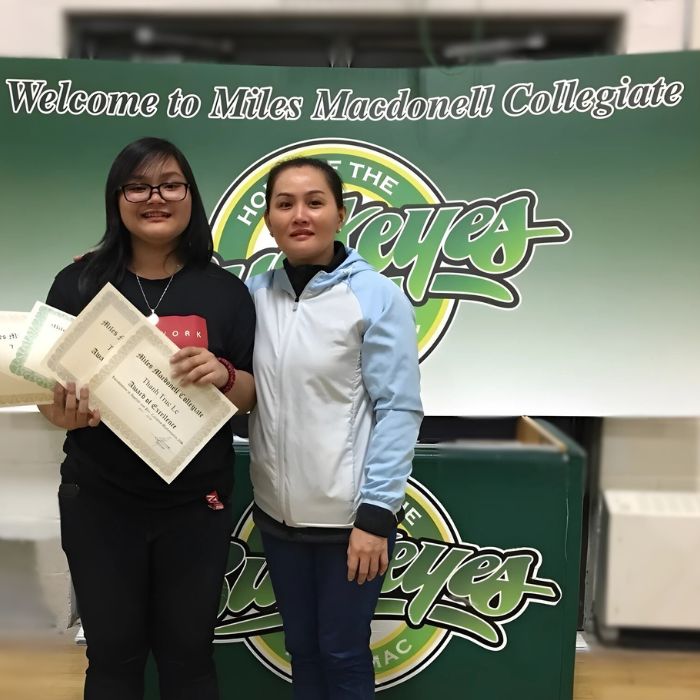
Lê Thanh Trúc, Student at Miles Macdonell Collegiate
“My family and I are deeply grateful to SIEC for not only securing my **Canada high school student visa** in Grade 10 but also for assisting my parents and siblings in obtaining their **visitor visas**. That was an invaluable gift.” — Lê Thanh Trúc, Student at **Miles Macdonell Collegiate** Secure Your Early High School (Secondary) […]
Phan Thị Ngọc Huỳnh, Former Student in Winnipeg
“The solid foundation provided by SIEC and Ms. Huong not only helped me realize my study abroad dream but also gave me the confidence to graduate, secure a stable job, and **settle permanently in Canada**.” — Phan Thị Ngọc Huỳnh, Former Student, currently working in **Winnipeg, Canada** Explore Your Study & Immigration Pathway in Canada […]
Hoàng Giang, Student at Edmonds College
“With her dedication and passion, Ms. Huong helped launch my **American dream**, opening up a vast world of opportunity and the chance to meet new friends.” — Hoàng Giang, Student at **Edmonds College** Explore More About Studying in the USA Spotlight on Edmonds College (Washington State) Gain in-depth knowledge about the programs, tuition fees, and […]
Khánh Lê, Student at LaSalle College
“Thank you to Ms. Huong and the SIEC team for their dedicated partnership and support, from my application phase until I was settled in Canada, helping me confidently pursue my dreams.” — Khánh Lê, Student at **LaSalle College** Explore Further Canada Study Opportunities Spotlight on LaSalle College Gain deeper insights into the programs, tuition fees, […]
Quỳnh Giao, Student at Red River Colleg
“She didn’t just stop at completing the application; she was an inspiration, a true motivator…” — Quỳnh Giao, Student at **Red River College** Continue Your Canada Study Abroad Journey Spotlight on Red River College Polytechnic (RRC Polytech) Discover the high-demand, **applied learning programs** at **Red River College** – one of the premier post-secondary institutions in […]