Detailed guide to successful Canada investment immigration
11/08/2026 Phong Nguyen
In the context of Canada’s immigration policy undergoing landmark changes, **Canada investment immigration** is no longer limited to committing large capital to open a business. Instead, the trend of pursuing **Canada investment immigration** through education and skill development pathways is becoming the most sustainable choice for the 2026–2027 period. Investing in knowledge and practical work experience in Canada helps candidates adapt easily and meet the specific needs of the local labor market.
Canada investment immigration trends for 2026 and 2027
The Canadian government has announced plans to reduce the number of general permanent residents and focus on individuals capable of contributing directly to the economy. This means that **Canada investment immigration** through bond purchases or passive investment is gradually being replaced by programs that require candidates to live and work directly in the country. In particular, the **Canada investment immigration 2025** programs have laid the foundation for prioritizing highly skilled candidates in sectors facing severe labor shortages.
Instead of trying to follow traditional investment immigration streams with extremely high costs and intense competition, many families now choose **Canada investment immigration** by sending their children or themselves to study abroad. This is a smart strategy to both obtain an international standard degree and accumulate enough points for future residency programs. In the coming years, priority will be fully given to those with work experience in Canada, especially in key industries.
Latest Study Permit requirements and application process
To begin the **Canada investment immigration** roadmap through the study pathway, the first and most important step is obtaining a Study Permit. Since 2024, Immigration, Refugees and Citizenship Canada (IRCC) has implemented a new regulation regarding Provincial Attestation Letters (PAL) for most levels of study. This requires those planning for **Canada investment immigration 2025** to prepare their applications early to timely secure acceptance letters from both the school and the province.
Required documents in the application
Study Permit applications now require absolute transparency regarding the purpose of study and financial capacity. Candidates need to prepare a Letter of Acceptance from a Designated Learning Institution (DLI), a valid passport, and evidence of educational qualifications in Vietnam. Demonstrating a clear intention to return or a well-defined career development plan is a significant plus when evaluating future **Canada investment immigration** applications.
Language and health requirements
Proficiency in English or French is an indispensable factor. Depending on the level and field of study, you need to achieve an IELTS Academic score of 6.0 to 6.5 or higher, or equivalent certificates such as PTE. Health is also a mandatory condition; candidates must undergo a medical examination at designated clinics to ensure they do not have infectious diseases or pose a burden to Canada’s public health system.
New financial requirements and the 24-hour weekly work rule
One of the biggest changes for those interested in **Canada investment immigration** is the financial capacity requirement. IRCC has increased the minimum financial proof amount to ensure international students can afford the high cost of living in major cities. This is part of the **Canada investment immigration 2025** strategy to filter for candidates who are thoroughly prepared economically.
Living expense levels to be proven
Currently, in addition to the first year’s tuition, students need to prove they have approximately more than 20,000 CAD for living expenses (this figure may change annually). **Canada investment immigration** requires you to have a long-term financial plan, including savings, fixed assets, or a stable income source from your family in Vietnam to ensure the learning process is not interrupted.
New work hour regulations for international students
Starting in late 2024, Canada officially applied a regulation allowing international students to work up to 24 hours per week during academic terms. This is a positive change from the previous 20-hour limit, helping participants in **Canada investment immigration** earn extra income to cover living costs and, more importantly, accumulate practical work experience. Part-time work not only helps alleviate the financial burden but also provides an opportunity to build networks, preparing for **Canada investment immigration 2025** goals and beyond.
Choosing priority occupations for a more certain PR path
If you want your **Canada investment immigration** roadmap to proceed smoothly, choosing the right field of study is the decisive factor. The Canadian government is currently conducting category-based selection invitations for residency. Instead of general immigration, the Healthcare, STEM, and Construction sectors are being prioritized with lower point requirements and faster processing times.
Healthcare and Wellness sector
With an aging population, Canada is facing a severe shortage of nurses, medical assistants, and psychologists. Choosing **Canada investment immigration** in this sector ensures a stable job immediately after graduation with a high salary. This is also a group of occupations that is always on the priority list for **Canada investment immigration 2025** programs in most provinces.
STEM sector including Science, Technology, Engineering, and Mathematics
Information technology experts, software engineers, and data analysts are always in high demand. When pursuing **Canada investment immigration** through STEM fields, you not only have the opportunity to work at multinational corporations but also easily receive provincial nominations. The strong growth of the digital economy makes these sectors pillars in the **Canada investment immigration 2025** and 2026 policies.
Construction and Skilled Trades sector
Canada is ramping up housing and infrastructure construction, leading to a huge demand for electricians, plumbers, and construction managers. **Canada investment immigration** through vocational schools training in construction techniques is the shortest path to employment and residency. These occupations often do not require very high academic degrees but demand good practical skills, making them very suitable for those who want to stabilize their lives quickly.
How to choose majors and schools to optimize PR potential
Choosing a school should not only be based on ranking but also on the eligibility for a Post-Graduation Work Permit (PGWP). For a successful **Canada investment immigration** roadmap, you need to choose schools on the DLI list that offer programs eligible for a PGWP of up to 3 years. This is extremely important because Canadian work experience after graduation is the key to transitioning to permanent residency.
Additionally, the geographical location of the school also affects your **Canada investment immigration 2025** opportunities. Provinces like Saskatchewan, Manitoba, or the Atlantic provinces often have more open immigration policies compared to Ontario or British Columbia. Choosing to study in regional areas gives you extra residency points and easier access to provincial nomination programs dedicated to local graduates.
Pathway from study to work and long-term residency
A typical **Canada investment immigration** roadmap usually lasts 3 to 5 years. After completing a study program of 2 years or more, you will apply for a PGWP to stay and work. During this time, you need to seek jobs in priority occupational groups to accumulate professional work experience (NOC TEER 0, 1, 2, 3). This is the most crucial stage to realize the **Canada investment immigration 2025** goals set previously.
Once you have 1 year of work experience in Canada, you can apply to the Express Entry system through the Canadian Experience Class (CEC) or Provincial Nominee Programs (PNP). With the changes in 2026–2027, having a degree in Healthcare, STEM, or Construction will make your profile stand out significantly. **Canada investment immigration** is not a short-term race but a well-prepared process involving knowledge, skills, and finances.
To achieve a permanent resident card by 2027, you need to start your plan right now. Keeping up with new regulations on Study Permits, financial requirements, and priority occupation lists will help you save time and money. Remember, successful **Canada investment immigration** is only for those who are thoroughly prepared and moving in the right direction according to the requirements of the Canadian labor market.
Are you wondering if your profile fits the latest changes in Canada’s immigration policy? Don’t let precious opportunities slip away due to a lack of accurate information on priority occupations and the latest financial regulations. Preparing your **Canada investment immigration** roadmap starting today will help you and your family be fully proactive in the face of immigration law fluctuations in the 2026-2027 period.
Let experienced experts help you analyze the strengths and weaknesses of your profile and build the most optimal study-and-work plan. Contact SIEC now for in-depth consultation and to take the first step in your sustainable residency journey. Evaluate your Canada 2027 residency potential now so as not to miss the golden moment of priority programs.
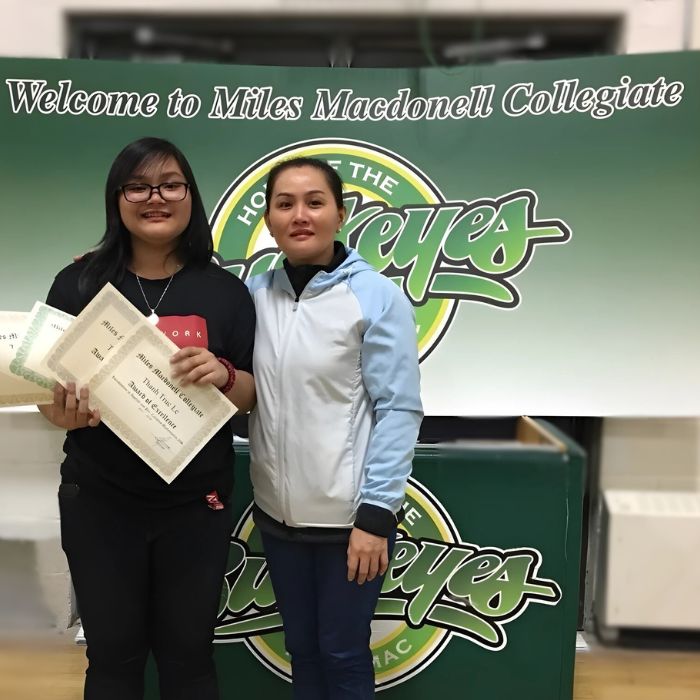
Lê Thanh Trúc, Student at Miles Macdonell Collegiate
“My family and I are deeply grateful to SIEC for not only securing my **Canada high school student visa** in Grade 10 but also for assisting my parents and siblings in obtaining their **visitor visas**. That was an invaluable gift.” — Lê Thanh Trúc, Student at **Miles Macdonell Collegiate** Secure Your Early High School (Secondary) […]
Phan Thị Ngọc Huỳnh, Former Student in Winnipeg
“The solid foundation provided by SIEC and Ms. Huong not only helped me realize my study abroad dream but also gave me the confidence to graduate, secure a stable job, and **settle permanently in Canada**.” — Phan Thị Ngọc Huỳnh, Former Student, currently working in **Winnipeg, Canada** Explore Your Study & Immigration Pathway in Canada […]
Hoàng Giang, Student at Edmonds College
“With her dedication and passion, Ms. Huong helped launch my **American dream**, opening up a vast world of opportunity and the chance to meet new friends.” — Hoàng Giang, Student at **Edmonds College** Explore More About Studying in the USA Spotlight on Edmonds College (Washington State) Gain in-depth knowledge about the programs, tuition fees, and […]
Khánh Lê, Student at LaSalle College
“Thank you to Ms. Huong and the SIEC team for their dedicated partnership and support, from my application phase until I was settled in Canada, helping me confidently pursue my dreams.” — Khánh Lê, Student at **LaSalle College** Explore Further Canada Study Opportunities Spotlight on LaSalle College Gain deeper insights into the programs, tuition fees, […]
Quỳnh Giao, Student at Red River Colleg
“She didn’t just stop at completing the application; she was an inspiration, a true motivator…” — Quỳnh Giao, Student at **Red River College** Continue Your Canada Study Abroad Journey Spotlight on Red River College Polytechnic (RRC Polytech) Discover the high-demand, **applied learning programs** at **Red River College** – one of the premier post-secondary institutions in […]