Detailed Canada skilled worker cost for your immigration
07/08/2026 Phong Nguyen
In the context of Canada’s immigration policies shifting toward targeted selection, thoroughly researching the Canada skilled worker cost has become more crucial than ever for those planning to build a future in the Great White North. The 2026–2027 period marks a turning point as the Canadian government shifts from general immigration to focusing on sectors with severe labor shortages. Proper financial preparation and a strategic educational pathway will help you optimize the **Canada skilled worker cost** and increase your chances of obtaining permanent residency quickly.
Document Requirements and Changes in Canada Skilled Worker Costs
To begin this journey, candidates must clearly understand the basic document requirements, as each piece of paperwork is associated with a specific fee. Within the category of **Canada skilled worker cost**, fees for educational credential assessments (ECA), notarized translation fees, and language proficiency exam fees are the first items to prepare for. For the 2026–2027 period, requirements for language proficiency such as IELTS or PTE Core tend to be stricter, requiring candidates to potentially invest more in studying and testing to achieve optimal scores.
Requirements for Professional Competence and Experience
Your profile must demonstrate work experience in priority occupational groups. Preparing professional evidence of work experience will help save on the total **Canada skilled worker cost** by avoiding errors that necessitate re-submission. Work certification documents, labor contracts, and payroll records must be translated and consularized in accordance with the latest regulations from Immigration, Refugees and Citizenship Canada (IRCC).
Financial Capacity and Administrative Fees
In addition to government processing fees, the **Canada skilled worker cost** also includes biometrics fees and medical exam costs at designated facilities. Changes in administrative fee levels are often updated annually; therefore, you need to monitor them closely to prepare sufficient financial resources. Having a clean and complete application from the start is the best way to control your budget and prevent unexpected expenses.
New Information on Study Permits and Financial Requirements for 2026–2027
One of the most popular and sustainable routes to immigration is through the study pathway. However, starting from 2026, Study Permit regulations have undergone significant changes that directly impact the **Canada skilled worker cost**. The Canadian government has implemented new quotas for study permits while requiring international students to prove stronger financial capacity before arriving in the country.
New Cost of Living Financial Proof Levels
Instead of the old cost-of-living rates, students must now prove they have enough to support themselves with a much higher amount to match the actual cost of living in Canada. This is a mandatory component of the **Canada skilled worker cost** for those choosing the study-to-immigrate route. This fund ensures you can focus on your studies without excessive economic pressure during the first year while meeting the strict requirements of visa processing authorities.
Provincial Attestation Letter (PAL) Process
For many study programs, you need a Provincial Attestation Letter before applying for a Study Permit. This process may slightly increase the initial complexity of your plan but serves as a solid stepping stone toward permanent residency. Complying with study permit regulations will help you maintain legal status and create a good foundation for post-graduation employment.
24-Hour Weekly Work Rule Supporting Canada Skilled Worker Cost
Good news for international students in the 2026–2027 period is that the regulation for off-campus work hours has been adjusted to 24 hours per week. This not only helps you accumulate work experience in an international environment but also contributes significantly to covering your **Canada skilled worker cost**. Income from part-time jobs can help you pay for rent, food, and other personal living expenses.
Leveraging Income to Reduce Financial Burden
With minimum wages in Canada on an upward trend, working the full 24 hours per week can provide a stable income. Students can use this money to offset the initial investment made toward their immigration goals. However, you must be mindful of balancing work and study time to ensure good academic results, as this is the deciding factor for your Post-Graduation Work Permit (PGWP) eligibility.
Practical Work Experience in Canada
Working part-time is not just about money; it is an opportunity to understand the local work culture. The soft skills accumulated during this process will enhance your profile, helping to save on long-term costs by making it easier to find high-skilled professional jobs after graduation. Understanding the local labor market is a huge advantage when applying for immigration through provincial or federal streams.
Choosing Priority Majors to Optimize Canada Skilled Worker Cost
Instead of choosing general fields with high competition, a smart strategy for 2027 is to focus on priority sectors. Choosing the right major not only ensures employability but also helps you optimize the **Canada skilled worker cost** thanks to specific immigration programs with faster processing times and lower score requirements.
Healthcare and Medical Sectors
Canada is facing an aging population, leading to an enormous demand for healthcare personnel. From nursing and personal care assistants to laboratory technicians, the opportunities for immigration are very high. Investing in healthcare courses is a safe choice that yields high career returns, as this sector is always at the top of the government’s priority list.
STEM and Construction Sectors
Science, Technology, Engineering, and Mathematics (STEM) fields, along with Construction, are the drivers of Canada’s economic growth. Studying these subjects gives you access to high starting salaries, allowing you to quickly recover your initial investment. In particular, provinces like Ontario or British Columbia always have specific immigration streams for high-skilled workers in technology and infrastructure.
Roadmap from Study to Employment and Solid Skilled Immigration
To turn your immigration dream into reality, you need a systematic roadmap from the start of your studies until you receive your permanent resident card. Every step in this journey requires careful calculation of time and budget. After completing a study program of at least 2 years, you will have the opportunity to receive a Post-Graduation Work Permit valid for up to 3 years.
Transitioning from PGWP to Permanent Residency
During your PGWP period, you need to accumulate at least one year of professional work experience in a priority occupational group. This is the most critical stage to finalize your journey. Working in your field of expertise not only provides a high income but also helps you accumulate enough points in the Comprehensive Ranking System (CRS) or Provincial Nominee Programs (PNP).
Official Immigration Application Process
Once eligible, you will proceed to apply for permanent residency. At this point, the final costs will include application fees and the Right of Permanent Residence Fee (RPRF). If you follow priority occupations like Healthcare or Construction, the waiting time can be significantly shorter than for standard streams. Thorough preparation of documents and finances throughout your study and work period will ensure this final stage goes smoothly.
Total Estimated Canada Skilled Worker Cost for Newcomers
Overall, the total **Canada skilled worker cost** for the 2026–2027 period will include various items. You need to prepare for tuition, living expenses, insurance, immigration application fees, and other incidental costs. Understanding each expenditure will help you have a proactive financial plan and avoid budget shortfalls midway.
Factors Affecting the Immigration Budget
Your choice of location for living and studying greatly affects the overall budget. Major cities like Toronto or Vancouver are often more expensive than Atlantic provinces or the Prairies. However, job opportunities and salary levels in large urban centers are also usually higher, providing better repayment capacity. You should carefully weigh the costs against the benefits when choosing your destination.
Tips to Save on Your Canada Skilled Worker Cost
To optimize your budget, you should search for entrance scholarships, choose colleges with moderate tuition fees but high-quality training, and select areas with favorable immigration policies. Managing your finances smartly by taking advantage of student discounts and working within regulations will make your journey much smoother. Always stay updated with the latest information from official sources to ensure your plan stays on track.
The journey to immigrate to Canada as a skilled worker in the coming years requires thorough preparation and a clear strategy. By focusing on priority occupations and understanding the new financial and employment regulations, you can absolutely achieve your goal. Start preparing for your future today so you don’t miss out on golden opportunities in the land of the maple leaf.
If you are concerned about your personal profile or need a detailed financial roadmap to optimize your **Canada skilled worker cost**, do not hesitate to seek professional support. An assessment of your capabilities and actual conditions will help you save time and money most effectively.
Contact us for in-depth advice on study and immigration programs suited to your abilities. We will help you answer all questions regarding legal procedures and the best way to prepare your application for the 2027 period.
Assess your Canada 2027 immigration potential now to seize the opportunity to change your life and build a solid career in one of the most livable countries in the world.
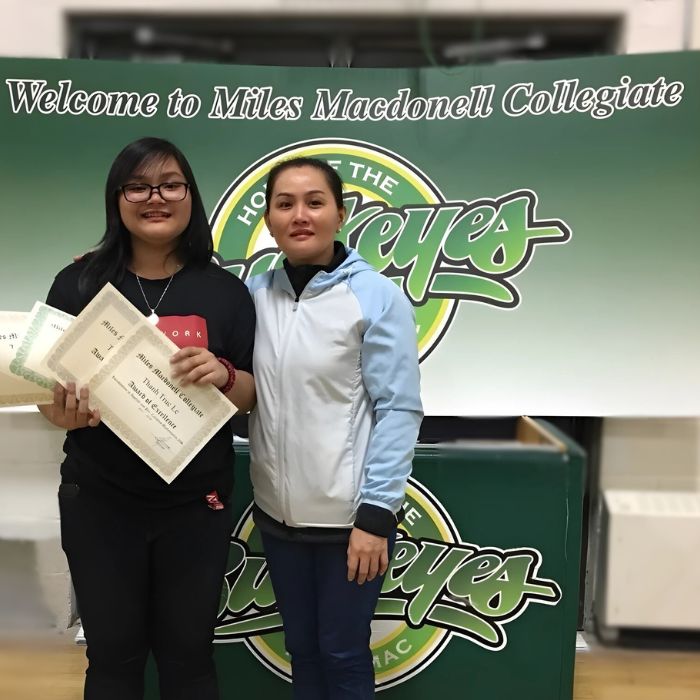
Lê Thanh Trúc, Student at Miles Macdonell Collegiate
“My family and I are deeply grateful to SIEC for not only securing my **Canada high school student visa** in Grade 10 but also for assisting my parents and siblings in obtaining their **visitor visas**. That was an invaluable gift.” — Lê Thanh Trúc, Student at **Miles Macdonell Collegiate** Secure Your Early High School (Secondary) […]
Phan Thị Ngọc Huỳnh, Former Student in Winnipeg
“The solid foundation provided by SIEC and Ms. Huong not only helped me realize my study abroad dream but also gave me the confidence to graduate, secure a stable job, and **settle permanently in Canada**.” — Phan Thị Ngọc Huỳnh, Former Student, currently working in **Winnipeg, Canada** Explore Your Study & Immigration Pathway in Canada […]
Hoàng Giang, Student at Edmonds College
“With her dedication and passion, Ms. Huong helped launch my **American dream**, opening up a vast world of opportunity and the chance to meet new friends.” — Hoàng Giang, Student at **Edmonds College** Explore More About Studying in the USA Spotlight on Edmonds College (Washington State) Gain in-depth knowledge about the programs, tuition fees, and […]
Khánh Lê, Student at LaSalle College
“Thank you to Ms. Huong and the SIEC team for their dedicated partnership and support, from my application phase until I was settled in Canada, helping me confidently pursue my dreams.” — Khánh Lê, Student at **LaSalle College** Explore Further Canada Study Opportunities Spotlight on LaSalle College Gain deeper insights into the programs, tuition fees, […]
Quỳnh Giao, Student at Red River Colleg
“She didn’t just stop at completing the application; she was an inspiration, a true motivator…” — Quỳnh Giao, Student at **Red River College** Continue Your Canada Study Abroad Journey Spotlight on Red River College Polytechnic (RRC Polytech) Discover the high-demand, **applied learning programs** at **Red River College** – one of the premier post-secondary institutions in […]