Complete guide to the latest US student visa requirements
17/08/2026 Phong Nguyen
Preparing for your educational journey in the United States for the 2026–2027 period requires a long-term strategy and meticulous preparation. Understanding the **US student visa requirements** not only helps students proactively manage their time but also assists parents in optimizing financial resources. Current trends extend beyond merely obtaining an international degree to include pathways for permanent residency through employment programs such as EB-3. This article provides a detailed analysis of the steps to prepare your profile according to the Double-Path strategy, combining intensive study with building a sustainable foundation for residency in the US.
Strategic School and Major Selection for the 2026-2027 Pathway
Before diving deep into the specific documents needed for your journey, the first and most crucial step is identifying educational goals tied to career opportunities. The 2026-2027 period is forecast to see changes in immigration policies and the labor market; therefore, choosing a major within the STEM fields (Science, Technology, Engineering, and Mathematics) will provide a significant advantage. These majors allow students to stay and work in the US for up to 3 years after graduation under the OPT program, creating favorable conditions for transitioning to other residency statuses.
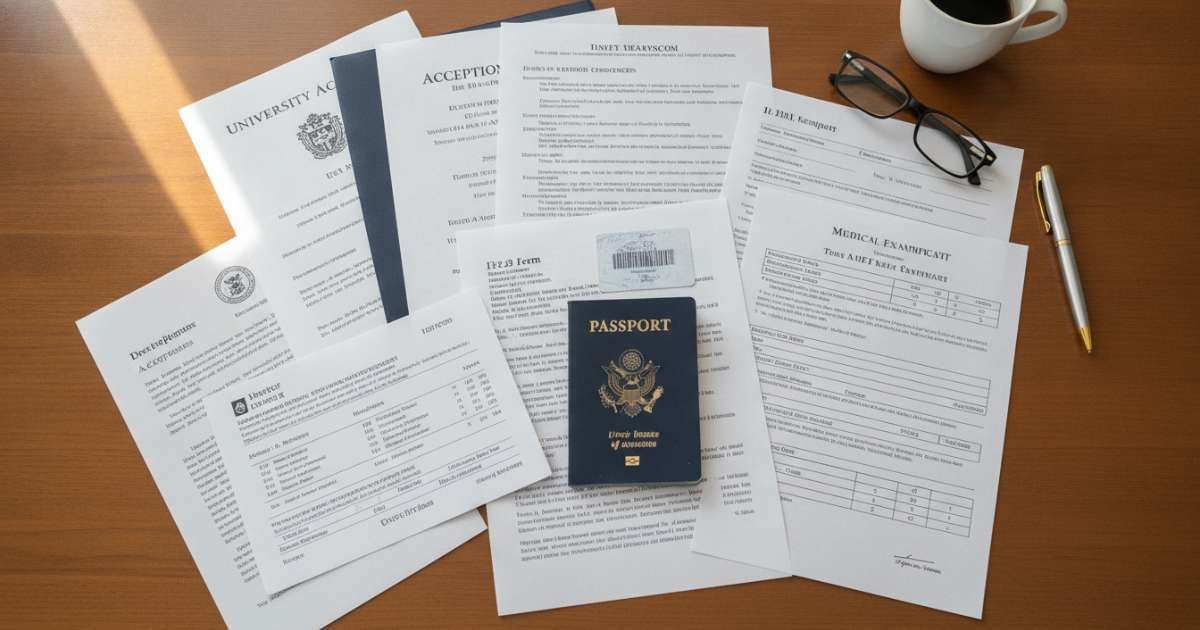
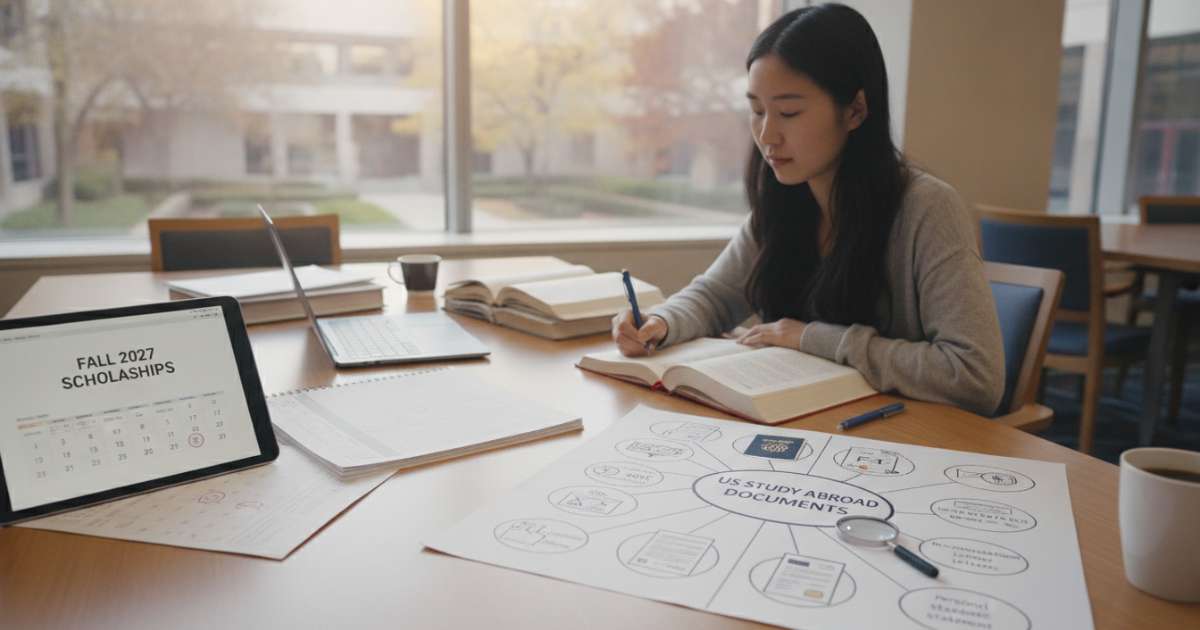
Parents should prioritize universities with strong corporate networks and career support for international students. Once a school is selected, the list of necessary documents begins with the specific Application Forms of each institution. Submitting applications early for the Fall 2027 semester will give students more opportunities to receive generous scholarships, reducing the financial burden on the family throughout the four-year program.
School Selection Criteria for a Residency Strategy
Choosing a school should not only be based on rankings but also on geographical location. States with strong economic growth, such as Texas, Florida, or North Carolina, are often hubs for businesses that sponsor EB-3 visas. When preparing your profile, you must also pay attention to the Letter of Acceptance (I-20) from SEVP-certified schools to ensure the legal validity of your long-term pathway.
Hunting Fall 2027 Scholarships and **US student visa requirements**
Securing a scholarship is a top goal for many high-achieving students. To prepare for the Fall 2027 intake, the application process should ideally begin in 2025 or early 2026. Within the scope of academic preparation, standardized test scores play a pivotal role. A minimum GPA of 3.5/4.0 along with high SAT or ACT scores will be the key to opening the doors of prestigious universities.
In addition to academic scores, the Personal Statement is an element that showcases the applicant’s unique identity. You need to clearly present your career goals and the reasons why you deserve financial support from the school. While completing your documentation, do not forget letters of recommendation from teachers or direct supervisors, as these provide objective evaluations of your abilities and character.
Required Academic Records
Transcripts or report cards for the last 3 years, translated and notarized into English.
The highest current degree or a temporary graduation certificate.
International English certificates such as IELTS (usually 6.5 or higher) or TOEFL iBT (80 or higher).
Certificates of merit from academic competitions or outstanding extracurricular activities.
Understanding the academic aspects of the **US student visa requirements** will help students avoid missing Early Action or Early Decision deadlines. This is the time when schools have more scholarship funds available, and competition rates are typically lower than during regular admission rounds.
Preparing Transparent Financial Records for US Study
Financial records are often the most complex part and cause the most concern for parents. The US Consulate requires clear evidence that the family can afford tuition and living expenses for at least the first academic year, while also having a stable source of income to sustain subsequent years. The transparency and legality of the funds are decisive factors in visa issuance.
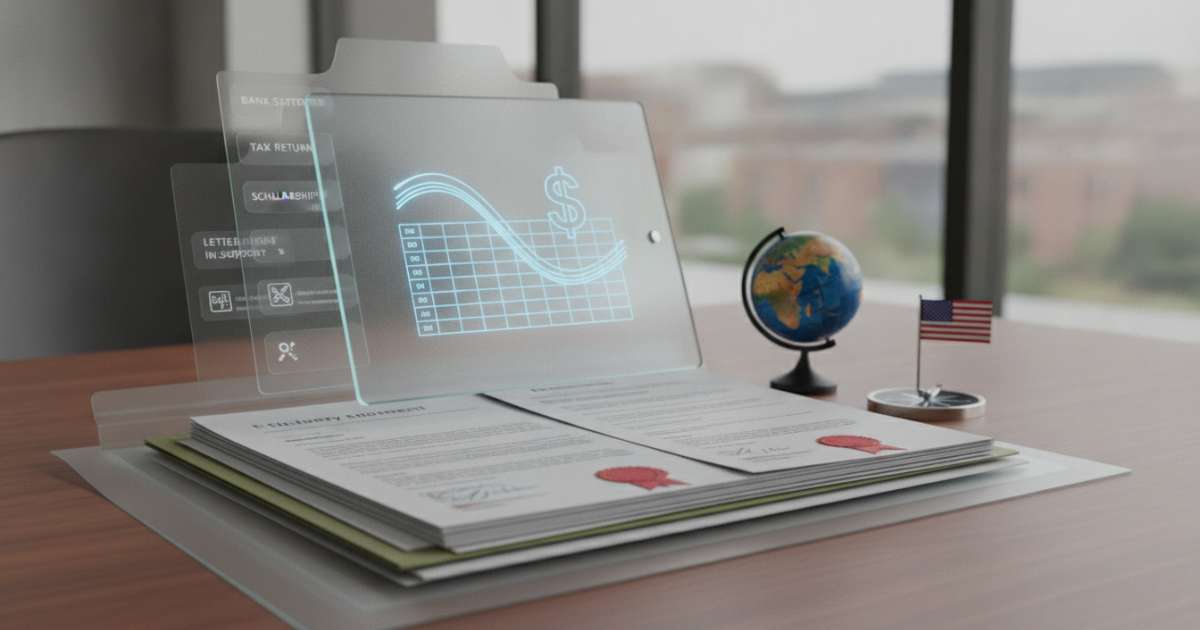
Typically, a savings book is the most common proof. The balance should be sufficient to cover the total estimated costs for one academic year as stated on the I-20. However, a savings book alone is not enough; parents must provide additional documents proving the source of those funds. Essential financial documents include employment contracts, payrolls, business licenses, and tax receipts.
Common Types of Income Proof Documents
For households or businesses: Business registration certificate, financial statements, and VAT declarations from the last 6 months to 1 year.
For salaried employees: Employment contract, appointment decision, bank salary statements, or income confirmation from the company.
Other asset ownership documents: Property deeds (red books), car registration, stocks, or lease contracts to increase the persuasiveness of the profile.
Preparing a comprehensive set of financial documents will help the consular officer see the family’s seriousness and actual ability to pay, thereby minimizing suspicions regarding intentions other than studying in the US.
A Clear Study Plan and Visa Interview Secrets
The visa interview is the turning point that determines the success or failure of the entire preparation process. During the interview, the consular officer will ask about your study pathway to verify your honesty and future plans. One of the biggest mistakes international students often make is an unclear purpose error. If you cannot explain why you chose a specific major or school, the likelihood of visa refusal is very high.
To perform well during the interview, you must bring the original versions of all documents submitted in your visa application. Your Study Plan should be presented logically, showing the link between the program in the US and your career orientation in Vietnam after graduation. However, in the Double-Path strategy, mental preparation and clever answers regarding future intentions are also very important.
Avoiding Unclear Purpose Errors in Interviews
Many students often give generic answers, such as stating that the US has the best education system in the world. Instead, delve into specific details like unique courses in the school’s curriculum, a professor you admire, or how the school’s facilities will support your research. When you have a firm grasp of the **US student visa requirements** and your own information, you will be more confident in direct dialogue with the consular officer.
Note that all information provided during the interview must be consistent with the prepared documents. Any contradiction can lead to doubts about the authenticity of the profile. Practicing communication skills and English reflexes is also an indispensable part of the process of securing a successful visa.
Overview of the EB-3 Residency Pathway and 2026 Waiting Times
The Double-Path strategy refers to combining studying abroad with labor-based residency via the EB-3 category. This is a residency program for skilled workers, professionals, or other workers based on sponsorship from a US employer. For international students, pursuing an EB-3 application concurrently with or after graduation is a smart way to obtain a Green Card legitimately. So, in this pathway, what documents are needed to support residency?
The EB-3 process requires close coordination between the worker and the sponsoring entity. Necessary documents include Labor Certification from the US Department of Labor, the I-140 Immigrant Petition, and subsequently, the I-485 Application to Register Permanent Residence or Adjust Status. For Vietnamese citizens, the waiting time for the EB-3 category fluctuates according to the monthly Visa Bulletin.
EB-3 Waiting Time Forecast for Vietnamese Applicants in 2026
According to immigration experts, the waiting time for the EB-3 category for Vietnamese citizens in 2026 is expected to range from 3 to 5 years, depending on the filing date. Therefore, starting to learn about the requirements and implementing the residency pathway early while still a student will save you a lot of time. Students can utilize their university years to complete the initial steps of the EB-3 process, thereby shortening the distance to a Green Card after graduation.
This pathway requires perseverance and an experienced consulting unit to handle complex legal issues. Understanding the necessary documentation within the context of residency will give parents more peace of mind regarding their children’s long-term future in the Land of Opportunity. This is not just a study trip; it is a life-changing plan for future generations.
Important Notes Regarding **US student visa requirements**
To ensure the preparation process goes smoothly, creating a checklist is absolutely necessary. You should categorize documents into groups: personal documents, academic records, financial records, and documents from the school in the US. Each document has its own validity period; for example, a passport must be valid for at least 6 months from the intended date of entry into the US. When reviewing **US student visa requirements**, always check for the most updated forms on the official website of the US Embassy or Consulate.
Another note is regarding translation and notarization. All documents not in English must be translated by authorized units and accompanied by the original for comparison when necessary. Throughout the process, keep high-quality electronic copies (scans) to send quickly if there are additional requests from the school or immigration authorities.
Comprehensive Checklist for US Study Applications 2026-2027
Valid passport and ID photos meeting US visa regulations (5×5 cm, white background).
Completed DS-160 form and SEVIS fee payment confirmation.
Original I-20 Certificate of Eligibility signed by the school representative and the student.
Transcripts, degrees, and English proficiency certificates (IELTS, TOEFL, SAT).
Financial proof records (Savings books, income confirmation, asset documents).
Interview appointment confirmation letter from the Consulate.
Meticulous preparation of the **US student visa requirements** will help you reduce psychological pressure before application deadlines. Always stay proactive in updating the latest changes in visa policies to make timely adjustments to your educational and residency pathway.
The journey to conquer the American dream in the 2026–2027 period is a promising yet challenging path. By mastering the list of required documents and flexibly applying the Double-Path strategy, students and parents can confidently build a solid future. The combination of top-tier education and EB-3 employment residency opportunities is the key to optimizing all efforts and investment costs.
If you and your family are looking for a safe and effective pathway to study and settle in the US, do not hesitate to seek support from experienced experts. Understanding the basic requirements is only the first step; the partnership of a reputable agency will help you overcome procedural and legal barriers, turning your dream of US residency into reality.
Start preparing today to be ready for the Fall 2027 intake. Every careful preparation regarding the necessary documentation will be worthily rewarded with a visa in hand and a wide-open future in the world’s leading superpower.
For detailed advice on the Double-Path strategy, Fall 2027 scholarship hunting, and professional EB-3 residency processes, parents and students should contact SIEC immediately. We are committed to providing comprehensive, personalized solutions for each profile to optimize your chances of success.
Don’t miss the opportunity to build a sustainable future in the US with support from a dedicated team of experts. Register for information and a free profile evaluation at SIEC to start your journey now.
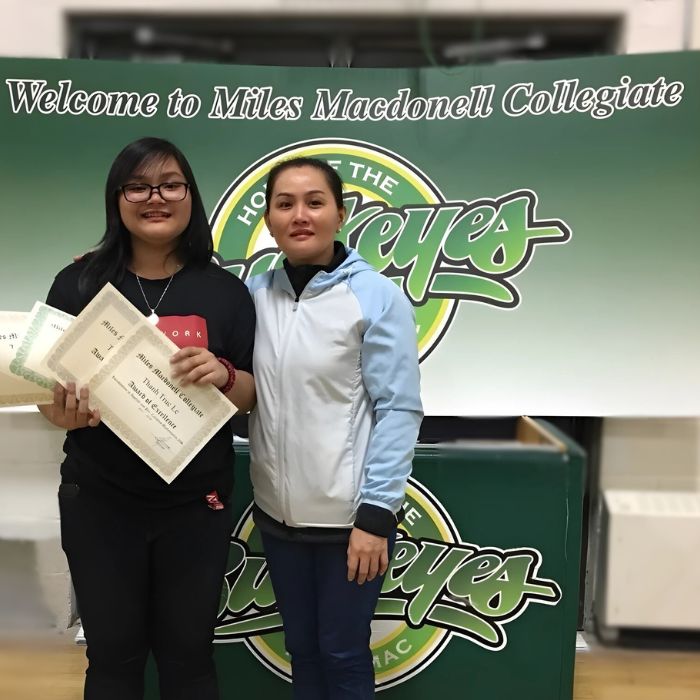
Lê Thanh Trúc, Student at Miles Macdonell Collegiate
“My family and I are deeply grateful to SIEC for not only securing my **Canada high school student visa** in Grade 10 but also for assisting my parents and siblings in obtaining their **visitor visas**. That was an invaluable gift.” — Lê Thanh Trúc, Student at **Miles Macdonell Collegiate** Secure Your Early High School (Secondary) […]
Phan Thị Ngọc Huỳnh, Former Student in Winnipeg
“The solid foundation provided by SIEC and Ms. Huong not only helped me realize my study abroad dream but also gave me the confidence to graduate, secure a stable job, and **settle permanently in Canada**.” — Phan Thị Ngọc Huỳnh, Former Student, currently working in **Winnipeg, Canada** Explore Your Study & Immigration Pathway in Canada […]
Hoàng Giang, Student at Edmonds College
“With her dedication and passion, Ms. Huong helped launch my **American dream**, opening up a vast world of opportunity and the chance to meet new friends.” — Hoàng Giang, Student at **Edmonds College** Explore More About Studying in the USA Spotlight on Edmonds College (Washington State) Gain in-depth knowledge about the programs, tuition fees, and […]
Khánh Lê, Student at LaSalle College
“Thank you to Ms. Huong and the SIEC team for their dedicated partnership and support, from my application phase until I was settled in Canada, helping me confidently pursue my dreams.” — Khánh Lê, Student at **LaSalle College** Explore Further Canada Study Opportunities Spotlight on LaSalle College Gain deeper insights into the programs, tuition fees, […]
Quỳnh Giao, Student at Red River Colleg
“She didn’t just stop at completing the application; she was an inspiration, a true motivator…” — Quỳnh Giao, Student at **Red River College** Continue Your Canada Study Abroad Journey Spotlight on Red River College Polytechnic (RRC Polytech) Discover the high-demand, **applied learning programs** at **Red River College** – one of the premier post-secondary institutions in […]