Complete Guide for Your Canada study with family Journey
20/05/2026 Phong Nguyen
In the 2026–2027 period, Canada’s immigration policy is undergoing significant shifts, focusing strongly on quality over quantity. Choosing to **Canada study with family** remains an attractive route, but it requires careful preparation and a smart career selection strategy. Instead of broad residency programs as before, the Canadian government now prioritizes candidates with high professional skills, especially in sectors facing severe labor shortages.
This article provides a detailed look at the latest regulations, helping you and your family establish a sustainable study and residency roadmap in the Great White North.
1. Application Requirements and Procedures for Canada study with family in 2026
To begin your journey to Canada study with family, the first and most important step is preparing the Study Permit application for the primary applicant and the corresponding visas for family members. In the new context, Immigration, Refugees and Citizenship Canada (IRCC) is exercising tighter control over study purposes and the potential contribution of international students to the local economy.
1.1. Documentation for the Primary Applicant
The primary applicant must have a Letter of Acceptance (LOA) from a Designated Learning Institution (DLI). A crucial new requirement is the Provincial Attestation Letter (PAL), a mandatory document for most undergraduate and college programs. When planning to **Canada study with family**, you must demonstrate a logical study path closely related to your previous work experience or degrees to increase your visa approval chances.
The Study Plan must clearly state your intention to return home or contribute to priority sectors in Canada.
1.2. Documentation for Accompanying Spouse
Regulations regarding the Open Work Permit (OWP) for spouses have changed significantly. Currently, this privilege is primarily prioritized for partners of students enrolled in Master’s, Doctoral, or specific professional programs such as Medicine and Law. If you plan to **Canada study with family** at the bachelor’s or college level, you must carefully check if your program is on the list that supports OWP for relatives.
If ineligible for an OWP, a spouse may enter Canada on a Visitor Visa and later convert to other permits if they find a sponsoring employer.
1.3. Documentation for Accompanying Children
One of the biggest advantages of choosing to **Canada study with family** is that children aged 5 to 18 are entitled to free tuition at public schools in most provinces, provided the parent holds a valid Study Permit. Documentation for children typically includes an enrollment letter (if required), proof of family relationship, and immunization records. Early preparation of academic records from your home country will help your child quickly integrate into the Canadian education system upon arrival.
2. New Financial Requirements and Work Regulations for Canada study with family
Financial stability is often the biggest hurdle for families intending to relocate. Starting in 2024 and continuing to tighten through 2026–2027, Canada has increased financial proof requirements to ensure students and their families can cover the rising cost of living.
2.1. Updated Cost of Living for the Entire Family
Instead of the previous 10,000 CAD per year, single students must now prove they have at least 20,635 CAD for living expenses, excluding tuition. For those who **Canada study with family**, this figure increases based on the number of accompanying members. For a family of three, the total amount required in a bank account typically ranges from 35,000 to 45,000 CAD for the first year.
Preparing a substantial and transparent financial source is a prerequisite to convincing the consulate of your family’s self-sufficiency.
2.2. 24-Hour Weekly Off-Campus Work Regulation
A positive change is that the Canadian government has officially adjusted off-campus work hours to 24 hours per week during academic sessions and unlimited during scheduled breaks. This helps the primary applicant earn extra income to cover part of the expenses. However, keep in mind that the primary goal remains studying, as academic results directly impact eligibility for the Post-Graduation Work Permit (PGWP) and future residency programs.
2.3. Income from Accompanying Relatives
If a spouse is granted an OWP, they can work full-time for any employer in Canada. This is a vital financial source to maintain life while you **Canada study with family**. With minimum wages increasing in provinces like Ontario and British Columbia, a full-time worker can cover most of the rent and food costs for the entire family.
However, job searching should be planned in advance, prioritizing areas with high labor demand.
3. How to Choose Majors and Schools to Optimize 2027 Residency Opportunities
To ensure that your decision to **Canada study with family** results in a Permanent Residency (PR) card rather than just a degree, choosing the right major is key. Canada is currently applying Category-based selection within the Express Entry system, prioritizing those with work experience in essential fields.
3.1. Healthcare and Medical Sector
This sector has the highest demand and is always at the top of the priority list. Roles such as nursing, lab technicians, personal support workers, and psychologists are facing extreme shortages. By choosing to **Canada study with family** in the healthcare field, you virtually secure your residency opportunity upon completing your program and obtaining professional certification.
Provinces like Nova Scotia and New Brunswick often have specific nomination programs with lower score requirements for healthcare workers.
3.2. STEM and Information Technology
Science, Technology, Engineering, and Mathematics (STEM) are the engines of Canada’s economic growth. Fields like software development, data analysis, cybersecurity, and artificial intelligence are always welcoming international students. Pursuing a **Canada study with family** path in STEM grants access to high starting salaries and numerous opportunities at major corporations.
Furthermore, candidates with a STEM background often receive priority points in federal invitation rounds for residency.
3.3. Construction and Skilled Trades
Canada is facing a housing crisis, leading to a massive demand for labor in the construction industry. Trades such as electricians, plumbers, carpenters, construction managers, and heavy machinery operators are highly sought after. Opting to **Canada study with family** through vocational colleges not only saves on tuition but also shortens the time to enter the labor market.
These programs typically last 1 to 2 years, making them ideal for those who want to start working quickly to stabilize family life.
4. Roadmap from Study to Employment and Long-term Residency in Canada
The journey to **Canada study with family** requires a long-term roadmap of 3 to 5 years. After completing your studies, you need to maximize government support policies to transition your status from temporary to permanent resident.
4.1. Leveraging the Post-Graduation Work Permit (PGWP)
Upon graduating from an eligible DLI program, you can apply for a PGWP with a duration of up to 3 years. This is the “golden time” to accumulate Canadian Work Experience. For those who **Canada study with family**, professional work experience (within TEER categories 0, 1, 2, or 3) is a mandatory condition for applying through the Express Entry system or Provincial Nominee Programs (PNP).
4.2. Express Entry and Provincial Nominee Programs
Express Entry is the fastest path to PR, but competition for CRS points is becoming increasingly fierce. However, if you belong to priority groups like Healthcare or STEM, your chances of receiving an Invitation to Apply (ITA) are much higher, even if your total score isn’t exceptionally high. Additionally, aiming for a **Canada study with family** route in smaller provinces through the PNP is a smart choice.
Provinces like Saskatchewan, Manitoba, or the Atlantic provinces often have more relaxed policies for local graduates.
4.3. Category-Based Residency Strategy
From 2026, Canada is expected to continue emphasizing occupation-based invitations rather than just CRS scores. This means if you work in Construction or Transportation, you may be prioritized for residency earlier than other office-based professions. When planning to **Canada study with family**, always stay updated with the IRCC priority list to adjust your direction accordingly.
5. Important Notes When Applying for Canada study with family
Moving an entire family to a new country is a major change, both financially and psychologically. Small details can determine the success or failure of your entire **Canada study with family** plan, and they require careful attention.
5.1. Application Timing and Visa Processing
Processing times can range from a few months to half a year depending on the backlog. You should apply at least 6–8 months before the official start of your term. When applying for **Canada study with family**, filing simultaneously (Dual Intent) for all members must be skillfully explained in your Statement of Purpose (SOP).
You must prove that despite your intention to settle, your family will comply with temporary residency regulations and has sufficient ties to return home if residency goals are not met.
5.2. Preparing for Your Children’s Life
Finding schools and housing near schools for your children is a top priority when you **Canada study with family**. You should research the public school system in your intended area beforehand. Some provinces require a fixed residential address before you can enroll your child.
Additionally, preparing children psychologically for the language change and new environment is essential to prevent culture shock in the first few months.
5.3. Maintaining Valid Legal Status
Throughout your **Canada study with family** journey, maintaining valid Study and Work Permits is your responsibility. Any disruption in studies or unauthorized work can lead to deportation risks and negatively impact future residency applications. Always monitor expiry dates and apply for extensions at least 30 days before they expire.
The journey of **Canada study with family** in the 2026–2027 period is full of new challenges but also opens up great opportunities for those with thorough preparation. By focusing on priority sectors like Healthcare, STEM, and Construction, your family not only ensures a stable income but also builds a solid foundation for long-term residency. Start preparing today to turn your Canadian dream into reality for your whole family.
If you still have concerns about your profile or need a detailed roadmap to optimize residency opportunities for your family in 2027, do not hesitate to seek professional support. Grasping exact changes in immigration law will help you avoid unnecessary mistakes and save significant time and costs.
Contact the experienced consulting team at SIEC now for a profile assessment and to build the most suitable study-to-residency strategy for your family’s actual conditions. We are committed to accompanying you from school selection and visa applications until your family is settled in Canada.
Don’t miss the golden opportunity to change your family’s future in one of the most livable countries in the world. Register for in-depth consultation and receive the latest priority skilled residency roadmap today at: https://siec.com.vn/dang-ky
Are You Ready to Breakthrough Your Global Career with SIEC?
Don’t let your prestigious degree stay on paper. Let SIEC experts advise you on a study roadmap combined with a strategic career orientation starting today!
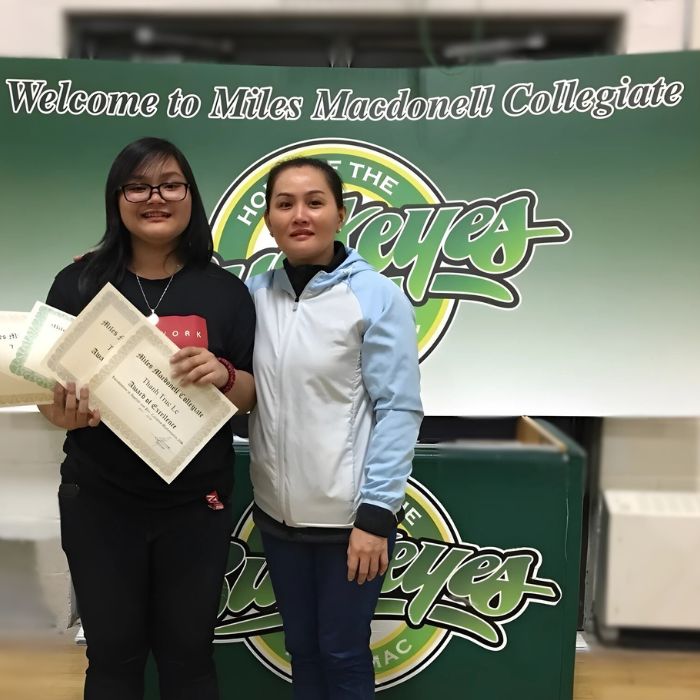
Lê Thanh Trúc, Student at Miles Macdonell Collegiate
“My family and I are deeply grateful to SIEC for not only securing my **Canada high school student visa** in Grade 10 but also for assisting my parents and siblings in obtaining their **visitor visas**. That was an invaluable gift.” — Lê Thanh Trúc, Student at **Miles Macdonell Collegiate** Secure Your Early High School (Secondary) […]
Phan Thị Ngọc Huỳnh, Former Student in Winnipeg
“The solid foundation provided by SIEC and Ms. Huong not only helped me realize my study abroad dream but also gave me the confidence to graduate, secure a stable job, and **settle permanently in Canada**.” — Phan Thị Ngọc Huỳnh, Former Student, currently working in **Winnipeg, Canada** Explore Your Study & Immigration Pathway in Canada […]
Hoàng Giang, Student at Edmonds College
“With her dedication and passion, Ms. Huong helped launch my **American dream**, opening up a vast world of opportunity and the chance to meet new friends.” — Hoàng Giang, Student at **Edmonds College** Explore More About Studying in the USA Spotlight on Edmonds College (Washington State) Gain in-depth knowledge about the programs, tuition fees, and […]
Khánh Lê, Student at LaSalle College
“Thank you to Ms. Huong and the SIEC team for their dedicated partnership and support, from my application phase until I was settled in Canada, helping me confidently pursue my dreams.” — Khánh Lê, Student at **LaSalle College** Explore Further Canada Study Opportunities Spotlight on LaSalle College Gain deeper insights into the programs, tuition fees, […]
Quỳnh Giao, Student at Red River Colleg
“She didn’t just stop at completing the application; she was an inspiration, a true motivator…” — Quỳnh Giao, Student at **Red River College** Continue Your Canada Study Abroad Journey Spotlight on Red River College Polytechnic (RRC Polytech) Discover the high-demand, **applied learning programs** at **Red River College** – one of the premier post-secondary institutions in […]