Canada Study Pathway: PR Requirements and Essential Tips
21/07/2026 Phong Nguyen
In the context of significant adjustments to Canadian immigration policies, the Canada study pathway for the 2026–2027 period is no longer an open door for everyone. The Canadian government is currently shifting its focus from mass enrollment to attracting international students with high professional skills in sectors facing severe labor shortages. Understanding the new regulations regarding finances, part-time work hours, and especially the list of priority occupations will be the key to the success of your plan to immigrate to Canada via the study route.
This article provides a detailed and up-to-date look to help students build a solid foundation for their future in the Great White North.
1. Documentation Requirements and Applying for a Study Permit in 2026–2027
To begin your Canada study pathway, the first and most crucial step is obtaining a Study Permit. Since 2024 and extending through 2026–2027, Immigration, Refugees and Citizenship Canada (IRCC) has implemented strict quotas on the number of Study Permit applications. This means competition will become fiercer, and requirements for application quality have significantly increased.
One of the biggest changes is the requirement for a Provincial Attestation Letter (PAL). Most students applying for undergraduate or college programs must obtain this letter from the province where the school is located before applying for a Study Permit. Obtaining a PAL depends on the quota allocated by the federal government to each province; therefore, early application is essential to secure your chance to immigrate to Canada via the study route in the future.
Furthermore, a clear Study Plan plays a pivotal role. You need to demonstrate a clear educational purpose and the relevance between your chosen field in Canada and your previous educational background or work experience. To achieve the goal of Canadian immigration via study, selecting majors within the provincial priority lists will make your profile more persuasive to consular officers.
Language proficiency is also a mandatory condition, with increasingly higher IELTS Academic or PTE Core score requirements to ensure students can adapt well to the academic and professional environments later on.
Study Permit applications now also require absolute transparency regarding criminal records and health. Students must undergo medical examinations at designated facilities and provide a judicial record certificate to prove they have no prior criminal convictions. These are indispensable stepping stones to building a solid foundation for a long-term Canada study pathway.
2. New Financial Requirements and Work Regulations for International Students
Financial issues are often a major barrier for many families exploring Canadian immigration via the study route. Starting in 2024, Canada significantly increased the financial proof requirement for living expenses to ensure students can support themselves without being overly dependent on part-time work. Specifically, in addition to the first year’s tuition, students must prove they have at least approximately 20,635 CAD in their account for living costs, a figure that is adjusted annually based on inflation.
Raising this financial threshold aims to protect students from the rising costs of housing and food in Canada. When preparing for your Canada study pathway, you need a long-term financial plan, including reserves for health insurance, study materials, and other incidental costs. Using a Guaranteed Investment Certificate (GIC) remains a popular and reliable method to prove financial capacity to immigration authorities.
Regarding work regulations, the Canadian government has officially applied a limit of 24 hours per week for off-campus work during academic sessions. This change is designed to help students focus maximum effort on their studies, ensuring good results to graduate and qualify for a Post-Graduation Work Permit (PGWP). During official breaks, such as summer or winter holidays, students are still permitted to work full-time without a limit on hours.
The 24-hour-per-week regulation is considered a reasonable balance, allowing students to earn extra income and gain practical work experience in Canada without compromising academic quality. For those aiming for Canadian immigration for international students, part-time experience in fields related to their major will be a significant advantage when applying for official jobs later. Strict compliance with work regulations is also a way to protect your legal residency status in Canada.
3. Choosing Programs and Schools to Optimize Your Canada Study Pathway
Choosing a major and a school is no longer just about personal preference; it must be based on the needs of the Canadian labor market if you want a successful Canada study pathway. In the 2026–2027 phase, Canada is focusing on attracting talent in specific sectors through category-based Express Entry invitations. Therefore, choosing the right major from the start will help shorten your road to a permanent resident card.
Selected schools must be on the list of Designated Learning Institutions (DLI), and the program must be eligible for a PGWP. You should prioritize public colleges or universities in provinces with favorable immigration policies or high demand for labor in your chosen field. For example, the Atlantic provinces or central provinces like Saskatchewan and Manitoba often have unique immigration programs for local graduates.
When considering your Canada study pathway, you should carefully research the list of shortage occupations in each province. Some provinces prioritize IT talent, while others focus on agriculture or manufacturing. Choosing a program that includes a paid internship (Co-op) is also a smart strategy.
Co-op not only helps you earn extra income but also builds a network with potential employers, opening up job opportunities immediately after graduation.
Additionally, your level of education affects your immigration score. Postgraduate or Master’s programs usually provide higher bonus points in the Comprehensive Ranking System (CRS). However, if you choose to study high-skilled technical trades at colleges, the opportunity for Canadian immigration for international students remains wide open through provincial skilled worker streams.
Carefully weigh your academic ability, budget, and career goals to make the most informed decision.
4. Priority for Healthcare, STEM, and Construction in the Canada Study Pathway
In its new immigration strategy, Canada has clearly identified three key sectors that will receive maximum priority for those on a Canada study pathway: Healthcare, STEM (Science, Technology, Engineering, Mathematics), and Construction. These are fields where Canada faces severe labor shortages due to an aging population and national infrastructure development needs.
The Healthcare sector includes roles such as nursing, personal care assistants, lab technicians, and pharmacists. Students who choose this field often find employment immediately after graduation. Provinces continuously open special immigration streams specifically for healthcare workers with lower CRS requirements compared to other sectors.
This is a sustainable and highly valued path in Canada.
For STEM fields, the focus lies in areas like artificial intelligence, cybersecurity, data analysis, and electrical or mechanical engineering. As Canada strives to be a global tech powerhouse, STEM professionals are always in demand. The Canada study pathway for STEM students is typically very favorable through programs like the Global Talent Stream or specialized Express Entry draws for technicians and scientists.
The Construction and Skilled Trades sectors are also becoming new highlights. With a goal to build millions of new homes to resolve the housing crisis, Canada desperately needs electricians, carpenters, welders, and construction managers. Studying in specialized vocational training programs not only leads to high starting salaries but also makes the process of immigrating to Canada via the study route easier than ever thanks to priority policies for highly skilled workers.
Focusing on these sectors instead of general business or administration will be a strategic move for your future.
5. From Graduation to Employment and Permanent Residency in Canada
A typical Canada study pathway usually lasts from 3 to 5 years, starting from when you enroll until you receive your Permanent Resident (PR) card. The first stage is completing your program with good results. During this time, you should take advantage of internship and part-time opportunities to accumulate practical work experience in a local environment, which is vital for future job applications.
After graduation, the next step is applying for a Post-Graduation Work Permit (PGWP). The PGWP allows you to stay in Canada and work full-time for any employer for up to 3 years, depending on the length of your study program. This is the golden period to accumulate professional work experience under TEER categories 0, 1, 2, or 3 of the National Occupational Classification (NOC) system.
Canadian work experience is the key factor in increasing your CRS score or qualifying for Provincial Nominee Programs (PNP) to immigrate to Canada via study.
Once you have at least one year of work experience in Canada, you can apply for the Express Entry system through the Canadian Experience Class (CEC). If you work in priority sectors like Healthcare or STEM, you will have a major advantage in category-based invitations. Additionally, Provincial Nominee Programs (PNP) are an excellent choice for Canadian immigration for international students.
Many provinces have immigration streams dedicated to students who graduated in that province and have a job offer from a local business.
Finally, after receiving an Invitation to Apply (ITA) and successfully submitting your PR application, you will officially become a Canadian Permanent Resident. This journey requires perseverance, careful preparation, and staying updated on immigration law changes. Having a clear strategy from choosing a major to finding a job will ensure that your goal of immigrating to Canada via the study route becomes a reality in this volatile but opportunity-filled 2026–2027 period.
6. Evaluate Your Potential for Canadian Immigration in 2027 Now
The journey to immigrate to Canada via the study route is a major life project, requiring investment in time, money, and intellect. With rapid changes in Canadian immigration policy leading toward 2027, trying to navigate it alone can sometimes lead to unnecessary mistakes. Don’t let outdated or inaccurate information affect your future.
A professional and objective profile evaluation is the smartest move right now.
To know if you are suitable for priority sectors like Healthcare, STEM, or Construction, and to build a personalized Canada study pathway, you need advice from experienced experts. We will help you analyze your projected CRS score, choose the province with the highest success rate, and guide you through financial preparation according to the latest IRCC regulations. Take the initiative to become part of the Canadian permanent resident community in the near future.
If you are dreaming of studying and working in one of the world’s most livable countries, start today. Contact SIEC for assistance with profile evaluation and to receive in-depth advice on the Canada study pathway most suitable for your abilities and aspirations. We accompany you from the school selection step until you hold your Canadian permanent resident card in your hand.
Let SIEC help you realize your dream of settling in the land of the maple leaf with a detailed and secure roadmap. Our team of experts is always ready to answer any questions about documentation conditions, financial requirements, and the latest changes in Canadian immigration law for international students.
Don’t miss the golden opportunity to build a sustainable future in Canada. Connect with us to start your journey with confidence and efficiency.
Contact SIEC today for study and immigration information to receive expert consultation and a personalized roadmap for your Canadian dream. Visit https://siec.com.vn/dang-ky to begin your life-changing journey.
Don’t hesitate in the face of policy changes; let our experts help you turn challenges into opportunities and achieve your immigration goals successfully in the 2026-2027 period.
Realize Your Dream of Canadian Immigration and Boost Your Global Career with SIEC
Immigrating to Canada via the study route is not just about choosing the right school; it is a long-term strategy that requires careful preparation of both the Canada study pathway and practical career orientation. Understanding these challenges, SIEC provides personalized roadmap solutions, helping you perfectly combine education and global career development to optimize your chances for sustainable settlement in the land of the maple leaf.
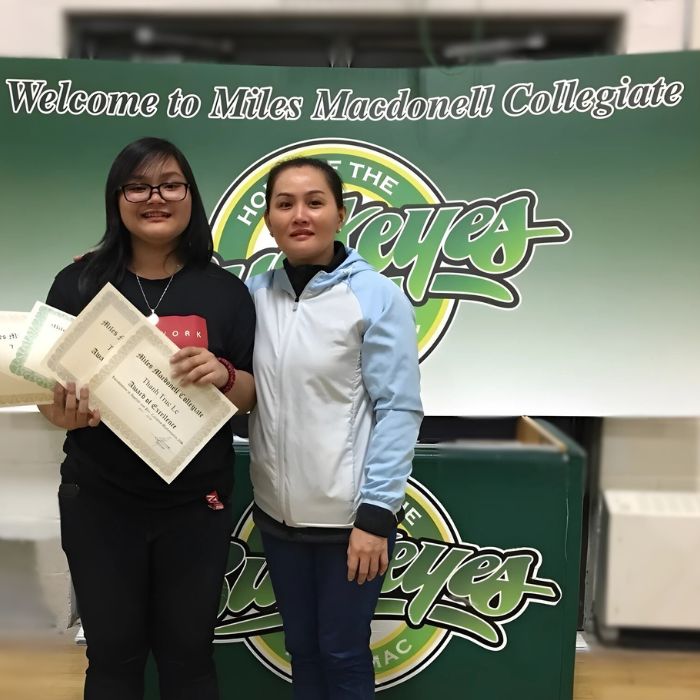
Lê Thanh Trúc, Student at Miles Macdonell Collegiate
“My family and I are deeply grateful to SIEC for not only securing my **Canada high school student visa** in Grade 10 but also for assisting my parents and siblings in obtaining their **visitor visas**. That was an invaluable gift.” — Lê Thanh Trúc, Student at **Miles Macdonell Collegiate** Secure Your Early High School (Secondary) […]
Phan Thị Ngọc Huỳnh, Former Student in Winnipeg
“The solid foundation provided by SIEC and Ms. Huong not only helped me realize my study abroad dream but also gave me the confidence to graduate, secure a stable job, and **settle permanently in Canada**.” — Phan Thị Ngọc Huỳnh, Former Student, currently working in **Winnipeg, Canada** Explore Your Study & Immigration Pathway in Canada […]
Hoàng Giang, Student at Edmonds College
“With her dedication and passion, Ms. Huong helped launch my **American dream**, opening up a vast world of opportunity and the chance to meet new friends.” — Hoàng Giang, Student at **Edmonds College** Explore More About Studying in the USA Spotlight on Edmonds College (Washington State) Gain in-depth knowledge about the programs, tuition fees, and […]
Khánh Lê, Student at LaSalle College
“Thank you to Ms. Huong and the SIEC team for their dedicated partnership and support, from my application phase until I was settled in Canada, helping me confidently pursue my dreams.” — Khánh Lê, Student at **LaSalle College** Explore Further Canada Study Opportunities Spotlight on LaSalle College Gain deeper insights into the programs, tuition fees, […]
Quỳnh Giao, Student at Red River Colleg
“She didn’t just stop at completing the application; she was an inspiration, a true motivator…” — Quỳnh Giao, Student at **Red River College** Continue Your Canada Study Abroad Journey Spotlight on Red River College Polytechnic (RRC Polytech) Discover the high-demand, **applied learning programs** at **Red River College** – one of the premier post-secondary institutions in […]