Canada immigration visa types: Latest Pathways and Rules
13/08/2026 Phong Nguyen
In the context of significant adjustments to Canada’s immigration policies, thoroughly researching Canada immigration visa types is the most vital step for anyone intending to build a future in the Land of the Maple Leaf. The 2026–2027 period marks a major turning point as the Canadian government prioritizes precision in candidate selection rather than accepting mass applications as before. Instead of focusing on quantity, current residency programs target individuals with high professional skills, particularly in sectors facing severe labor shortages. Capturing the roadmap from international study to residency through priority industry groups will help candidates increase their success rate and shorten processing times.
Overview of Changes in Canada immigration visa types for 2026–2027
The 2026–2027 period is witnessing a distinct shift in Canada’s immigration management system. Various **Canada immigration visa types** are no longer issued broadly based solely on CRS scores but have moved toward category-based selection. This means that Immigration, Refugees and Citizenship Canada (IRCC) will proactively send invitations to candidates with work experience in essential occupations. This change ensures that new immigrants can immediately contribute to the economy and address urgent social issues such as the housing crisis and healthcare system strain. This new direction requires foreign workers and international students to be more systematically prepared in terms of language and expertise. Economic immigration programs like Express Entry or the Provincial Nominee Program (PNP) remain the primary pillars, but selection criteria have become stricter. For those seeking **Canada immigration visa types**, choosing the study pathway at Designated Learning Institutions (DLIs) remains the most sustainable route. However, instead of choosing “easy” majors like business administration or marketing, candidates are encouraged to pursue engineering, medicine, and construction to take full advantage of government priority policies.
Latest Documentation and Financial Requirements for Canada immigration visa types
To prepare for an application for **Canada immigration visa types**, candidates must meet a rigorous set of standards regarding both personal capacity and financial ability. First is the language requirement, which is a prerequisite for assessing a candidate’s integration potential. For high-skilled programs, English scores (IELTS or PTE) or French scores (TEF or TCF) must reach at least CLB 7 or higher. In the 2026–2027 period, French is becoming a massive advantage, helping candidates gain significant bonus points in the immigration ranking system. Financially, the Canadian government has updated the income proof levels to ensure immigrants can afford living expenses amidst inflation. For international students wishing to transition to **Canada immigration visa types**, the required amount in bank accounts has increased significantly compared to previous years. Specifically, a single candidate needs to prove they have approximately 20,635 CAD (excluding tuition fees) to cover living costs for the first year. If accompanied by family, this figure increases corresponding to the number of members. Transparency in financial sources and full preparation of documents such as bank statements, employment contracts, and asset certifications are mandatory for a smooth approval process.
Study Permit Regulations and the 24-Hour Weekly Work Policy
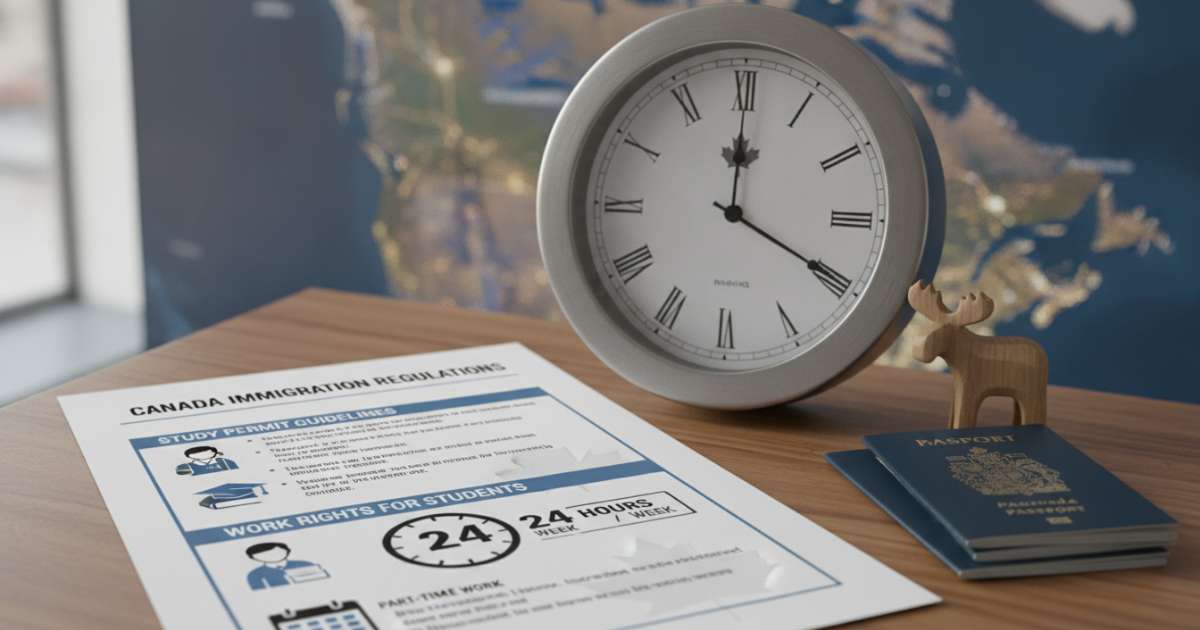
A Study Permit is the first ticket that helps international students set foot in Canada and opens up opportunities to access **Canada immigration visa types** later. Starting in 2024 and extending through 2026–2027, IRCC has applied new regulations regarding off-campus work hours for international students. Instead of being allowed to work unlimited hours or only 20 hours as before, students are now permitted to work a maximum of 24 hours per week during academic sessions. This regulation aims to help students earn extra income for living expenses while still ensuring that their primary priority is studying and completing their program on time. Compliance with the 24-hour weekly work limit is extremely important. If students violate this by working over the prescribed hours, they could face the risk of having their Study Permit revoked, directly affecting their eligibility for a Post-Graduation Work Permit (PGWP). The PGWP is a crucial stepping stone to accumulating Canadian work experience, thereby qualifying for skilled-worker **Canada immigration visa types**. Therefore, international students need to balance their time between classes, internships, and part-time work to build a clean and impressive profile in the eyes of immigration authorities.
Priority Sectors for Residency: Healthcare, STEM, and Construction
In the immigration levels plan for 2026–2027, Canada is focusing its resources on three strategic sectors: Healthcare, STEM, and Construction. These are fields with extremely high labor demand that domestic supply cannot meet. When studying and working in these fields, a candidate’s chances of obtaining **Canada immigration visa types** will be much higher than in other professions. The government frequently organizes separate invitation rounds for those with experience in these categories with significantly lower cutoff scores. Specifically, the Healthcare group includes nursing, family physicians, pharmacists, and lab technicians. With an aging population, Canada desperately needs professional healthcare staff. The STEM group (Science, Technology, Engineering, and Mathematics) focuses on software engineers, data analysts, and mechanical engineers to drive innovation. Finally, the Construction group, including electricians, plumbers, and project managers, is the core force for solving the housing puzzle. Orienting your career toward one of these three groups is the smartest tactic to secure **Canada immigration visa types** in the near future.
How to Choose Majors and Schools to Optimize the Immigration Pathway
Choosing the right major and a reputable school is a factor that determines 70% of the success of your journey to owning **Canada immigration visa types**. Candidates should prioritize universities or colleges on the DLI list that offer PGWP-eligible programs. When choosing a major, cross-reference it with the priority occupation list of the province where you intend to live. For example, if you choose to settle in Ontario, information technology sectors will be very promising, while in coastal provinces like New Brunswick or Nova Scotia, healthcare and construction are more favored. Additionally, the school’s geographical location affects residency prospects. Provincial Nominee Programs (PNP) often have priority streams for students who graduate within that specific province. Studying in sparsely populated areas or provinces hungry for labor will give you extra regional points when applying for **Canada immigration visa types**. Thoroughly research the local labor market and each province’s immigrant support policies before making a final decision on your school and major.
The Roadmap from Education to Employment and Official Residency
The most common roadmap to achieving **Canada immigration visa types** begins with completing a study program of at least 2 years in Canada. After graduation, students need to apply for a PGWP to stay and work legally. The duration of the PGWP is usually equivalent to the study period, up to a maximum of 3 years. During this time, the most important goal is to find a job in a priority sector and accumulate at least 1 year of full-time work experience. Canadian work experience is a key factor in increasing CRS points or qualifying for provincial nomination programs. Once enough work experience is gained and language requirements are met, candidates can create an Express Entry profile or apply directly to a province. The 2026–2027 period will prioritize applications with a Job Offer from Canadian businesses in essential fields. After receiving an Invitation to Apply (ITA), candidates will undergo health checks, criminal record checks, and complete final procedures to receive a Permanent Resident (PR) card. This is the well-deserved result of a systematically planned roadmap and persistent pursuit of **Canada immigration visa types** through education and skilled labor.
Key Considerations When Preparing a Canada Immigration Application
When starting to prepare an application for **Canada immigration visa types**, meticulousness and honesty are the two top factors. All information declared in the application—from education and work experience to travel history—must be accompanied by supporting documents. Any discrepancy, even the smallest, can lead to the application being rejected or a multi-year ban from entering Canada. Additionally, candidates need to regularly update themselves on changes in immigration law, as regulations regarding **Canada immigration visa types** can change quarterly based on the socio-economic situation. Early preparation in terms of language and finances will help you be more proactive in the face of unexpected changes. Ensure that your passport has a long validity and that your English certificates are still valid at the time of submission. If the roadmap feels too complex, seeking advice from reputable immigration experts is a wise choice. They will help you evaluate the strengths and weaknesses of your profile and provide the most appropriate strategy to realize the dream of owning one of the **Canada immigration visa types** in this challenging yet opportunity-filled 2026–2027 period.
Evaluate Your Canada Immigration Potential for 2027 with Experts
To avoid missing golden opportunities in the new immigration policies, evaluating your profile right now is a strategic move. Every individual has a different educational background and experience; therefore, there is no one-size-fits-all formula when searching for **Canada immigration visa types**. An accurate assessment of your ability to meet criteria regarding scores, occupations, and finances will save you time and money, avoiding unfeasible paths. Start your journey by thoroughly researching the specific requirements of each program and comparing them with your current capabilities. Canada always welcomes people with will, skills, and a sincere desire to contribute to the nation’s development. With careful preparation and the right orientation toward priority industries, the door to owning **Canada immigration visa types** will always be wide open for you and your family in the near future.
To receive in-depth advice and a detailed assessment of your personal case for the Canada residency roadmap in 2026–2027, contact the expert team at SIEC immediately. We will help you analyze choices for majors and schools and build the most optimal roadmap to achieve permanent residency quickly and safely.
Don’t let policy changes become a barrier to your dreams; proactively capture information and prepare the strongest foundation today by registering for a free consultation from SIEC.
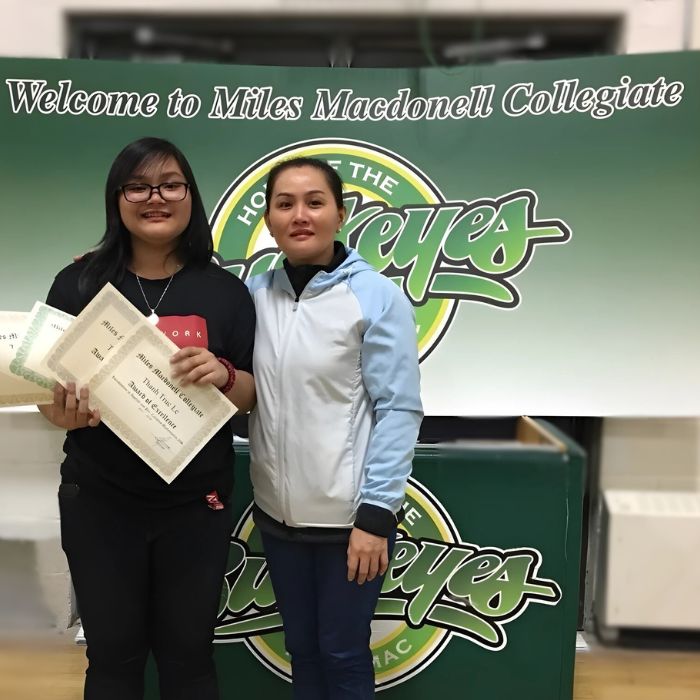
Lê Thanh Trúc, Student at Miles Macdonell Collegiate
“My family and I are deeply grateful to SIEC for not only securing my **Canada high school student visa** in Grade 10 but also for assisting my parents and siblings in obtaining their **visitor visas**. That was an invaluable gift.” — Lê Thanh Trúc, Student at **Miles Macdonell Collegiate** Secure Your Early High School (Secondary) […]
Phan Thị Ngọc Huỳnh, Former Student in Winnipeg
“The solid foundation provided by SIEC and Ms. Huong not only helped me realize my study abroad dream but also gave me the confidence to graduate, secure a stable job, and **settle permanently in Canada**.” — Phan Thị Ngọc Huỳnh, Former Student, currently working in **Winnipeg, Canada** Explore Your Study & Immigration Pathway in Canada […]
Hoàng Giang, Student at Edmonds College
“With her dedication and passion, Ms. Huong helped launch my **American dream**, opening up a vast world of opportunity and the chance to meet new friends.” — Hoàng Giang, Student at **Edmonds College** Explore More About Studying in the USA Spotlight on Edmonds College (Washington State) Gain in-depth knowledge about the programs, tuition fees, and […]
Khánh Lê, Student at LaSalle College
“Thank you to Ms. Huong and the SIEC team for their dedicated partnership and support, from my application phase until I was settled in Canada, helping me confidently pursue my dreams.” — Khánh Lê, Student at **LaSalle College** Explore Further Canada Study Opportunities Spotlight on LaSalle College Gain deeper insights into the programs, tuition fees, […]
Quỳnh Giao, Student at Red River Colleg
“She didn’t just stop at completing the application; she was an inspiration, a true motivator…” — Quỳnh Giao, Student at **Red River College** Continue Your Canada Study Abroad Journey Spotlight on Red River College Polytechnic (RRC Polytech) Discover the high-demand, **applied learning programs** at **Red River College** – one of the premier post-secondary institutions in […]