Canada immigration otofun: Careers and Financial Pathways
02/08/2026 Phong Nguyen
In the context of Canada’s immigration policies undergoing landmark changes, the user community on major forums such as **Canada immigration otofun** is expressing special interest in the 2026–2027 residency roadmap. This period marks a strong shift from general immigration to programs focused on priority occupation groups. Instead of applying through highly competitive general streams, choosing a path through study and work in core fields such as Healthcare, STEM, or Construction is considered the golden key to obtaining a Permanent Resident (PR) card. This article will analyze the latest regulations regarding Canada immigration otofun in detail to help you gain a comprehensive view and prepare the most suitable roadmap.
Latest Application Requirements and Study Permit Regulations 2026–2027
To begin your Canada immigration otofun journey, the first and most important step is applying for a Study Permit. Since 2024, Immigration, Refugees and Citizenship Canada (IRCC) has implemented a cap on the number of Study Permit applications. This means the review process will become stricter, requiring applicants to have thorough preparation of their academic records and a clear study purpose. An important new point that those interested in Canada immigration otofun should note is the requirement for a Provincial Attestation Letter (PAL). Most international students applying for Study Permits for college and university programs must have this letter. This helps provinces control the quality and quantity of the future workforce in line with local economic needs. Additionally, language proficiency is a major barrier. For priority programs, the minimum IELTS requirement is usually 6.0 to 6.5, with no skill below 6.0, to ensure the ability to study and work later. Study Permit applications for the 2026–2027 period also require absolute transparency regarding academic and work history. If you have an excessively long gap year, you need a reasonable explanation through work certificates or short-term courses. Proving the intention to return home after graduation remains a procedural factor, but in reality, the Canada immigration otofun roadmap will be realized by transitioning to a Post-Graduation Work Permit (PGWP).
Financial Requirements and 24h/Week Part-time Work Regulations for Students
Financial issues are always a hot topic in Canada immigration otofun discussions. Since 2024, Canada has significantly increased the cost-of-living requirement for financial proof. Instead of the 10,000 CAD level from previous years, international students now need to prove they have at least approximately 20,635 CAD (excluding tuition fees) to ensure their life in the land of the maple leaf. This figure reflects the reality of inflation and rising rental costs in major cities. To support students in covering costs, the Canadian government has issued new regulations on part-time work hours. Instead of the previous 20-hour limit, international students are now allowed to work part-time up to 24 hours per week during their studies. This regulation helps those pursuing a Canada immigration otofun pathway to have an additional source of income and accumulate practical work experience in Canada. However, you should note that working more than the prescribed hours can lead to the cancellation of your Study Permit and the loss of future residency opportunities. Smart financial management is a decisive factor in the success of a Canada immigration otofun plan. Experts recommend opening a GIC (Guaranteed Investment Certificate) account at Canadian banks to optimize your financial profile. This not only speeds up visa processing but also provides you with a fixed monthly disbursement to pay for essential needs when you first arrive.
Choosing Canada immigration otofun via Priority Occupation Groups
In the 2026–2027 period, invitations for residency through the Express Entry system will focus primarily on sectors experiencing severe labor shortages. Choosing the right major from the priority list will help your CRS (Comprehensive Ranking System) score stand out compared to other candidates. Instead of choosing general economics or management majors, the Canada immigration otofun community is heading toward three main pillars: Healthcare, STEM, and Construction.
Healthcare Sector
The Canadian healthcare system is facing a shortage of personnel at all levels. Positions such as nurses, personal care assistants, laboratory technicians, and psychologists are always at the top of the priority list. If you choose to study these programs, the chance of receiving a Canada immigration otofun invitation is almost absolute after graduation and obtaining professional certification. Provinces also have their own Provincial Nominee Programs (PNP) for healthcare workers with extremely low score requirements.
STEM Sector (Science, Technology, Engineering, and Mathematics)
With the goal of becoming a technology powerhouse, Canada continuously seeks talent in STEM fields. Sectors such as software development, data analysis, cybersecurity, and mechanical engineering offer very high starting salaries. When pursuing a Canada immigration otofun roadmap through the STEM group, you will not only find jobs easily but also benefit from specialized Express Entry draws for skilled workers.
Construction Sector
To address the housing crisis, the Canadian government needs hundreds of thousands of workers in the construction industry. Trades such as electricians, carpenters, welders, and construction project managers are given special priority. Many members on the Canada immigration otofun forum have shared that this is the shortest path to residency for those with strong vocational skills. Trade programs for skilled workers usually have short study durations and high employability immediately after graduation.
How to Choose Majors and Schools to Optimize Residency Potential
Choosing a school should not be based solely on ranking but must be based on the DLI (Designated Learning Institutions) list and the ability to grant a PGWP. Not every school in Canada will help you obtain a work permit after graduation. For a smooth Canada immigration otofun roadmap, you should prioritize public colleges in provinces with flexible immigration policies such as Saskatchewan, Manitoba, or the Atlantic provinces. When choosing a major, refer to the NOC (National Occupational Classification) list to see if that occupation belongs to TEER categories 0, 1, 2, or 3. These are the groups eligible for Express Entry applications. A valuable piece of advice from the Canada immigration otofun community is to choose majors with Co-op (internship) programs. Co-op not only provides extra income but also serves as an important bridge to receiving official job offers from Canadian employers immediately after graduation. Additionally, you need to consider the study location. Studying in regional areas often helps you receive bonus points from Provincial Nominee Programs. Large cities like Toronto or Vancouver offer many job opportunities, but the level of competition for Canada immigration otofun is extremely fierce. Choosing tier-two cities will help reduce financial pressure and increase the probability of receiving PR more quickly.
Roadmap from Studying to Working and Canada Residency 2027
A typical Canada immigration otofun roadmap usually lasts from 3 to 5 years. First, you will spend about 2 years completing a college program or 4 years for a university program. During this time, maintaining good academic performance and actively participating in extracurricular activities and internships is essential. After graduation, you will apply for a PGWP with a duration of up to 3 years (depending on the length of the study program). During the PGWP period, the most important goal is to accumulate at least 1 year of work experience in Canada in priority occupations. This is a prerequisite for participating in the Express Entry system under the Canadian Experience Class (CEC) category. With changes in 2026–2027, candidates with experience in Healthcare, STEM, or Construction will be prioritized for Invitations to Apply (ITA) in category-based draws. Besides Express Entry, you should also closely monitor Provincial Nominee Programs (PNP). Many provinces have immigration streams specifically for international students who graduate within that province without requiring high CRS scores. The combination of a Canadian degree, practical work experience, and language proficiency will create a perfect Canada immigration otofun profile, helping you and your family settle down early in one of the world’s most livable countries.
Assess Your Canada Residency Potential 2027 Now
Self-assessing your profile is a wise step to avoid wasting time and money. You need to honestly look at your financial capacity, language proficiency, and your suitability for priority occupations. A successful Canada immigration otofun roadmap is not for those who follow the crowd but for those who have systematic preparation and choose the right direction from the start. Do not hesitate to seek advice from reputable organizations to update yourself on the latest changes in immigration law. With the Canadian government’s tightening of immigration controls, only high-quality profiles in needed economic sectors will have the chance to realize their residency dreams. Start preparing for your Canada immigration otofun plan today to stay ahead of opportunities in the 2026–2027 period. Are you looking for a sustainable study-to-residency roadmap in Canada for the 2026–2027 period? Let the experts at SIEC help you analyze your profile and build the most optimal strategy for choosing majors and schools based on the latest regulations from IRCC. Don’t miss the chance to own a Permanent Resident card through priority groups like Healthcare, STEM, and Construction. Contact SIEC now to receive detailed information and begin your journey to conquer the future in the land of the maple leaf. Call to action for study and residency information at SIEC https://siec.com.vn/dang-ky
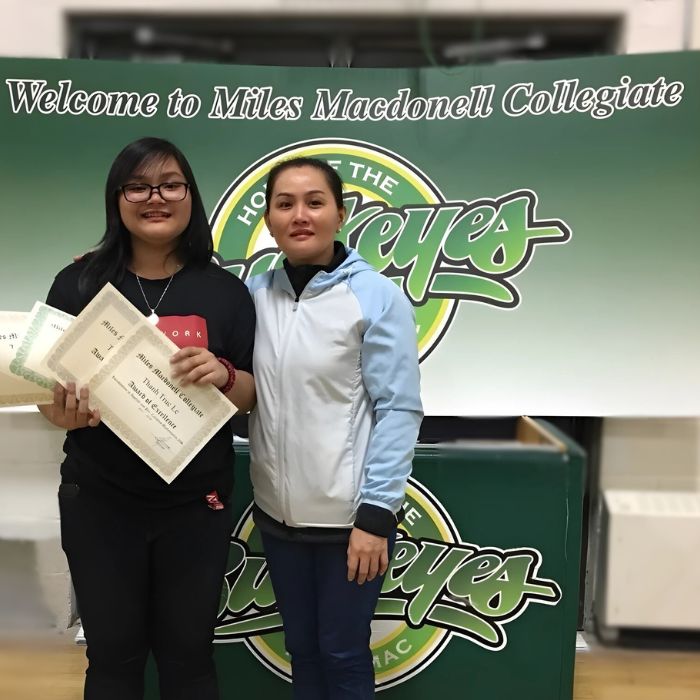
Lê Thanh Trúc, Student at Miles Macdonell Collegiate
“My family and I are deeply grateful to SIEC for not only securing my **Canada high school student visa** in Grade 10 but also for assisting my parents and siblings in obtaining their **visitor visas**. That was an invaluable gift.” — Lê Thanh Trúc, Student at **Miles Macdonell Collegiate** Secure Your Early High School (Secondary) […]
Phan Thị Ngọc Huỳnh, Former Student in Winnipeg
“The solid foundation provided by SIEC and Ms. Huong not only helped me realize my study abroad dream but also gave me the confidence to graduate, secure a stable job, and **settle permanently in Canada**.” — Phan Thị Ngọc Huỳnh, Former Student, currently working in **Winnipeg, Canada** Explore Your Study & Immigration Pathway in Canada […]
Hoàng Giang, Student at Edmonds College
“With her dedication and passion, Ms. Huong helped launch my **American dream**, opening up a vast world of opportunity and the chance to meet new friends.” — Hoàng Giang, Student at **Edmonds College** Explore More About Studying in the USA Spotlight on Edmonds College (Washington State) Gain in-depth knowledge about the programs, tuition fees, and […]
Khánh Lê, Student at LaSalle College
“Thank you to Ms. Huong and the SIEC team for their dedicated partnership and support, from my application phase until I was settled in Canada, helping me confidently pursue my dreams.” — Khánh Lê, Student at **LaSalle College** Explore Further Canada Study Opportunities Spotlight on LaSalle College Gain deeper insights into the programs, tuition fees, […]
Quỳnh Giao, Student at Red River Colleg
“She didn’t just stop at completing the application; she was an inspiration, a true motivator…” — Quỳnh Giao, Student at **Red River College** Continue Your Canada Study Abroad Journey Spotlight on Red River College Polytechnic (RRC Polytech) Discover the high-demand, **applied learning programs** at **Red River College** – one of the premier post-secondary institutions in […]