Canada humanitarian immigration: Key updates and insights
29/07/2026 Phong Nguyen
As Canada’s immigration policies undergo landmark changes, understanding **Canada humanitarian immigration** has become a significant interest for many. However, the 2026–2027 period marks a tightening of general immigration categories and a strong shift toward prioritizing highly skilled individuals. Although Canada humanitarian immigration is an option for special cases, reality shows that the most sustainable and fastest path today is studying and working in priority sectors.
The Canadian government is concentrating resources to attract talent in essential fields such as Healthcare, STEM, and Construction to address severe labor shortages.
1. Understanding Canada humanitarian immigration and New Migration Trends
The concept of **Canada humanitarian immigration** is typically understood as a program for individuals currently in Canada who would face exceptional hardship if they had to return to their home country. This is a specific immigration category that requires evidence demonstrating strong ties to the Canadian community. However, in the immigration levels plan for 2026–2027, Immigration, Refugees and Citizenship Canada (IRCC) has confirmed it will prioritize economic immigration streams.
This means that instead of relying on Canada humanitarian immigration, Vietnamese individuals should consider the study-to-immigrate route at reputable institutions to establish a solid legal foundation.
Immigration trends in the coming years will no longer be open to everyone on a mass scale. Instead, Canada will selectively choose candidates capable of contributing immediately to the economy. Understanding the difference between humanitarian programs and skilled worker programs will help you have a more realistic view of your opportunities.
Provincial Nominee Programs (PNP) and the Express Entry system are gradually adjusting to favor those studying and working in the occupations most needed by Canadian society.
For those seeking opportunities through **Canada humanitarian immigration**, pivoting toward a professional education pathway is a smart move. When you hold a Canadian degree and work in priority sectors, the likelihood of receiving Permanent Resident (PR) status is much higher than submitting applications based on subjective assessments. This is a long-term strategy that helps you and your family stabilize your lives in the Maple Leaf country legally and safely.
2. Latest Documentation and Financial Requirements for International Students
To prepare for a pathway that replaces **Canada humanitarian immigration** with study, you need to understand the changes in application requirements. Starting in 2024, Canada implemented the Provincial Attestation Letter (PAL) requirement for most international students pursuing undergraduate and college programs. This is a quality control step to ensure students are studying at qualified educational institutions.
For a high success rate, candidates must clearly demonstrate their study purpose and career plans linked to priority immigration occupations.
Financial requirements have also been significantly adjusted to match the actual cost of living in Canada. Instead of the old financial proof levels, international students now need to prove they have at least $20,635 CAD for first-year living expenses, excluding tuition. Preparing solid finances not only makes applying for a Study Permit easier but also serves as evidence of your self-sufficiency, avoiding the need to rely on social assistance or seek **Canada humanitarian immigration** due to financial hardship later.
Study permit applications must be meticulously prepared with documents proving academic level, language proficiency, and a clean criminal record. A strong profile will be the foundation for you to reach your goal of permanent residency after graduation. Note that honesty in information disclosure is the most important factor in avoiding risks of visa refusal or being banned from entering Canada in the future.
2.1. Study Permit Regulations and Important Changes
A Study Permit is not just a permit to study but also the key to accessing the Canadian labor market. In the 2026–2027 period, IRCC will tighten the issuance of permits for programs that do not provide practical value to the economy. Therefore, choosing the right field of study from the beginning is vital so that you do not have to resort to **Canada humanitarian immigration** if you cannot extend your work permit.
2.2. Proof of Financial Capacity and Stable Income Sources
Financial sources must be clearly proven through savings accounts, assets, and the monthly income of the sponsor. This ensures that you have enough resources to complete your program without interruption. Good financial preparation also helps reduce pressure during your studies and creates conditions to focus on achieving high results, thereby increasing your immigration score compared to the humanitarian stream.
3. 24-Hour Weekly Work Regulation and Experience Accumulation Opportunities
One of the most positive changes for international students is the new regulation on part-time work hours. Instead of the previous 20-hour limit, students are now allowed to work up to 24 hours per week during their studies. This change helps students earn extra income to cover living costs and, more importantly, accumulate practical work experience in Canada.
This is a major advantage compared to those applying for **Canada humanitarian immigration**, as local work experience is a huge plus in economic immigration programs.
Working 24 hours per week allows you early access to the office environment and local work culture. However, you need to balance work and study to ensure good academic results. If your grades drop, you could face the risk of having your Study Permit canceled, leading to the need for more difficult solutions like humanitarian applications.
Utilize this time to build professional networks, which will be very beneficial when searching for official employment after graduation.
Part-time jobs do not necessarily have to be directly related to your field of study, but if you find work in priority sectors like healthcare support, engineering, or professional customer service, it will be a perfect stepping stone. This experience proves your ability to integrate and contribute to Canadian society, a factor that immigration officers value highly when reviewing files compared to standard **Canada humanitarian immigration** cases.
4. How to Choose Majors and Schools to Optimize Long-term Immigration Potential
Choosing a major is a strategic decision that determines 80% of your immigration success. Instead of choosing general majors, you should focus on priority occupation groups where Canada faces severe labor shortages in 2026–2027. Holding a degree in these fields will give you an overwhelming advantage when applying for immigration, and you won’t need to worry about finding a path through humanitarian streams because the likelihood of being invited for skilled immigration is very high.
When selecting a school, prioritize Designated Learning Institutions (DLI) that offer the Post-Graduation Work Permit (PGWP) program. Schools in provinces with open immigration policies or regional areas often have specific nomination programs for local graduates. This is the shortest path to achieving immigration goals without going through the complex processes of **Canada humanitarian immigration**.
4.1. Healthcare and Social Care Groups
Healthcare is always a top priority for Canada due to its aging population. Fields such as Nursing, Medical Assistants, and Elderly Care have immense hiring needs. Graduates in these fields almost always find immediate employment and receive maximum support in the PR application process.
This is a perfect alternative for those with a passion for human care instead of seeking humanitarian paths.
4.2. STEM and Information Technology Groups
Science, Technology, Engineering, and Mathematics (STEM) are the drivers of Canada’s economic growth. Experts in programming, data analysis, and civil engineering are always in high demand. These occupations not only provide high income but also have dedicated immigration streams with fast processing times.
If you have a talent for technology, choose STEM instead of struggling with risky humanitarian immigration categories.
4.3. Construction and Skilled Trades Groups
To solve the housing crisis, Canada needs a large number of electricians, carpenters, welders, and construction managers. Vocational training programs at community colleges usually have shorter study durations and focus on practice. After graduation, you can easily find stable jobs and qualify for immigration under Federal Skilled Trades programs, a much more certain route than humanitarian streams.
5. Pathway from Education to Employment and Official Immigration
The ideal immigration pathway starts by completing a study program of 2 years or more to receive a 3-year PGWP. During this time, you should focus on finding a job in a priority occupation group. At least 1 year of work experience in Canada will qualify you to apply through the Express Entry system under the Canadian Experience Class (CEC).
This is an official, transparent immigration path with a much higher success rate than humanitarian applications.
In addition to the federal system, Provincial Nominee Programs (PNP) are also an excellent choice. Many provinces have streams dedicated to international students graduating in Healthcare, STEM, or Construction. Being nominated by a province adds 600 points to your Express Entry profile, guaranteeing an Invitation to Apply (ITA).
Thorough preparation of degrees and work experience will make you more confident on the road to becoming a permanent resident, rather than relying on the random factors of humanitarian cases.
Throughout this process, maintaining legal status is mandatory. You should regularly update yourself on changes in Canadian immigration law to adjust your plans in time. The 2026–2027 period will offer many priorities for those who have integrated well into the labor market.
Once you have a stable job and pay taxes, opportunities for economic immigration will be wide open, as it remains the government’s top priority.
6. Assess Your Canada 2027 Immigration Potential Now
Correct orientation from the start will help you save time, money, and effort. Instead of swimming alone in a sea of information about **Canada humanitarian immigration**, you should seek reputable immigration consultants for an in-depth profile evaluation. Each individual has a different academic and financial background, so a personalized roadmap is the key factor for success in this volatile 2026–2027 period.
Don’t let policy changes hinder your immigration dream. By focusing on priority sectors like Healthcare, STEM, and Construction, you are creating a safe ticket for yourself to settle in Canada. Start your journey by assessing your capacity today to know exactly what you need to prepare for your goals.
The journey to Canadian immigration is a long road that requires perseverance and a smart strategy. If you are concerned about documentation procedures or want to learn more about opportunities in priority sectors, contact the SIEC expert team immediately. We will help you analyze options, from school and major selection to holding your PR card.
Don’t miss the chance to realize your dream of living in one of the most livable countries in the world. Let SIEC accompany you in building a solid future in Canada through the most accurate and updated advice on 2026–2027 immigration policies.
Register for in-depth consultation and a completely free study-to-immigrate profile evaluation to capture the most optimal roadmap for yourself. We are committed to providing transparent information and the most effective solutions for every client at https://siec.com.vn/dang-ky.
Create a Sustainable Future in Canada with a Specialized Roadmap from SIEC
**Canada humanitarian immigration** is a journey that requires a deep understanding of policies and is often reserved for specific cases, sometimes causing many to miss out on broader career development opportunities. To help you optimize your immigration potential proactively and sustainably, SIEC provides consultation services for study pathways combined with global career orientation, accompanying you from choosing potential majors to building long-term work strategies in the land of the maple leaf.
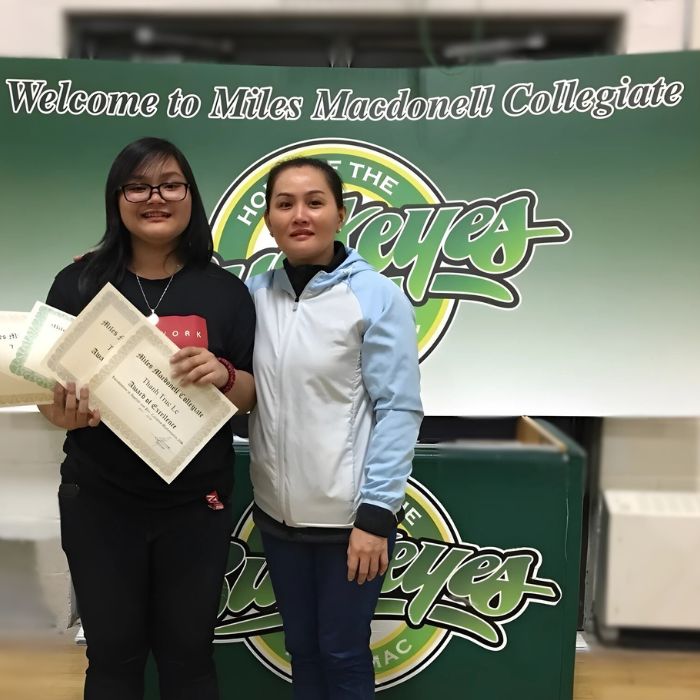
Lê Thanh Trúc, Student at Miles Macdonell Collegiate
“My family and I are deeply grateful to SIEC for not only securing my **Canada high school student visa** in Grade 10 but also for assisting my parents and siblings in obtaining their **visitor visas**. That was an invaluable gift.” — Lê Thanh Trúc, Student at **Miles Macdonell Collegiate** Secure Your Early High School (Secondary) […]
Phan Thị Ngọc Huỳnh, Former Student in Winnipeg
“The solid foundation provided by SIEC and Ms. Huong not only helped me realize my study abroad dream but also gave me the confidence to graduate, secure a stable job, and **settle permanently in Canada**.” — Phan Thị Ngọc Huỳnh, Former Student, currently working in **Winnipeg, Canada** Explore Your Study & Immigration Pathway in Canada […]
Hoàng Giang, Student at Edmonds College
“With her dedication and passion, Ms. Huong helped launch my **American dream**, opening up a vast world of opportunity and the chance to meet new friends.” — Hoàng Giang, Student at **Edmonds College** Explore More About Studying in the USA Spotlight on Edmonds College (Washington State) Gain in-depth knowledge about the programs, tuition fees, and […]
Khánh Lê, Student at LaSalle College
“Thank you to Ms. Huong and the SIEC team for their dedicated partnership and support, from my application phase until I was settled in Canada, helping me confidently pursue my dreams.” — Khánh Lê, Student at **LaSalle College** Explore Further Canada Study Opportunities Spotlight on LaSalle College Gain deeper insights into the programs, tuition fees, […]
Quỳnh Giao, Student at Red River Colleg
“She didn’t just stop at completing the application; she was an inspiration, a true motivator…” — Quỳnh Giao, Student at **Red River College** Continue Your Canada Study Abroad Journey Spotlight on Red River College Polytechnic (RRC Polytech) Discover the high-demand, **applied learning programs** at **Red River College** – one of the premier post-secondary institutions in […]