Can You Work while studying USA? 5 Essential Rules to Know
17/08/2026 Phong Nguyen
Many parents and students preparing for their education in the United States often ask if they can work while studying USA to balance their personal budgets. In the context of rising education costs, thoroughly understanding labor regulations for international students is essential. However, rather than just focusing on short-term part-time jobs, the current trend is to apply the Double-Path strategy for the 2026–2027 period. This is a roadmap that combines high-quality education with the preparation of long-term residency applications through skilled labor categories, helping to thoroughly solve financial and career challenges after graduation.
Current legal regulations on whether you can work while studying USA
According to regulations from the U.S. Citizenship and Immigration Services (USCIS), international students holding an F-1 visa have specific employment limitations. To answer the question of whether you can work while studying USA, you need to know that students are allowed to work on-campus starting from their first academic year. The maximum working time is 20 hours per week during the semester, and you can work full-time (40 hours per week) during holidays or summer breaks. These jobs typically include working at the library, cafeteria, student support offices, or as a teaching assistant for a professor.
For off-campus employment, the regulations are much stricter. Students are only allowed to work off-campus after completing at least one full academic year and must obtain permission from their Designated School Official (DSO). There are two main forms: Curricular Practical Training (CPT) and Optional Practical Training (OPT). CPT allows you to work in a field directly related to your major before graduation. Meanwhile, OPT allows students to work after graduation for 12 months (or up to 36 months for STEM fields). Understanding these rules helps you avoid violating immigration laws when looking for answers on how to work while studying USA.
An important note is that students are not allowed to perform off-campus manual labor such as restaurant service or nail salon work without a valid work permit. Illegal employment not only violates the law but also leads to the risk of deportation and a permanent entry ban. Therefore, instead of worrying about how to work while studying USA through illegal means, students should focus on professional internship programs to both earn an income and accumulate experience for their future residency applications.
Choosing schools and hunting for Fall 2027 scholarships to optimize finances
To reduce the burden regarding the need to work while studying USA, the smartest strategy is to hunt for scholarships for the Fall 2027 semester. School selection should not be based solely on rankings but should consider factors such as scholarship funds for international students and the cost of living in that area. States in the Midwest or Southern United States often have lower living costs, helping students reduce the pressure to earn money during their studies.
Fall 2027 scholarships usually require students to prepare their applications early, at least 12 to 18 months before the enrollment date. Common types of scholarships include Merit-based and Need-based scholarships. When you secure a scholarship covering 50% to 100% of tuition, the question of whether you can work while studying USA will no longer be an overwhelming pressure for the family. This allows students to focus on maintaining high grades, a key factor for transitioning to skilled labor residency categories later on.
Additionally, when choosing a school under the Double-Path roadmap, you should prioritize institutions with strong corporate networks. These schools often provide many on-campus jobs, helping to resolve concerns about working legally and easily. Having a good academic foundation at a prestigious school is also an important stepping stone for EB-3 sponsoring employers to notice your profile in the future.
Preparing financial documents and a clear study plan
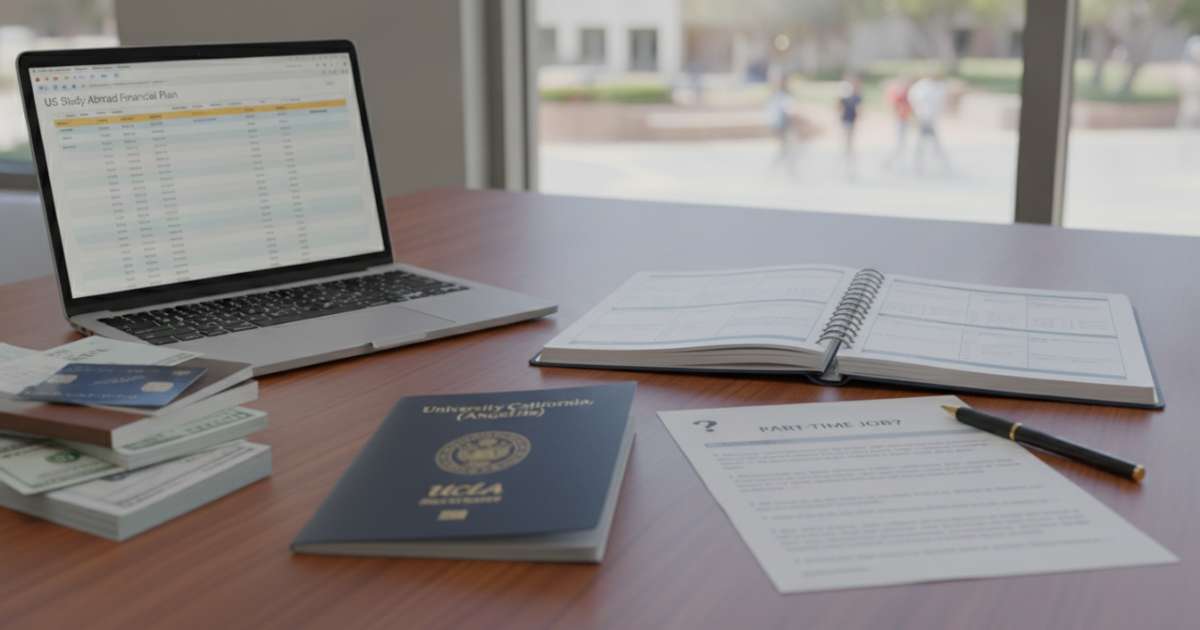
One of the biggest hurdles when applying for a visa is not the question of whether you can work while studying in the US, but the family’s ability to prove financial capacity. Financial records need to clearly demonstrate a stable source of income and enough savings to cover at least the first academic year. Consular officers need to see that you are going to study for genuine educational purposes and not using student status as a pretext to enter the US for labor.
The Study Plan must be constructed logically and in detail. You need to explain why you chose this major, why you chose this school, and what your career goals are after graduating back in Vietnam. A superficial study plan will make consular officers suspect that you are looking for ways to work while studying rather than focusing on attending classes. Transparency in your study plan is the key to convincing the visa authority of your serious intentions.
In the 2026–2027 Double-Path strategy, the study plan also needs to integrate a long-term skill development roadmap. Instead of just asking if you can work while studying, you should present your plan to participate in CPT or OPT programs to enhance your professional qualifications. Thorough preparation of financial paperwork and a clear academic mindset will help minimize the risk of visa denial due to “unclear purpose” errors—a very common mistake for Vietnamese students.
Visa interview and the error of unclear purpose
When entering the visa interview round, many candidates often feel confused when facing questions related to working while studying. The biggest mistake is showing too much desire to work to cover costs. Consular officers are trained to detect candidates who intend to immigrate illegally or work over the regulated hours. If you cannot prove that the purpose of study is your top priority, your visa will be rejected immediately.
The error of unclear purpose often occurs when students choose majors unrelated to their previous background or fail to explain the value of a US degree for their future. To avoid this, answer questions about working while studying honestly and based on legal regulations. You can state that you are aware of the 20-hour-per-week on-campus work regulation and see it as an opportunity for cultural integration, but the primary financial source still comes from your family or scholarships.
Confidence and consistency in your answers are decisive factors. In the Double-Path strategy, we do not hide the intention of long-term residency, but we must implement it through legal paths like EB-3 after completing the study program. Demonstrating a transparent roadmap from studying to high-skilled labor will help you avoid suspicions about working improperly while still a student.
Overview of the EB-3 residency roadmap for Vietnamese students 2026-2027
For families with a long-term vision, the question of working while studying is just the beginning. The ultimate goal is often a Green Card through the EB-3 employment-based residency program. This is a residency program based on the sponsorship of a US employer when they cannot find suitable local labor. The EB-3 category includes three groups: professional workers, skilled workers, and unskilled workers.
In the 2026–2027 period, the number of EB-3 applications from Vietnam is predicted to remain high. The waiting time for the unskilled worker category for Vietnamese nationals typically lasts from 4 to 6 years depending on the Visa Bulletin. Therefore, if a student starts the Double-Path roadmap in 2026, filing an EB-3 application during their studies or during their OPT period is a strategic move. This takes advantage of the time the student is legally in the US to wait for the application to be processed, instead of waiting from Vietnam.
Combining study with EB-3 preparation helps students stop worrying about how to work while studying just to survive. Once sponsored by a reputable business, the roadmap from an international student to a permanent resident becomes clearer than ever. However, it should be noted that this process requires strict compliance with F-1 visa regulations throughout the study period to avoid affecting the future Green Card transition.
Double-Path Strategy: Combining study with residency preparation
The Double-Path strategy we propose for the 2026–2027 period focuses on optimizing all resources for international students. Instead of just revolving around the question of working while studying, students will be guided to build a strong professional profile. The first step is hunting for Fall 2027 scholarships to minimize initial costs. The second step is maintaining excellent academic results and participating in extracurricular activities to enhance their personal portfolio.
Parallel to their studies, students will look for labor sponsors suitable for their expertise or participate in EB-3 unskilled labor programs if they want to ensure the highest residency possibility. Understanding how to work while studying according to the law will help students secure internships in their field, creating a foundation for employers to trust and perform residency sponsorship procedures. This is a closed, safe, and highly practical roadmap for Vietnamese people.
Waiting times for the EB-3 category in 2026 may fluctuate, but with early preparation starting in 2025, international students will have an advantage in the priority queue for visa issuance. This strategy requires perseverance and a solid financial plan from parents. Once the rules of working while studying are understood and a specific residency roadmap is in place, the journey to study in the US will no longer be a gamble but a smart investment for a sustainable future.
We hope this article has satisfactorily answered your questions about working while studying and provided you with a long-term view of the 2026–2027 Double-Path roadmap. Grasping accurate information and preparing early will help you feel more confident on your path to conquering education and residency in the Land of Opportunity.
If you are looking for a comprehensive solution to both optimize scholarship opportunities and build a safe residency roadmap for your children, contact the expert team at SIEC immediately. We will help you answer all detailed questions about working while studying as well as provide the most updated information on the US labor and immigration market for 2026–2027.
Don’t let procedural barriers or a lack of information interrupt your family’s future plans. Let SIEC accompany you in designing a unique Double-Path roadmap tailored to your specific abilities and financial conditions, helping to realize your goals of studying and residing in the United States most effectively.
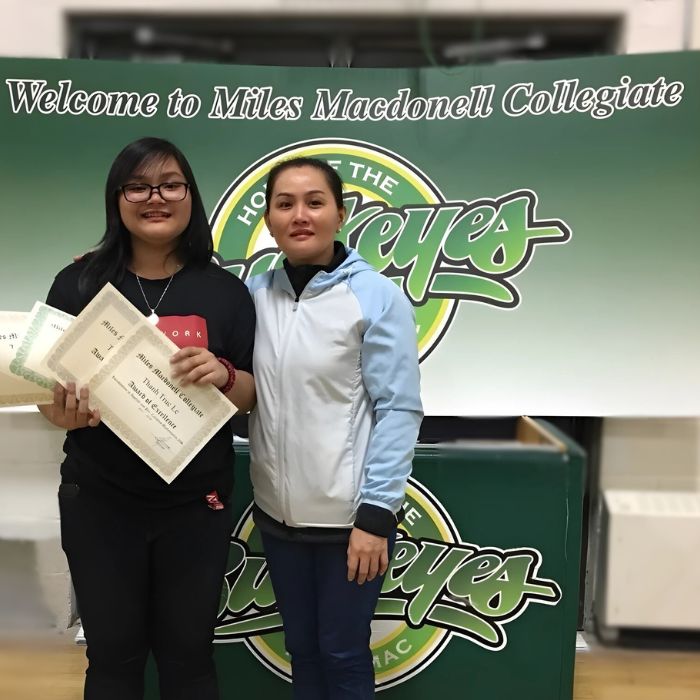
Lê Thanh Trúc, Student at Miles Macdonell Collegiate
“My family and I are deeply grateful to SIEC for not only securing my **Canada high school student visa** in Grade 10 but also for assisting my parents and siblings in obtaining their **visitor visas**. That was an invaluable gift.” — Lê Thanh Trúc, Student at **Miles Macdonell Collegiate** Secure Your Early High School (Secondary) […]
Phan Thị Ngọc Huỳnh, Former Student in Winnipeg
“The solid foundation provided by SIEC and Ms. Huong not only helped me realize my study abroad dream but also gave me the confidence to graduate, secure a stable job, and **settle permanently in Canada**.” — Phan Thị Ngọc Huỳnh, Former Student, currently working in **Winnipeg, Canada** Explore Your Study & Immigration Pathway in Canada […]
Hoàng Giang, Student at Edmonds College
“With her dedication and passion, Ms. Huong helped launch my **American dream**, opening up a vast world of opportunity and the chance to meet new friends.” — Hoàng Giang, Student at **Edmonds College** Explore More About Studying in the USA Spotlight on Edmonds College (Washington State) Gain in-depth knowledge about the programs, tuition fees, and […]
Khánh Lê, Student at LaSalle College
“Thank you to Ms. Huong and the SIEC team for their dedicated partnership and support, from my application phase until I was settled in Canada, helping me confidently pursue my dreams.” — Khánh Lê, Student at **LaSalle College** Explore Further Canada Study Opportunities Spotlight on LaSalle College Gain deeper insights into the programs, tuition fees, […]
Quỳnh Giao, Student at Red River Colleg
“She didn’t just stop at completing the application; she was an inspiration, a true motivator…” — Quỳnh Giao, Student at **Red River College** Continue Your Canada Study Abroad Journey Spotlight on Red River College Polytechnic (RRC Polytech) Discover the high-demand, **applied learning programs** at **Red River College** – one of the premier post-secondary institutions in […]