Guide to the Atlantic Immigration Program: Path to Canada
06/08/2026 Phong Nguyen
In the context of Canada’s immigration policies shifting strongly towards selecting high-skilled labor, the Atlantic region continues to emerge as an attractive destination thanks to special priority policies. Entering the 2026–2027 period, the Atlantic Immigration Program is no longer maintaining mass application intake as before but is shifting its focus to candidates with expertise in sectors facing severe labor shortages. Understanding the roadmap from international study to employment is the key for international candidates, especially Vietnamese students, to realize their dream of settling in provinces such as New Brunswick, Nova Scotia, Prince Edward Island, and Newfoundland and Labrador.
Overview of the Atlantic Immigration Program updated for 2026–2027
The Atlantic Immigration Program (AIP) is a federal program designed in partnership with Canada’s four eastern coastal provinces. The core objective of this program is to attract foreign workers and international graduates from Canadian institutions to fill labor gaps in the region. For the 2026–2027 period, the Canadian government has clearly defined an economic development strategy for the Atlantic region based on selective talent attraction. This means that applications in priority sectors will be processed quickly and have a significantly higher success rate compared to general occupations.
The biggest difference between the Atlantic Immigration Program and other immigration pathways is the requirement for a Job Offer from a designated employer approved by the province. Instead of facing fierce competition through the Express Entry CRS scoring system, candidates participating in the AIP only need to meet minimum standards for education, language proficiency, and work experience as required by the employer and the province. This is a direct pathway to Permanent Residency (PR) without having to go through many complex intermediate steps, saving time and costs for workers.
Application Conditions and Latest Financial Requirements
To participate in the Atlantic Immigration Program during the 2026–2027 period, candidates need to prepare a profile that meets strict standards for both professional qualifications and adaptability. First, regarding education, candidates must have credentials equivalent to a Canadian high school diploma or a college/university degree. If the degree was obtained outside of Canada, an Educational Credential Assessment (ECA) is mandatory to prove its equivalent value.
Regarding language proficiency, the Atlantic Immigration Program typically requires a minimum level of CLB 4 or CLB 5, depending on the job classification (TEER). However, to increase competitiveness and ensure stable employment, experts encourage candidates to achieve CLB 7 (equivalent to IELTS 6.0) or higher. This is a safe threshold for candidates to communicate effectively in a professional working environment in Canada.
An important change in the 2026–2027 phase is the financial requirement. The Canadian government has updated the Low Income Cut-Off (LICO) table to ensure that immigrants have enough funds to cover their living expenses during their initial period in the country. Candidates must prove they have a certain amount of savings based on the number of family members. However, if you are already working in Canada with a valid work permit, this financial proof requirement may be waived or significantly simplified within the Atlantic Immigration Program application.
Study Permit Regulations and the 24-Hour Weekly Work Policy
For those choosing the study route to progress toward the Atlantic Immigration Program, mastering Study Permit regulations is extremely important. Since 2024, Canada has tightened Study Permit issuance by applying quotas for each province. However, the Atlantic region, with its high demand for human resources, often has its own priorities to attract international students to study at local colleges and universities.
A bright spot in the new policy for international students is the regulation on off-campus work hours. Instead of the previous 20-hour weekly limit, students are now allowed to work up to 24 hours per week during academic terms and full-time during scheduled breaks. This regulation not only helps students earn extra income to cover living expenses but is also a golden opportunity to accumulate practical work experience in Canada. Such work experience, if related to the field of study, will be a huge plus when candidates seek an employer to sponsor them for the Atlantic Immigration Program after graduation.
Working 24 hours a week also helps students build networks with local businesses. In the Atlantic Immigration Program, the relationship with the employer is a decisive factor. Many students have received official job offers immediately after internships or part-time work, thereby significantly shortening their immigration roadmap.
Priority Occupations in the Atlantic Immigration Program
Instead of being open to all professions, the Atlantic Immigration Program for 2026–2027 focuses heavily on three main economic pillars. Choosing the right field of study and work within these groups will ensure nearly a 90% chance of successful settlement for candidates.
Healthcare and Social Assistance Group
With a rapidly aging population, the Atlantic region is facing a severe shortage of nurses, personal care assistants, and medical technical specialists. Provinces in the region continuously introduce specific support policies for international healthcare workers. If you graduate from a healthcare training program in the Atlantic region, you will be a top priority for the Atlantic Immigration Program, with a highly simplified application review process.
STEM Group (Science, Technology, Engineering, and Mathematics)
The boom of technology companies in Halifax (Nova Scotia) and Moncton (New Brunswick) has created a huge demand for programmers, software engineers, and data analysts. The STEM group not only offers high salaries but is also a priority group for processing in the Atlantic Immigration Program due to its vital contribution to innovation and the region’s digital economy.
Construction and Skilled Trades Group
To meet the demand for housing and infrastructure, electricians, carpenters, welders, and construction managers are more sought after than ever. These are occupations that require high practical skills and have clear certification pathways in Canada. Candidates with skills in the construction sector often find it easy to secure an employer to sponsor them for the Atlantic Immigration Program even without a university degree, provided they have the appropriate vocational certification.
How to Choose Majors and Schools to Optimize the Atlantic Immigration Program
Choosing a school is not just about choosing a place to get a degree; it is about choosing a “launchpad” to participate in the Atlantic Immigration Program. Advice from immigration experts is to choose public colleges or universities that are on the list of Designated Learning Institutions (DLI) and have training programs closely linked with local businesses.
In Nova Scotia, Dalhousie University or Nova Scotia Community College (NSCC) are top choices for STEM and Construction groups. In New Brunswick, the campuses of New Brunswick Community College (NBCC) are famous for their practical training programs, helping students find jobs immediately after graduation. When choosing a major, cross-reference it with the list of high-demand occupations in each province to ensure that after graduation, you can easily find a “Designated Employer” to apply for the Atlantic Immigration Program.
Additionally, you should also consider the geographical location of the school. Studying in smaller cities or rural areas sometimes offers a greater advantage because competition is lower, and the regional settlement incentive policies of the Atlantic Immigration Program are often more relaxed than in major hubs like Halifax.
Roadmap from International Study to Employment and Official Permanent Residency
The ideal roadmap to successful settlement through the Atlantic Immigration Program typically lasts from 3 to 5 years depending on the study program. The first step is to apply for a Study Permit and complete a program of at least 2 years at a recognized educational institution in the Atlantic region. During your studies, making the most of the 24 hours of part-time work per week to accumulate experience and build a professional profile is mandatory.
Upon graduation, students apply for a Post-Graduation Work Permit (PGWP) to stay and work legally. During this time, the most important goal is to find a full-time job in a priority sector from an employer already approved by the province to participate in the Atlantic Immigration Program. Once you have a Job Offer and an Endorsement plan approved by the province, you can apply for Permanent Residency directly with Immigration, Refugees and Citizenship Canada (IRCC).
This roadmap not only helps you prepare well in terms of knowledge but also helps you fully adapt to the culture and living environment in the Atlantic. The Atlantic Immigration Program highly values candidates who have spent time integrating into the local community, as they are the ones most likely to stay long-term and contribute sustainably to the region’s development.
Preparing an application for the Atlantic Immigration Program requires meticulousness and a deep understanding of immigration law. With new updates for the 2026–2027 period, having a professional consulting firm accompany you will help you avoid unnecessary mistakes and optimize your chances of success. Start planning today so you don’t miss the opportunity to settle in one of the most peaceful and livable regions in Canada.
Assess your Canada 2027 settlement potential now to see if you meet the latest criteria for the Atlantic region. Early profile evaluation will help you be proactive in choosing a major and preparing your finances in the most systematic way.
To receive detailed support regarding the study and settlement roadmap in the Atlantic region, please contact the team of experts at SIEC immediately. We will help you analyze your profile, choose the most suitable school and major based on your personal capacity and recruitment trends in Canada.
Do not hesitate to leave your information for in-depth consultation on the steps to prepare your immigration file. SIEC is committed to accompanying you from the very first steps until you hold your Canadian Permanent Resident card in your hand.
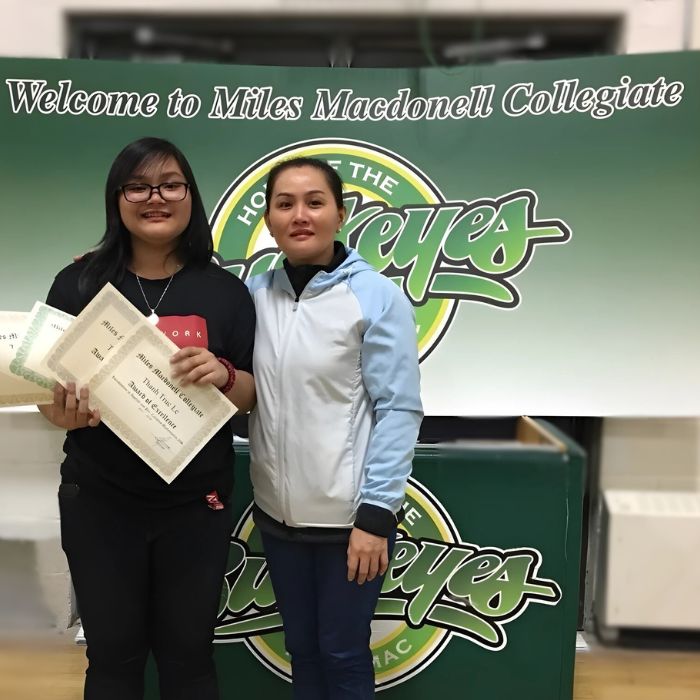
Lê Thanh Trúc, Student at Miles Macdonell Collegiate
“My family and I are deeply grateful to SIEC for not only securing my **Canada high school student visa** in Grade 10 but also for assisting my parents and siblings in obtaining their **visitor visas**. That was an invaluable gift.” — Lê Thanh Trúc, Student at **Miles Macdonell Collegiate** Secure Your Early High School (Secondary) […]
Phan Thị Ngọc Huỳnh, Former Student in Winnipeg
“The solid foundation provided by SIEC and Ms. Huong not only helped me realize my study abroad dream but also gave me the confidence to graduate, secure a stable job, and **settle permanently in Canada**.” — Phan Thị Ngọc Huỳnh, Former Student, currently working in **Winnipeg, Canada** Explore Your Study & Immigration Pathway in Canada […]
Hoàng Giang, Student at Edmonds College
“With her dedication and passion, Ms. Huong helped launch my **American dream**, opening up a vast world of opportunity and the chance to meet new friends.” — Hoàng Giang, Student at **Edmonds College** Explore More About Studying in the USA Spotlight on Edmonds College (Washington State) Gain in-depth knowledge about the programs, tuition fees, and […]
Khánh Lê, Student at LaSalle College
“Thank you to Ms. Huong and the SIEC team for their dedicated partnership and support, from my application phase until I was settled in Canada, helping me confidently pursue my dreams.” — Khánh Lê, Student at **LaSalle College** Explore Further Canada Study Opportunities Spotlight on LaSalle College Gain deeper insights into the programs, tuition fees, […]
Quỳnh Giao, Student at Red River Colleg
“She didn’t just stop at completing the application; she was an inspiration, a true motivator…” — Quỳnh Giao, Student at **Red River College** Continue Your Canada Study Abroad Journey Spotlight on Red River College Polytechnic (RRC Polytech) Discover the high-demand, **applied learning programs** at **Red River College** – one of the premier post-secondary institutions in […]