5 Best Ways to Avoid Canada student visa rejection Now
10/04/2026 Phong Nguyen
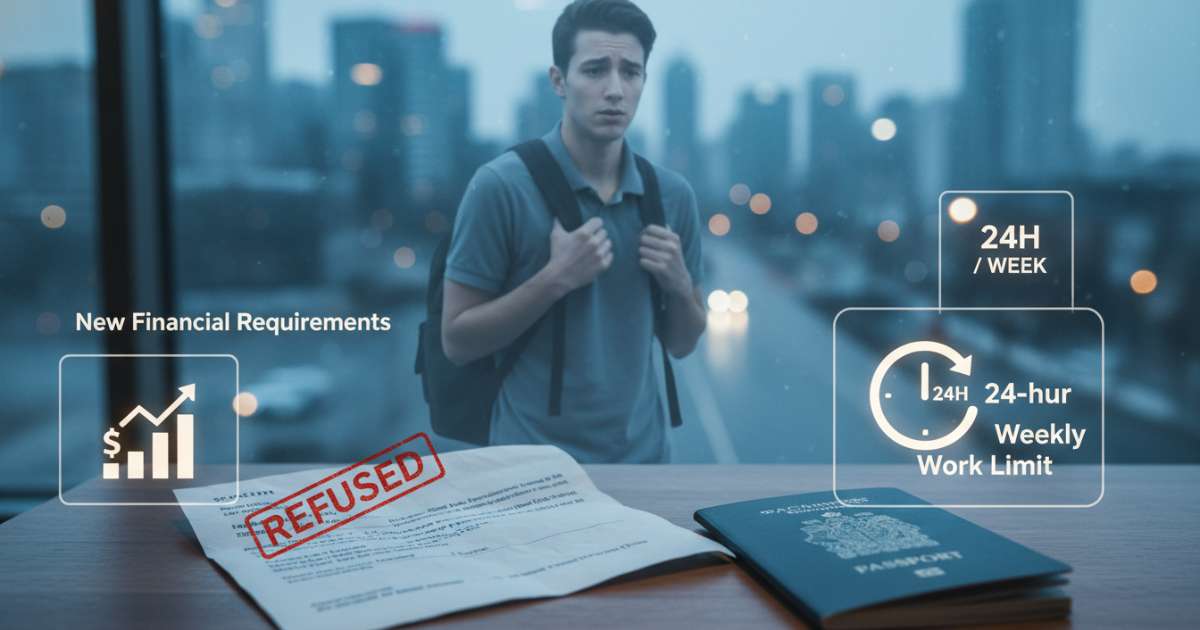
In the context of significant changes in Canadian immigration policies for the 2026–2027 period, thorough preparation is the key factor to avoid a Canada student visa rejection. The Canadian government is currently tightening the number of study permits and prioritizing candidates enrolled in sectors facing severe labor shortages. To succeed in this pathway, students must clearly understand new financial regulations, off-campus work rights, and choose a field of study that aligns with a long-term settlement strategy.
1. Common causes of Canada student visa rejection in 2026
The rate of Canada student visa rejection tends to increase for applications that fail to demonstrate a clear study purpose or lack strong financial standing. One of the top reasons is an illogical study plan that is unrelated to the applicant’s previous academic background or work experience. The Consulate will question your true intentions if you choose an entirely new field of study without a convincing explanation.
Financial proof is also a major barrier that causes many students to face a Canada student visa rejection regrettably. Starting from 2026, requirements for account balances and evidence of income have increased significantly to ensure students can support themselves in Canada without over-relying on part-time work. If tax documents, payslips, or business licenses are not prepared transparently, the profile will be downgraded immediately.
Additionally, the lack of a Provincial Attestation Letter (PAL) is a new reason for application refusal. This regulation is mandatory for most levels of study except for master’s and doctoral degrees. If you do not master the process of applying for this attestation letter, there is a high probability you will face a Canada student visa rejection right from the initial screening step.
2. Application conditions and latest Study Permit regulations 2026–2027
To successfully apply for a Study Permit in 2026, students must meet stricter standards regarding both academics and personal history. First, you must have a Letter of Acceptance (LOA) from a Designated Learning Institution (DLI), and this institution must be on the list allowed to recruit international students under the new quota. Carefully checking this list helps you avoid the risk of a Canada student visa rejection due to the school being ineligible.
Language requirements have also been raised to ensure students can keep up with the curriculum and integrate easily after graduation. Certificates such as IELTS, PTE, or TOEFL need to reach the minimum scores required for each major. In particular, for priority industry groups, language requirements are often higher to serve future internships and professional work.
Below is a summary table of important documents needed to minimize the risk of Canada student visa rejection during the 2026–2027 period:
Document Type
Detailed Requirements
Letter of Acceptance (LOA)
Must be from a DLI school with a valid code and remaining quota
Provincial Attestation Letter (PAL)
Mandatory for college and undergraduate levels
Language Certificate
Minimum IELTS Academic 6.0 or equivalent
Study Plan
Detailed explanation of the study path and reasons for choosing Canada
Police Certificate
Must be clean, with no criminal record
3. New financial requirements and 24-hour weekly work regulation
Starting from 2026, the Canadian Government has updated the minimum cost of living that international students must prove. This figure is no longer at the old level but has been adjusted upward to reflect the reality of inflation in major cities. Failing to update the latest financial figures is a direct cause of Canada student visa rejection for many students despite having excellent academic records.
Specifically, a single student needs to prove living expenses of more than 21,000 CAD for the first year, excluding tuition fees. If accompanied by family members, this figure will increase significantly. Preparing ample finances with a clear source will help you build trust with the consular officer, thereby reducing the risk of a Canada student visa rejection due to doubts about financial capacity.
Regarding work regulations, international students are now allowed to work off-campus for a maximum of 24 hours per week during study terms. This is a change from previous temporary regulations. This rule aims to help students focus more on their studies while still having the opportunity to gain practical work experience.
You must strictly comply with these work hours, as violating labor regulations can lead to the revocation of your Study Permit and affect future immigration applications.
4. Strategy for choosing majors and schools to avoid Canada student visa rejection
In the 2026–2027 period, Canada focuses on attracting human resources into priority occupations rather than mass immigration as before. Choosing the right major not only helps you easily explain your study plan to avoid a Canada student visa rejection, but also opens the door to settlement after graduation. The top priority industry groups include Healthcare, STEM, and Construction.
4.1. Healthcare and Social Care Sector
With an aging population, Canada is facing a severe shortage of nurses, medical laboratory technicians, and elderly care workers. When you choose to study these fields, your application is often given priority consideration because this is an urgent national need. This helps minimize the risk of rejection because the field of study has high potential to contribute to the socio-economy.
4.2. STEM Group (Science, Technology, Engineering, and Mathematics)
Training programs in information technology, software engineering, and data analysis are always on the immigration priority list. STEM graduates have very high job opportunities with attractive salaries. Demonstrating a clear STEM study path is a big plus to help you avoid a Canada student visa rejection when applying to prestigious universities.
4.3. Construction and Transportation Sector
To meet the demand for housing and infrastructure, Canada is looking for electricians, carpenters, construction managers, and infrastructure engineers. Short-term vocational courses or college diplomas in construction are becoming a new trend. This choice helps students save on tuition costs and quickly enter the labor market, while limiting the possibility of visa rejection due to the high practicality of the major.
5. Pathway from studying to employment and settlement in Canada 2027
The settlement pathway in Canada in 2027 requires students to prepare very early, right from the moment they start applying for study abroad. After completing your program, you need to apply for a Post-Graduation Work Permit (PGWP) to accumulate work experience in Canada. The duration of the PGWP will depend on the length of your study program, so consider carefully before deciding on a short or long course to avoid complications in later extension stages.
The Express Entry system now frequently features category-based selection draws. If you work in priority fields like Healthcare or STEM, priority points will help you receive an invitation to apply for permanent residency faster than other groups. This is a smart strategy to ensure that your time studying abroad leads to a sustainable settlement result.
To avoid a Canada student visa rejection or settlement refusal, you need to maintain good academic results and actively participate in internships (Co-op). Practical work experience at Canadian enterprises is the best evidence of your ability to adapt and contribute to the economy. Always stay updated on changes in immigration law to adjust your pathway most flexibly.
6. How to recover from a Canada student visa rejection to re-apply successfully
If you unfortunately face a Canada student visa rejection, the most important thing is not to panic but to request a detailed explanation (ATIP) from the Consulate. This report will tell you exactly why the application was refused, from which you can modify and supplement missing or unclear information. Re-applying immediately without making any changes to the profile usually leads to a second failure.
Many cases of visa rejection are due to presentation errors or unscientific document organization. You should seek professional consulting units for a full audit of all documents. Changing the study path to a priority occupation or choosing a school in an area that encourages immigration is also an effective solution to improve the success rate for the next application.
Finally, be persistent and maintain a strong mindset. A Canada student visa rejection once does not mean the door to the land of the maple leaf is completely closed. With more careful preparation of finances, language skills, and a tight study plan towards Healthcare, STEM, or Construction, you can absolutely conquer the study visa in 2026–2027.
To ensure your study and settlement pathway goes smoothly, document evaluation by experienced experts is essential. SIEC is always ready to accompany you in building an impressive profile, helping to minimize the risk of visa refusal and optimize long-term settlement opportunities in Canada.
Don’t let small mistakes lead to an unnecessary visa rejection. Contact us now for in-depth advice on priority occupations and the latest immigration updates for 2027. The team of experts at SIEC will help you assess your Canada 2027 settlement potential today so you have the most perfect preparation.
Are You Ready to Breakthrough Your Global Career with SIEC?
Don’t let your prestigious degree just stay on paper. Let SIEC experts advise you on a study abroad pathway combined with a career orientation strategy starting today!
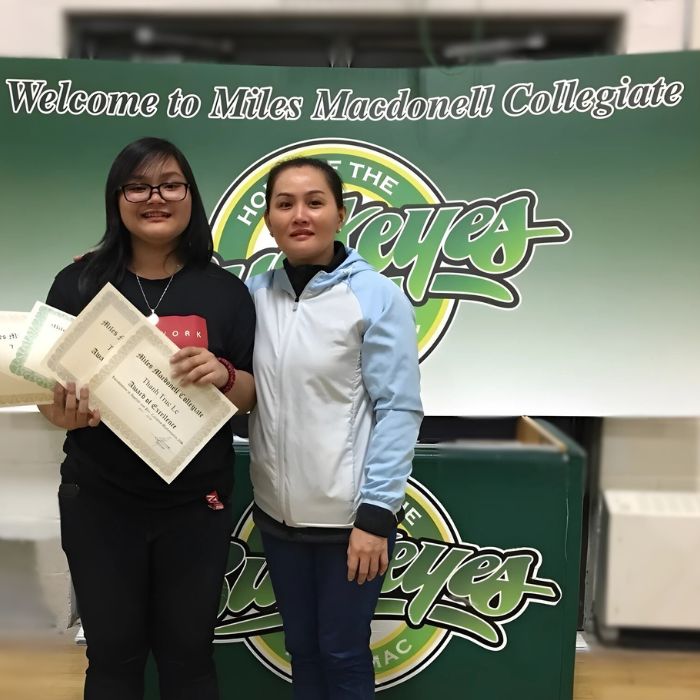
Lê Thanh Trúc, Student at Miles Macdonell Collegiate
“My family and I are deeply grateful to SIEC for not only securing my **Canada high school student visa** in Grade 10 but also for assisting my parents and siblings in obtaining their **visitor visas**. That was an invaluable gift.” — Lê Thanh Trúc, Student at **Miles Macdonell Collegiate** Secure Your Early High School (Secondary) […]
Phan Thị Ngọc Huỳnh, Former Student in Winnipeg
“The solid foundation provided by SIEC and Ms. Huong not only helped me realize my study abroad dream but also gave me the confidence to graduate, secure a stable job, and **settle permanently in Canada**.” — Phan Thị Ngọc Huỳnh, Former Student, currently working in **Winnipeg, Canada** Explore Your Study & Immigration Pathway in Canada […]
Hoàng Giang, Student at Edmonds College
“With her dedication and passion, Ms. Huong helped launch my **American dream**, opening up a vast world of opportunity and the chance to meet new friends.” — Hoàng Giang, Student at **Edmonds College** Explore More About Studying in the USA Spotlight on Edmonds College (Washington State) Gain in-depth knowledge about the programs, tuition fees, and […]
Khánh Lê, Student at LaSalle College
“Thank you to Ms. Huong and the SIEC team for their dedicated partnership and support, from my application phase until I was settled in Canada, helping me confidently pursue my dreams.” — Khánh Lê, Student at **LaSalle College** Explore Further Canada Study Opportunities Spotlight on LaSalle College Gain deeper insights into the programs, tuition fees, […]
Quỳnh Giao, Student at Red River Colleg
“She didn’t just stop at completing the application; she was an inspiration, a true motivator…” — Quỳnh Giao, Student at **Red River College** Continue Your Canada Study Abroad Journey Spotlight on Red River College Polytechnic (RRC Polytech) Discover the high-demand, **applied learning programs** at **Red River College** – one of the premier post-secondary institutions in […]