Study Canada vs Australia: The Best Choice for Your Future
09/04/2026 Phong Nguyen
Choosing between two of the world’s leading education powerhouses is always a difficult decision for many families. As we move into the 2026-2027 period, visa and settlement policies in both nations have undergone significant adjustments focusing on quality over quantity. This article provides a detailed **Study Canada vs Australia** comparison to give you an overview of costs, job opportunities, and sustainable settlement pathways.
1. Comparing Study Canada vs Australia: Application Requirements and Study Permits
In 2026, Canada’s Study Permit issuance process has stabilized following major changes to quotas. Students need a Letter of Acceptance (LOA) from the school and a Provincial Attestation Letter (PAL) for undergraduate and college levels. A **Study Canada vs Australia** comparison shows that Canada maintains a transparent review process; however, requirements for the Study Plan are increasingly strict to ensure students are coming for genuine academic purposes.
For Australia, the Subclass 500 visa assessment system focuses heavily on the risk level of the institution and the student’s nationality. Australia applies the Genuine Student (GS) test to replace the old GTE, requiring applicants to demonstrate the link between their field of study and future career. When you **Study Canada vs Australia**, you will find that Australia is somewhat stricter in controlling age and gap years compared to Canada.
Regarding language proficiency, both countries require IELTS, PTE, or equivalent TOEFL certificates. However, Canadian schools often require a minimum of 6.0 – 6.5 IELTS for college and university programs with no skill below 6.0 to facilitate direct visa applications through priority streams. Australia also maintains similar requirements but offers more flexibility depending on the level of the educational institution.
2. Financial Requirements and Part-time Work Regulations for Canada and Australia
Financial requirements are the most critical factor when making a **Study Canada vs Australia** comparison in the context of current global inflation. Canada has officially implemented new financial proof levels based on actual living costs. Students must prove they have approximately 21,000 – 25,000 CAD (excluding tuition) for the first year to ensure affordability in major cities like Toronto or Vancouver.
Australia is no exception, having increased financial proof requirements to approximately 30,000 AUD per year. When weighing the options of where to study, living costs in Australia are typically 15-20% higher than in Canada, especially in Sydney and Melbourne. However, the minimum wage in Australia is among the highest in the world, helping students alleviate the financial burden if they manage their spending wisely.
Comparison Category
Study in Canada (2026-2027)
Study in Australia (2026-2027)
Financial Proof
Approx. 21,000 – 25,000 CAD/year
Approx. 30,000 AUD/year
Part-time Work Regulations
Max 24 hours/week during terms
Max 48 hours/fortnight
Average Tuition Fees
18,000 – 35,000 CAD/year
25,000 – 45,000 AUD/year
Part-time work regulations in Canada are now limited to 24 hours per week during study periods. This is a government effort to help students focus maximally on their studies while still earning enough to cover basic expenses. Understanding these figures in a **Study Canada vs Australia** context will help families prepare stable financial resources for the long-term journey.
3. Choosing Majors and Schools to Optimize Settlement Opportunities in Canada
Instead of mass settlement as in previous years, the 2026 policies for those who choose to study abroad focus heavily on sectors with severe labor shortages. In Canada, skilled worker settlement programs (Express Entry) and Provincial Nominee Programs (PNP) currently give special priority to three main sectors: Healthcare, STEM, and Construction.
The Healthcare sector includes nursing, personal care support, and lab technicians. This group has the lowest settlement points and fastest processing times due to Canada’s rapidly aging population. When performing a **Study Canada vs Australia** analysis, you will see that the healthcare settlement pathway in Canada is somewhat more open thanks to specialized provincial sponsorship programs for healthcare workers.
STEM (Science, Technology, Engineering, Mathematics) and Construction sectors are also central to Canada’s 2027 economic development strategy. Software engineers, data specialists, and civil engineers not only receive high salaries but also easily receive invitations for permanent residency shortly after graduation with 1 year of work experience. Choosing the right profession is the key to securing a Permanent Resident (PR) card in the future.
4. The Roadmap from Education to Employment and Settlement in 2026
The typical roadmap for international students begins with completing a study program of 2 years or more. In Canada, after graduation, students are granted a Post-Graduation Work Permit (PGWP) valid for up to 3 years. This is the golden period to accumulate Canadian work experience, a prerequisite for calculating settlement points under the CRS system.
In the 2026-2027 phase, Canada encourages students to transition to low-density population areas through Rural and Northern Immigration Pilot (RNIP) programs. When you **Study Canada vs Australia**, Australia also has similar policies for Regional areas, adding priority points and extending work visa durations. However, Canada’s point system is currently considered more stable and predictable for international students.
To achieve settlement goals, students need a detailed plan from their first year of university. Participating in paid internship programs (Co-op) in Canada is a huge advantage. Co-op not only provides income but also builds a professional network, making the search for official employment after graduation much easier.
These practical experiences are a major plus when conducting a **Study Canada vs Australia** review regarding job prospects.
4.1. Healthcare and Wellness Sector
The Healthcare sector in Canada is not limited to doctors or nurses. Fields such as physiotherapy, school psychology, and hospital administration are in very high demand. Students who choose this field often have an employment rate of nearly 100% within 6 months of graduation.
The Canadian government also applies fast-track professional certification processes for international students graduating from domestic institutions.
4.2. STEM and Digital Technology Sector
With the explosion of artificial intelligence and cybersecurity, Canadian universities have continuously updated their curricula to stay close to the 2027 reality. When comparing options, Canada has the advantage of proximity to the US market, creating conditions for large tech corporations to base their headquarters in Toronto and Vancouver. This opens up internship and work opportunities at multinational companies for STEM students.
4.3. Construction and Infrastructure Sector
To address the housing crisis, Canada needs hundreds of thousands of workers in construction and project management. Students majoring in civil engineering, architecture, or construction management will be prioritized in provincial settlement invitations. This is a practical path for those with technical strengths who want a stable, long-term career.
5. Why You Should Evaluate Your Canada Settlement Profile Early for 2027
Immigration policies always change according to economic and social situations. A **Study Canada vs Australia** evaluation shows both countries are shifting toward targeted selection models. Early profile assessment helps you determine your current capacity, thereby choosing the most suitable major and province for your financial ability and family settlement goals.
The expert team at SIEC, with extensive experience, will help you analyze indicators regarding settlement points, visa success rates, and actual job opportunities. We update the latest 2026 data to ensure your roadmap is not interrupted by sudden policy changes. Investing in an international education is a major commitment, and thorough preparation will help you optimize resources and minimize risks.
Don’t let outdated information affect your future decisions. Proactively seek professional advice for the most accurate view of the **Study Canada vs Australia** landscape in the next two years. A ticket to settlement in the Great White North or the Land Down Under is within reach if you have the right roadmap starting today.
Let SIEC accompany you in building the most sustainable study and settlement roadmap. We provide in-depth profile analysis services, helping you choose priority sectors like Healthcare, STEM, and Construction to maximize your settlement opportunities in Canada by 2027.
Contact our professional consulting team now to have your 2027 Canada settlement potential assessed and receive a list of prestigious schools matching your financial capacity. SIEC is committed to providing the most accurate, transparent, and updated information for your journey to conquer your international dreams.
Are You Ready to Breakthrough Your Global Career with SIEC?
Don’t let your prestigious degree just stay on paper. Let SIEC experts advise you on a study abroad roadmap combined with a career orientation strategy starting today!
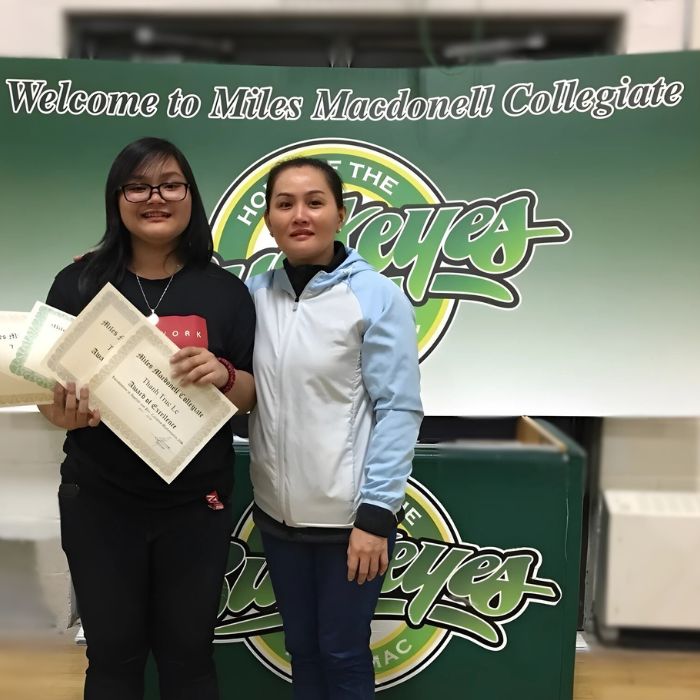
Lê Thanh Trúc, Student at Miles Macdonell Collegiate
“My family and I are deeply grateful to SIEC for not only securing my **Canada high school student visa** in Grade 10 but also for assisting my parents and siblings in obtaining their **visitor visas**. That was an invaluable gift.” — Lê Thanh Trúc, Student at **Miles Macdonell Collegiate** Secure Your Early High School (Secondary) […]
Phan Thị Ngọc Huỳnh, Former Student in Winnipeg
“The solid foundation provided by SIEC and Ms. Huong not only helped me realize my study abroad dream but also gave me the confidence to graduate, secure a stable job, and **settle permanently in Canada**.” — Phan Thị Ngọc Huỳnh, Former Student, currently working in **Winnipeg, Canada** Explore Your Study & Immigration Pathway in Canada […]
Hoàng Giang, Student at Edmonds College
“With her dedication and passion, Ms. Huong helped launch my **American dream**, opening up a vast world of opportunity and the chance to meet new friends.” — Hoàng Giang, Student at **Edmonds College** Explore More About Studying in the USA Spotlight on Edmonds College (Washington State) Gain in-depth knowledge about the programs, tuition fees, and […]
Khánh Lê, Student at LaSalle College
“Thank you to Ms. Huong and the SIEC team for their dedicated partnership and support, from my application phase until I was settled in Canada, helping me confidently pursue my dreams.” — Khánh Lê, Student at **LaSalle College** Explore Further Canada Study Opportunities Spotlight on LaSalle College Gain deeper insights into the programs, tuition fees, […]
Quỳnh Giao, Student at Red River Colleg
“She didn’t just stop at completing the application; she was an inspiration, a true motivator…” — Quỳnh Giao, Student at **Red River College** Continue Your Canada Study Abroad Journey Spotlight on Red River College Polytechnic (RRC Polytech) Discover the high-demand, **applied learning programs** at **Red River College** – one of the premier post-secondary institutions in […]