Optimal US University Transfer & Canada 2+2 Pathway: Save Billions on Study Abroad Costs
10/07/2026 Phong Nguyen
Amidst the escalating costs of global education and rising inflation rates, finding a secure, high-quality, and cost-effective route for international education has become a paramount concern for parents worldwide. Families are increasingly pressured by tuition fees that can reach staggering heights of $50,000 to $70,000 USD per year at traditional four-year institutions. Many parents find themselves considering extreme financial measures, from mortgaging family homes to draining lifelong retirement savings, just to provide their children with a world-class academic foundation.
However, modern educational strategy is evolving. True academic planning is no longer merely about having the financial capacity to pay exorbitant upfront fees; rather, it is about intelligently optimizing the Return on Investment (ROI) of every dollar spent. This comprehensive analysis from SIEC’s strategic education experts will thoroughly decode the mechanisms behind the US university transfer and the Canada 2+2 pathway. These specialized academic routes serve as a financial and educational masterstroke, helping thousands of international students save substantial amounts of money while securing diplomas from some of the most prestigious institutions in North America.
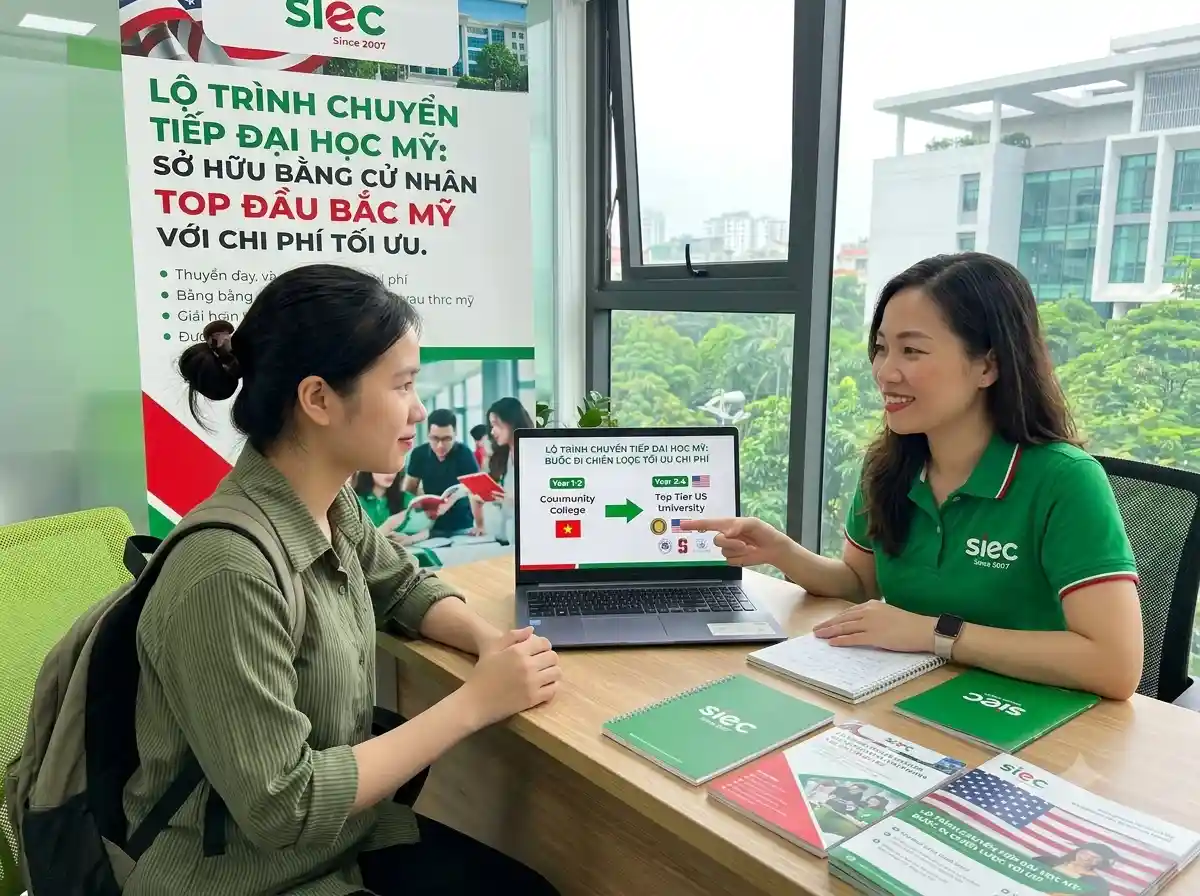
A well-planned transition route is a strategic stepping stone helping international students secure elite degrees.
1. Deconstructing the Myths: Are Transitional Colleges a “Step Down” or a Launchpad for the Elite?
In many regions around the world, particularly in Asian societies characterized by a strong “prestige-seeking” mindset, alternative educational routes are frequently misunderstood. There is a persistent psychological barrier that causes public two-year institutions to be wrongly equated with low-tier vocational training centers. This misguided perspective is perhaps the greatest tragedy for international applicants, as it stems entirely from a lack of deep, structural understanding of how North American higher education truly operates.
Understanding the Core Mechanics of Two-Year Institutions
In the United States, local public colleges serve as a fundamental and highly respected pillar of the overarching higher education framework. They are designed to democratize learning, offering rigorous foundational courses that parallel the first two years of a standard bachelor’s degree. According to historical data and reports from the American Association of Community Colleges (AACC), a significant portion—often exceeding 40%—of all bachelor’s degree holders in the country took at least one course at these localized institutions before completing their higher education journey.
The credibility and academic rigor of these initial stepping stones are unquestionable. Many of the world’s most influential leaders and innovators began their journeys in these very classrooms, benefiting from smaller class sizes and personalized attention before transitioning to larger, more renowned research institutions.
The Validity of the Final Degree
A frequent concern among parents is whether graduating via a transitional route will somehow “devalue” the final diploma in the eyes of future employers. The definitive answer to this is absolutely not.
Both the United States and Canadian higher education networks operate on a standardized, credit-based mobility system. When a student enrolls in a US university transfer program, they spend the first two academic years fulfilling general education requirements and lower-division major prerequisites. Upon completion, these accumulated credits are seamlessly moved to the destination four-year institution, where the student completes their upper-division coursework.
The crucial point to remember is that the Bachelor’s Degree you ultimately receive is issued directly by the destination institution. There is no asterisk, no secondary label, and no mention of your previous academic history on the diploma. Your credential is fundamentally identical to that of a student who enrolled directly as a freshman and paid double the tuition over four years.
2. The Financial Reality: Calculating the ROI and Exact Savings
To help families transition from abstract concepts to concrete financial planning, SIEC’s educational strategists have developed a realistic economic breakdown. This comparison highlights the profound financial differences between direct four-year university enrollment and utilizing optimized educational pathways.
Direct Entry vs. The American Transitional Route
Let us examine the financial implications in the United States, using a prominent public research institution in California as a benchmark.
Cost Category (Estimated USD)
Direct 4-Year Enrollment
Optimized 2+2 Route
Tuition (Years 1 & 2)
$48,000 / yr × 2 = $96,000
$11,000 / yr × 2 = $22,000
Tuition (Years 3 & 4)
$48,000 / yr × 2 = $96,000
$48,000 / yr × 2 = $96,000
TOTAL TUITION SAVINGS
SAVE APPROXIMATELY $74,000 USD
Beyond just tuition, students attending localized colleges often benefit from lower overall living expenses. Because these schools are integrated into local communities rather than high-cost campus bubbles, international students can often find more affordable off-campus housing, cook their own meals, and manage personal budgets far more efficiently during their crucial first two years abroad.
Direct Entry vs. The Canadian Dual-Degree Approach
Canada offers a similarly compelling financial landscape, combined with favorable exchange rates and robust international student support systems.
Cost Category (Estimated CAD)
Direct 4-Year Enrollment
Canada 2+2 Pathway
Tuition (Years 1 & 2)
$60,000 / yr × 2 = $120,000
$18,000 / yr × 2 = $36,000
Tuition (Years 3 & 4)
$60,000 / yr × 2 = $120,000
$60,000 / yr × 2 = $120,000
TOTAL TUITION SAVINGS
SAVE APPROXIMATELY $84,000 CAD
When factoring in these substantial capital reductions, choosing an optimized educational route transitions from being merely a backup plan to being the most mathematically sound investment a family can make for their child’s future.
3. Operational Mechanics: How Do These Academic Transitions Actually Work?
The success of these programs relies heavily on deeply ingrained, legally binding academic partnerships between localized colleges and larger universities. This ensures that students do not lose time or credits when moving from one institution to another.
Guaranteed Admission Programs in the United States
One of the most attractive features of this system is the existence of formal Articulation Agreements. In states like California, specific programs such as the Transfer Admission Guarantee (TAG) provide remarkable security. By meeting predetermined GPA requirements and completing specific core coursework, a student can secure a 100% guaranteed admission slot into multiple top-tier campuses within the state system long before they even finish their second year.
SIEC Expert Insight: The competitive landscape for direct freshman entry into elite schools like UC Berkeley or UCLA is notoriously fierce for international applicants. However, entering these exact same institutions as a third-year student with a strong 3.8+ GPA from a domestic partner college yields a dramatically higher statistical probability of acceptance.
Furthermore, smaller class sizes during the first two years—often capped at 25 to 30 students compared to massive university lecture halls holding 300+ freshmen—allow international students to build closer relationships with professors. This environment fosters better understanding of the material, easier access to letters of recommendation, and a gentler cultural adjustment to Western academic expectations.
4. The Canadian Advantage: Synergizing Academics with Long-Term Immigration Goals
While the academic mechanics are highly similar, studying in the northern part of the continent offers unique legislative benefits. The Canada 2+2 pathway is renowned not only for its world-class educational standards but also for its explicit alignment with the country’s welcoming immigration policies. The entire credit mobility process is meticulously governed by provincial authorities to ensure utmost transparency.
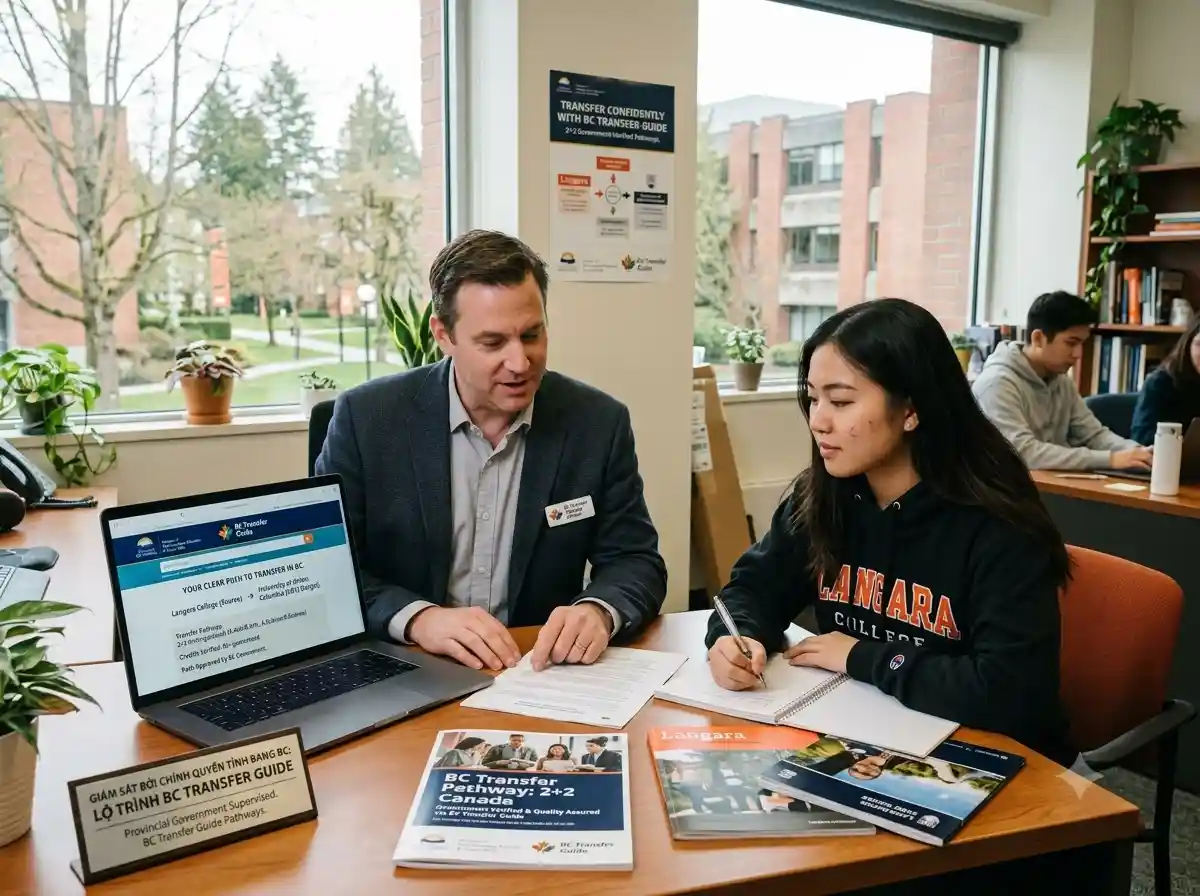
In Canadian provinces, educational mobility is heavily standardized. For instance, students studying in British Columbia utilize a centralized, publicly accessible database known as the BC Transfer Guide (BCCAT). This digital infrastructure allows students to map out their exact curriculum from day one, guaranteeing that every single class they pay for at the college level will be honored by the destination university. There is absolutely no guesswork involved.
Post-Graduation Work Permits (PGWP) and Career Building
A primary concern for many international students is their ability to gain global work experience after receiving their diploma. The regulations established by Immigration, Refugees and Citizenship Canada (IRCC) are highly favorable in this regard. Completing a continuous academic program spanning two or more years at designated learning institutions (DLIs) qualifies a graduate for a Post-Graduation Work Permit valid for up to three years.
Because the initial two years at a college and the subsequent two years at the university seamlessly combine into a four-year bachelor’s degree, students utilizing this route are fully eligible for the maximum PGWP duration. This three-year open work permit is the golden ticket for acquiring Canadian work experience, which is the foundational requirement for applying for permanent residency under programs like the Canadian Experience Class (CEC).
5. Navigating the Hidden Pitfalls: Five Dangerous “Credit Traps” to Avoid
Despite the overwhelming financial and academic benefits of these transitional routes, success is not automatic. The journey requires meticulous planning, strict discipline, and strategic foresight. Without proper guidance, students can fall victim to several common traps that can derail their academic progress and inflate their costs.
Misaligning General Education Requirements: Selecting electives purely based on personal interest without cross-referencing the destination university’s required transfer matrix is a fatal error. Taking non-transferable classes leads to wasted time and money.
Underestimating the Importance of Freshman GPA: Many students treat the first year of college as an extended vacation, assuming they can “catch up” later. Top-tier universities evaluate candidates based heavily on their cumulative performance during those vital first four semesters.
Neglecting Holistic Profile Development: While a high GPA is crucial, it is not always sufficient for elite institutions (such as the Ivy League or top-tier public universities). Admissions officers look for robust extracurricular involvement, leadership roles in campus clubs, and compelling personal essays.
Bypassing Academic Counseling: Attempting to navigate the complex credit systems alone is highly risky. Regular, mandatory check-ins with certified Academic Advisors are essential to ensure that every registered class directly serves the student’s ultimate degree goal.
Failing to Monitor Application Timelines: Destination universities operate on strict administrative schedules. The portals for submitting intent to enroll often close 6 to 9 months before the intended start date. Missing these deadlines means a forced gap year and delayed graduation.
6. Crafting Your Bespoke Educational Strategy with SIEC
The journey to international academic success requires more than just filling out admission forms; it demands a comprehensive, tailored strategy. At SIEC, our mandate goes far beyond basic paperwork. We view ourselves as educational architects, dedicated to constructing the safest, most efficient, and financially logical pathways for our clients.
Our specialized advisory team works intimately with families to chart out every step of the journey. From identifying the perfect partner colleges with the highest articulation success rates, to crafting a watertight course selection matrix, and finally executing a robust visa application strategy, we handle the complexities so students can focus on their studies.
Do not allow outdated societal prejudices or a lack of nuanced information to dictate your family’s financial future or limit your child’s potential. Embracing these optimized transition systems is the hallmark of modern, intelligent educational planning.
READY TO SECURE YOUR FUTURE AND SAVE THOUSANDS?
Strategic planning begins long before the first day of class. Register today to receive a comprehensive, customized blueprint from our senior educational strategists!
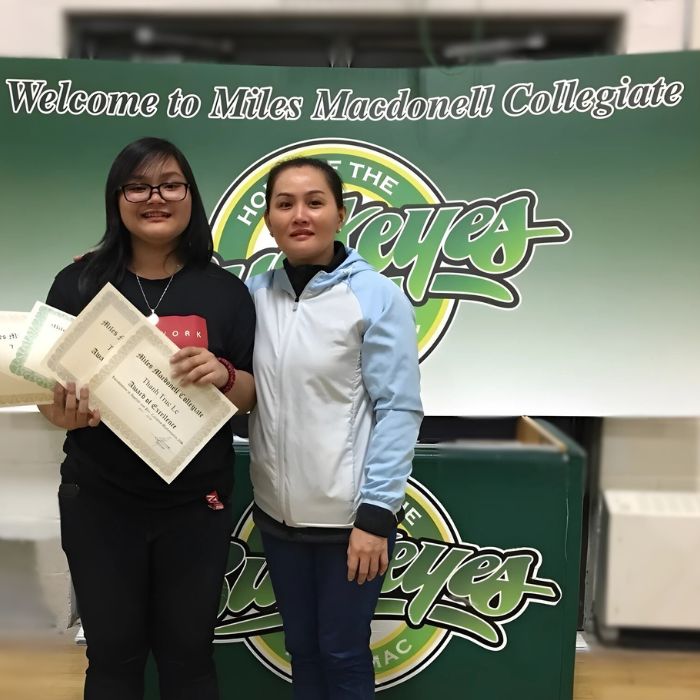
Lê Thanh Trúc, Student at Miles Macdonell Collegiate
“My family and I are deeply grateful to SIEC for not only securing my **Canada high school student visa** in Grade 10 but also for assisting my parents and siblings in obtaining their **visitor visas**. That was an invaluable gift.” — Lê Thanh Trúc, Student at **Miles Macdonell Collegiate** Secure Your Early High School (Secondary) […]
Phan Thị Ngọc Huỳnh, Former Student in Winnipeg
“The solid foundation provided by SIEC and Ms. Huong not only helped me realize my study abroad dream but also gave me the confidence to graduate, secure a stable job, and **settle permanently in Canada**.” — Phan Thị Ngọc Huỳnh, Former Student, currently working in **Winnipeg, Canada** Explore Your Study & Immigration Pathway in Canada […]
Hoàng Giang, Student at Edmonds College
“With her dedication and passion, Ms. Huong helped launch my **American dream**, opening up a vast world of opportunity and the chance to meet new friends.” — Hoàng Giang, Student at **Edmonds College** Explore More About Studying in the USA Spotlight on Edmonds College (Washington State) Gain in-depth knowledge about the programs, tuition fees, and […]
Khánh Lê, Student at LaSalle College
“Thank you to Ms. Huong and the SIEC team for their dedicated partnership and support, from my application phase until I was settled in Canada, helping me confidently pursue my dreams.” — Khánh Lê, Student at **LaSalle College** Explore Further Canada Study Opportunities Spotlight on LaSalle College Gain deeper insights into the programs, tuition fees, […]
Quỳnh Giao, Student at Red River Colleg
“She didn’t just stop at completing the application; she was an inspiration, a true motivator…” — Quỳnh Giao, Student at **Red River College** Continue Your Canada Study Abroad Journey Spotlight on Red River College Polytechnic (RRC Polytech) Discover the high-demand, **applied learning programs** at **Red River College** – one of the premier post-secondary institutions in […]